With more board configurations than there are atoms in the observable universe, the ancient Chinese game of 'Go' has long been considered a grand challenge for artificial intelligence. On March 9, 2016, the worlds of Go and AI collided in South Korea for an extraordinary best-of-five-game competition, coined the Google DeepMind Challenge Match. Hundreds of millions of people around the world watched as a legendary Go master took on an unproven AI challenger for the first time in history. AlphaGo chronicles a journey from the halls of Cambridge, through the backstreets of Bordeaux, past the coding terminals of DeepMind in London, and, ultimately, to the seven-day tournament in Seoul. As the drama unfolds, more questions emerge: What can artificial intelligence reveal about a 3000-year-old game? What can it teach us about human mind?
The film is a first of its kind that will transform how we think about engineering. From the Great Wall of China and the world's tallest buildings to underwater robots, solar cars and smart, sustainable cities, DREAM BIG celebrates the human ingenuity behind engineering marvels big and small, and shows how engineers push the limits of innovation in unexpected and amazing ways. With its inspiring stories of human grit and aspiration, and extraordinary visuals, the film reveals the compassion and creativity that drive engineers to create better lives for people and a more sustainable future for us all. Narrated by Jeff Bridges.
It is the year 2546. Corporations rule the world, and an agent is on a secret mission to explore the untold stories of the past. His journey leads him into a secret virtual reality where one corporation has recreated the 1980s, an era that witnessed the birth of video game development, an event in which a politically and economically restricted small European country, Hungary, had a significant role. He discovers a strange but exciting world, where computers were smuggled through the Iron Curtain and serious engineers started developing games. This small country was still under Soviet pressure when a group of people managed to set up one of the first game development studios in the world, and western computer stores started clearing room on their shelves for Hungarian products. These developers really didn't know it was impossible, because they created games including amazing technical feats that even engineers at Commodore thought their machines weren't capable of.
In this curious series, the minds behind history's most iconic toy franchises will discuss the rise (and sometimes fall) of their billion-dollar creations. In 1977, after being rejected by Mattel and Hasbro, Lucasfilm signed with Kenner Products to have toys produced for their sci-fi film Star Wars. This was a huge gamble, as Kenner was a small toy company at the time and the negotiation process started late due to George Lucas' secrecy over the ship designs. Since then, toy sales of the Star Wars franchise have totaled to US$14 billion worldwide.
Here's a growing trend in artificial intelligence. Dating video games and other applications let users carry on virtual relationships with computerized girlfriends ranging from career women to Japanese schoolgirls. There's even something for the ladies. How soon will there be artificial intelligence of such complexity that protecting its well-being and rights becomes a serious political and social concern? In what year will there be an app or computer program or a device that you not only love but that possibly, within the realm of believability might actually love you ...back?
Where big data meets big brother -- The story of how governments manipulate the internet to censor and monitor their citizens, and how those citizens are fighting back. This battle for control of cyberspace will challenge our ideas of privacy, citizenship and democracy to the very core. The film is a look at the global impact the internet has on free speech, privacy and activism.














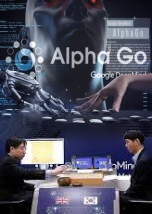








AlphaGo chronicles a journey from the halls of Cambridge, through the backstreets of Bordeaux, past the coding terminals of DeepMind in London, and, ultimately, to the seven-day tournament in Seoul. As the drama unfolds, more questions emerge: What can artificial intelligence reveal about a 3000-year-old game? What can it teach us about human mind?