A kaleidoscopic immersion into the underground art and music scene of 1960s New York, this documentary eschews conventional rock biographies in favor of a sensory-rich, cinematic experience. Through a vibrant mosaic of avant-garde films, rare archival footage, and personal testimonies, it paints the Velvet Underground not just as a band—but as the beating heart of a creative explosion. By interweaving interviews with John Cale and Maureen Tucker alongside voices from their cultural milieu, the film evokes the fraught, fragile energy of a time when music intersected with performance, queerness, and counterculture. More than a story about a band, it is a journey into a cultural explosion that still resonates today.
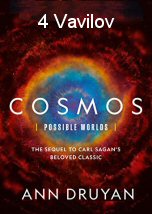
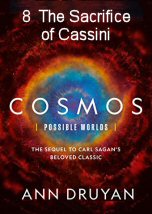
The 8th episode reviews Giovanni Cassini's life. His observations of Saturn and its moons would have an enduring effect on the scientific world. Neil deGrasse Tyson also narrates the mysterious untold story of the scientist who figured out how to go the Moon while fighting for his life in a WWI trench. Aleksandr Shargei changed his name to Yuri Kondratyuk out of fear for his life and wrote a manuscript on rocket motion and space colonization. This letter would end up capturing the attention of an engineer working on the Apollo program, John Houbolt, and would made the Apollo Mission possible. We will also know the saga of the twenty-year long odyssey of Cassini-Huygens spacecraft, a robotic explorer ordered to commit suicide on another world.
In the 1998 NBA finals, the defending NBA champion Chicago Bulls played against Utah Jazz in a repeat of the previous year's Final. With Utah leading 86-85 and few seconds remaining of the definitive match, John Stockton passed the ball to Karl Malone but Jordan stole the ball away and dribbled down the court to hit a 20-footer to end the finals. Battered and exhausted, the Bulls conclude their 'Last Dance' with a sixth championship. Michael, Phil Jackson and others reflect on the end of the dynasty.
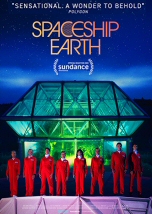
The true, stranger-than-fiction, adventure of eight visionaries who in 1991 spent two years quarantined inside of a self-engineered replica of Earth's ecosystem called Biosphere 2. The experiment was a worldwide phenomenon, chronicling daily existence in the face of life threatening ecological disaster and a growing criticism that it was nothing more than a cult. The bizarre story is both a cautionary tale and a hopeful lesson of how a small group of dreamers can potentially re-imagine a new world.
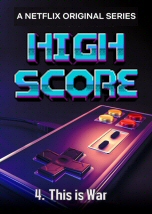
Nintendo was like an impossibly huge wall. But if Mario was the undisputed king, an underdog was about to declare war. For Japanese game maker Sega, mainly known for its arcade cabinets, the battle was about winning the home console market. Sega's Genesis console and its speedy character, Sonic, hit the market. In the early '80s, sports video games existed, but they didn't really look real. And one visionary entrepreneur had already started tackling the challenge of taking sports from the stadium onto the screen. Electronic Arts kicks off a partnership with football legend John Madden.
This American science fiction horror anthology film was produced by Steven Spielberg and John Landis. The film's production achieved notoriety when the actor Vic Morrow and two illegally-hired child actors were killed in a stunt helicopter crash during filming of Landis' segment. The Movie leaves those involved in the making of the film cursed by the memory of the incident they witnessed.











By interweaving interviews with John Cale and Maureen Tucker alongside voices from their cultural milieu, the film evokes the fraught, fragile energy of a time when music intersected with performance, queerness, and counterculture. More than a story about a band, it is a journey into a cultural explosion that still resonates today.