



Last Watched

"EU"  Sort by

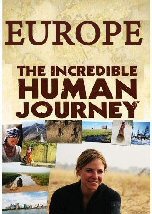
The Incredible Human Journey: Europe

   2009    History
When our species first arrived in Europe, the peak of the Ice Age was approaching and the continent was already crawling with a rival: stronger, at home in the cold and even (contrary to their popular image) brainier than us. So how did the European pioneers survive first the Neanderthals and then the deep freeze as they pushed across the continent? Alice Roberts reconstructs the head of the 'first European' to come face to face with one of our ancestors; she discovers how art became crucial for survival in the face of Neanderthal competition; and what happened to change the skin colour of these European pioneers from black to white.
Series: The Incredible Human Journey
The Red Sea

   2009    Nature
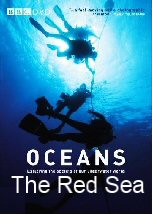
The Red Sea is one of the youngest oceans in the world and one of the warmest. The northern region, with its diverse array of marine life, is one of the most visited dive locations on earth while the southern end remains virtually unexplored. It's a global hotspot for marine biology and an important trade route throughout human history, linking the trade goods of India and the Far East with the markets of Egypt and Europe.
Series: Oceans

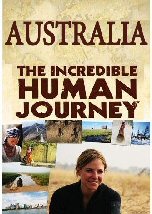
The Incredible Human Journey: Australia

   2009    History
Dr Alice Roberts looks at our ancestors' seemingly impossible journey to Australia. Miraculously preserved footprints and very old human fossils buried in the outback suggest a mystery: that humans reached Australia almost before anywhere else. How could they have travelled so far from Africa, crossing the open sea on the way, and do it thousands of years before they made it to Europe? The evidence trail is faint and difficult to pick up, but Alice takes on the challenge. In India, new discoveries among the debris of a super volcano hint that our species started the journey much earlier than previously thought, while in Malaysia, genetics points to an ancient trail still detectable in the DNA of tribes today. Alice travels deep into the Asian rainforests in search of the first cavemen of Borneo and tests out a Stone Age raft to see whether sea travel would have been possible thousands of years ago, before coming to a powerful conclusion.
Series: The Incredible Human Journey
Clash of the Gods: Zeus

   2009    History
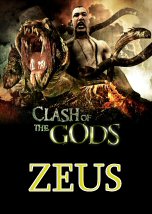
Ancient Greece's most powerful god wages an epic struggle against his father for control of the universe. It's the ultimate Clash of the Gods as the Olympians challenge the Titans in mythology's greatest showdown. This is a pivotal battle that experts believe may have been ancient code for a real world event - one of the greatest natural disasters the Earth ever experienced.
Series: Clash of the Gods

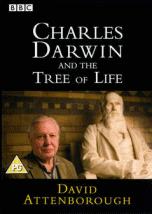
Charles Darwin and the Tree of Life

   2009    Science
David Attenborough asks three key questions: how and why did Darwin come up with his theory of evolution? Why do we think he was right? And why is it more important now than ever before? David starts his journey in Darwin's home at Down House in Kent, where Darwin worried and puzzled over the origins of life. David goes back to his roots in Leicestershire, where he hunted for fossils as a child, and where another schoolboy unearthed a significant find in the 1950s. And he revisits Cambridge University, where both he and Darwin studied, and where many years later the DNA double helix was discovered, providing the foundations for genetics. At the end of his journey in the Natural History Museum in London, David concludes that Darwin's great insight revolutionised the way in which we see the world. We now understand why there are so many different species, and why they are distributed in the way they are. But above all, Darwin has shown us that we are not set apart from the natural world, and do not have dominion over it. We are subject to its laws and processes, as are all other animals on earth to which, indeed, we are related.

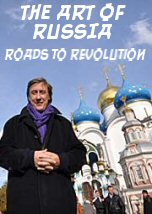
Roads to Revolution

   2009    Art
Andrew Graham-Dixon explores how Russia changed from a feudal nation of aristocratic excess to a hotbed of revolution at the beginning of the 20th century and how art moved from being a servant of the state to an agent of its destruction. From monuments that celebrate the absolutism of the tsars to the epic Russian landscape as inspiration; from the design and construction of gold and glittering palaces to the minutiae of diamond-encrusted Faberge eggs; and eventually to the stark and radical paintings of the avant-garde, the journey through Russian art history is one of extraordinary beauty and surprise.
Series: The Art of Russia
Planet Earth

Planet Earth

2007  Nature
Planet Earth III

Planet Earth III

2023  Nature
The Last Dance

The Last Dance

2020  Culture
Leaving Neverland

Leaving Neverland

2019  Culture
The Rehearsal

The Rehearsal

2022  Culture
The Cell

The Cell

  Science