






Last Watched

"Work"  Sort by

The Immortals

   2014    Science
This episode covers the nature of how life may have developed on Earth and the possibility of life on other planets. Tyson begins by explaining how the human development of writing systems enabled the transfer of information through generations, describing how Princess Enheduanna ca. 2280 BCE would be one of the first to sign her name to her works, and how Gilgamesh collected stories, including that of Utnapishtim documenting a great flood comparable to the story of Noah's Ark. Tyson explains how DNA similarly records information to propagate life, and postulates theories of how DNA originated on Earth, including evolution from a shallow tide pool, or from the ejecta of meteor collisions from other planets. In the latter case, Tyson explains how comparing the composition of the Nakhla meteorite in 1911 to results collected by the Viking program demonstrated that material from Mars could transit to Earth, and the ability of some microbes to survive the harsh conditions of space. With the motions of solar systems through the galaxy over billions of years, life could conceivably propagate from planet to planet in the same manner. Tyson then moves on to consider if life on other planets could exist. He explains how Project Diana performed in the 1960s showed that radio waves are able to travel in space, and that all of humanity's broadcast signals continue to radiate into space from our planet. Tyson notes that projects have since looked for similar signals potentially emanating from other solar systems. Tyson then explains that the development and lifespan of extraterrestrial civilizations must be considered for such detection to be realized. He notes that civilizations can be wiped out by cosmic events like supernovae, natural disasters such as the Toba disaster, or even self-destruct through war or other means, making probability estimates difficult. Tyson describes how elliptical galaxies, in which some of the oldest red dwarf stars exist, would offer the best chance of finding established civilizations. Tyson concludes that human intelligence properly applied should allow our species to avoid such disasters and enable us to migrate beyond the Earth before the Sun's eventual transformation into a red giant.
Series: Cosmos: A Spacetime Odyssey
Einstein Nightmare

   2014    Science
Professor Jim Al-Khalili investigates the most accurate and yet perplexing scientific theory ever - quantum physics. At the beginning of the 20th century scientists were led into the hidden workings of matter, into the sub-atomic building blocks of the world around us. They discovered phenomena unlike any encountered before - a realm where things can be in many places at once, where chance and probability call the shots and where reality appears to only truly exist when we observe it. Albert Einstein hated the idea that nature, at its most fundamental level, is governed by chance. Jim reveals how, in the 1930s, Einstein thought he'd found a fatal flaw in quantum physics because it implies that sub-atomic particles can communicate faster than light in defiance of the theory of relativity. In the 1960s the scientist John Bell showed there was a way to test if Einstein was right and quantum mechanics was actually mistaken. Jim repeats this critical experiment - with shocking results.
Series: The Secrets of Quantum Physics

Citizenfour

   2014    History
Citizenfour received the Academy Award for Best Documentary Feature at the 2015 Oscars. The film was directed by Laura Poitras concerning Edward Snowden and the NSA spying scandal." In January 2013, Laura Poitras received an encrypted e-mail from a stranger who called himself Citizen Four. In it, he offered her inside information about illegal wiretapping practices of the NSA and other intelligence agencies. Poitras had already been working for several years on a film about monitoring programs in the US, the result of the September 11 attacks. In June 2013, accompanied by investigative journalist Glenn Greenwald and The Guardian intelligence reporter Ewen MacAskill, she went to Hong Kong with her camera for the first meeting with the stranger, who identified himself as Edward Snowden. Several other meetings followed. The recordings gained from the meetings form the basis of the film.

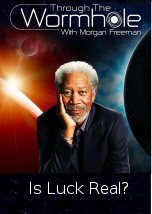
Is Luck Real

   2014    Science
Do you make your own luck, or does luck make you? Some scientists believe luck is strictly a matter of statistics and probabilities…but others believe unseen forces are at work, and randomness is built into every particle of the universe. We’ll find luck, good and bad, in casinos, basketball courts, genetics labs and the subatomic world. How much does the genetic lottery rule your fate? Are lucky streaks and unfortunate accidents merely our own minds fooling us? It’s a scientific journey that will radically revise your understanding of the laws of nature and the workings of the human brain.
Series: Through the Wormhole Season 5

Bears

   2014    Nature
Enjoy this wonderful documentary from Disney Nature about a family of brown bears living in the coastal mountain ranges of Alaska." A brown bear mother named Sky gives birth to two cubs named Amber and Scout in her den on a mountain slope. When April comes the bears will be ready to leave the den. As the bears leave the oncoming summer brings with it a threat of avalanches. Fortunately the bears are able to avoid disaster. Upon reaching the lush valley below, the cubs meet the other bears, some of which pose a threat to the cubs; among these bears are Magnus, a big healthy male, and Chinook, an older male. The family works together to survive the spring, with Sky keeping the cubs safe from Tikaani, a pesky grey wolf...

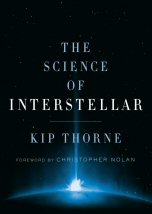
The Science of Interstellar

   2014    Art
In The Science of Interstellar, Kip Thorne, the physicist who assisted Nolan on the scientific aspects of Interstellar, shows us that the movie's jaw-dropping events and stunning, never-before-attempted visuals are grounded in real science. Thorne shares his experiences working as the science adviser on the film and then moves on to the science itself. In chapters on wormholes, black holes, interstellar travel, and much more, Thorne's scientific insights-many of them triggered during the actual scripting and shooting of Interstellar-describe the physical laws that govern our universe and the truly astounding phenomena that those laws make possible.