



Last Watched

"Bee"  Sort by

God and the Universe

   2011    Science    3D    HD
Since the dawn of civilization, humans have wondered who or what created the universe. Religion offers a spiritual answer, but do the latest discoveries in physics show evidence of a transcendent intelligence, or simply that the laws of physics by themselves could have led to the universe in which we live? This episode embarks on a mind-bending scientific search for God, asking physicists and theologians if the seemingly miraculous way the universe has been calibrated to support life is evidence of a creator...whether string theory will eventually be able to rule out the existence of God...why Stephen Hawking says the universe could have been created spontaneously...and how an advanced civilization in another universe could have conceivably created our own.
Series: The Universe
Fukushima Is Nuclear Power Safe

   2011    Technology
Professor Jim Al-Khalili sets out to discover whether nuclear power is safe. He begins in Japan, at the former Fukushima nuclear plant, where he meets some of the tens of thousands of people who have been evacuated from the exclusion zone. He travels to an abandoned village just outside the zone to witness a nuclear clean-up operation. Jim draws on the latest scientific findings from Japan and from the previous explosion at Chernobyl to understand how dangerous the release of radiation is likely to be and what that means for our trust in nuclear power.

Pluto and Beyond

   2011    Science
Pluto is one of the Smaller than our own Moon, Pluto has never had a single visitor from Earth - until now. We keep saying, 'This is it, this is humanity's trip to Pluto. For the first time in human history, Pluto is about to be revealed. We can expect surprises, it's almost guaranteed. Until then, we can only guess what Pluto looks like. And recently, astronomers decided not to call it a planet any more. Once thought to be an isolated oddity, Pluto now marks the beginning of a whole new frontier. it's as if the explorers had climbed up to the top of the Rockies and were looking over and could see the lands of California on the other side. There has never been a better time to venture where no human has gone before. To follow in the footsteps of our robot pioneers and explore beyond the planets of our Solar System.
Series: A Traveler Guide to the Planets

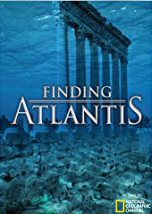
Finding Atlantis

   2011    History
Could the fabled lost city of Atlantis have been located? Professor Freund explained how he led a pursuit to find the lost civilisation, believed by many to be an ancient Greek myth, by using deep-ground radar, digital mapping and satellite imagery. He contends that Atlantis, described by Plato in 360BC, in Spain's Donaña National Park, north of Cadiz, and was wiped out by a giant tsunami. Plato wrote it had been destroyed by a natural disaster in 9,000BC. Experts are now surveying marshlands in Spain to look for proof of the ancient city.

The First Christianity

   2011    History
Professor Diarmaid MacCulloch - one of the world's leading historians - reveals the origins of Christianity and explores what it means to be a Christian. In the first episode, he overturns the familiar story that it all began when the apostle Paul took Christianity from Jerusalem to Rome. Instead, he shows that the true origins of Christianity lie further east, and that at one point it was poised to triumph in Asia, maybe even in China. The headquarters of Christianity might well have been Baghdad not Rome, and if that had happened then Western Christianity would have been very different.
Series: A History of Christianity

Protestantism The Evangelical Explosion

   2011    Culture
Diarmaid MacCulloch traces the growth of an exuberant expression of faith that has spread across the globe - Evangelical Protestantism. Today, it is associated with conservative politics, but the whole story is distinctly more unexpected. It is easily forgotten that the evangelical explosion has been driven by a concern for social justice and the claim that one could stand in a direct emotional relationship with God. It allowed the Protestant faith to burst its boundaries from its homeland in Europe. In America, its preachers marketed Christianity with all the flair and swashbuckling enterprise of American commerce. In Africa, it converted much of the continent by adapting to local traditions, and now it is expanding into Asia. But is Korean Pentecostalism and its message of prosperity in the here and now an adaptation too far?
Series: A History of Christianity
Earthflight

Earthflight

2012  Nature
Chef's Table

Chef's Table

2017  Art
Life of a Universe

Life of a Universe

2017  Science
Life

Life

2009  Nature
Shine a Light

Shine a Light

2008  Art