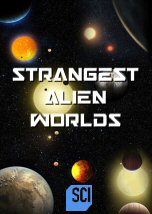
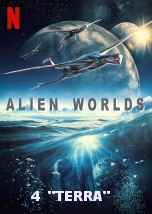
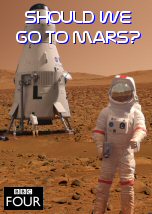
What sort of alien civilizations might exist in the vastness of space? Terra is the fictional world imagined in Episode 4, a planet nine billion years old, twice as old as Earth. Old enough that a truly advanced intelligence could evolve. It was once a fertile world, now it is barren. But life can still thrive here in artificial domes. Over time, they've evolved not to need their bodies. They exist only as neural tissue. They never age, they never die. They're monitored and maintained by robots. If alien civilizations are statistically so likely, why haven't astronomers found any sign of them? Where is everyone? Every time we look at an individual star, that's like dropping a bucket in the ocean. We're going to have to look at a lot of stars and to search through a lot of data until we find the clue that leads us to another civilization.
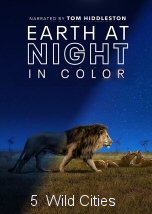
Each night, across the planet, our cities illuminate the darkness. Their lights burning brighter than ever before. And whilst we're asleep, animals are making the most of this new neon landscape. The sunset in Los Angeles, Chicago, and Toronto creates worlds of opportunities for the cleverest animals willing to take the risk.
The film covers the ever growing vegan movement and how it's best for the animals, human health, and the planet. Every year Plant Based News puts together a highlight reel of vegan related events and developments. This has served as a great way to look back on the events of the year as we take a closer look at the effectiveness of the film as a whole.
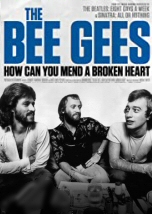
This documentary chronicles the triumphs and hurdles of brothers Barry, Maurice and Robin Gibb, otherwise known as the Bee Gees. The iconic trio, who found early fame in the 1960s, went on to write over 1,000 songs, including twenty #1 hits throughout their storied career. The film follows the Bee Gee’s meteoric rise as they rode the highs of fame and fortune, negotiated the vagaries of the ever-shifting music business and navigated the complexities of working so intimately alongside family. The story takes us from their childhood in 1950s Australia to the artistic crucible of 1960s London and to the sundrenched coast of Miami, Florida. The band created a distinct sound with their three-part harmonizing, their melodic voices forming a new kind of instrument.
The Sky at Night looks back at the last ten years of astronomy and ponders the most significant milestones and revelations. With the help of six distinguished astronomers, Chris and Maggie consider the state of astronomy in 2020 and wonder what new, exciting discoveries await us across the rest of the decade, as a host of new ground and space telescopes come online. Astronomer Royal Lord Martin Rees is among the guests to walk along the Astronomical Wall of Discovery in this one-hour special.
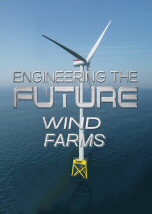
An engineering revolution is underway. Driven by dedicated individuals who are building extraordinary machines that will change our lives. The first episode follows the race to generate vast power from thin air - the wind. One of the world’s biggest wind farms is being built off the English coast where the harsh conditions pose great challenges for the team. Meanwhile, a Norwegian team is striving to build the first-ever floating wind farm.






If alien civilizations are statistically so likely, why haven't astronomers found any sign of them? Where is everyone? Every time we look at an individual star, that's like dropping a bucket in the ocean. We're going to have to look at a lot of stars and to search through a lot of data until we find the clue that leads us to another civilization.