

Last Watched

"Work"  Sort by

The Sound and the Fury: A Century of Modern Music. Wrecking Ball

   2013    Art
It begins by examining the shift in the language and sound of music from the melodies and harmonies of giants such as Mozart, Haydn and Brahms into the fragmented, abstract, discordant sound of the most radical composers of the new century - Schoenberg, Webern, Stravinsky and beyond. It examines how this new music was a response to the huge upheaval in the world at the start of the 20th century, with its developments in technology, science, modern art and the tumult of the First World War. Featuring performances of some of the key works of the period, performed by the London Sinfonietta, members of the Aurora Orchestra and composer and pianist Timothy Andres, the story of this episode in music history is brought to life through the contributions of the biggest names in modern classical music, among them Steve Reich, John Adams, Michael Tilson Thomas, Pierre Boulez, George Benjamin and Alex Ross, music critic of the New Yorker.
Series: The Sound and the Fury
Free for All

   2013    Art
Part 2 examines how the freewheeling modernism that had shocked audiences in the first two decades of the century came under state control. Initially, many practitioners thought the totalitarian regimes would be good for music and the arts. What followed in Germany was a ban on music written by Jews, African-Americans and communists, while in the Soviet Union there was a prohibition on music the workers were unable to hum. After the cataclysm of the 1940s, a new generation of composers - Boulez, Stockhausen, Xenakis, Nono, Ligeti - turned their back on what they saw as the discredited music of the past and tried to reinvent it from scratch. Or, at least, from serialism, which became as much of a straitjacket as totalitarianism's strictures had been. But from this period of avant-garde experimentation, which many listeners found baffling and terrifying, came some of the most influential and radical musical innovations of the century.
Series: The Sound and the Fury

Easy Listening

   2013    Art
Series concludes with the focus shifting to the United States in the post-war years of the 1950s and beyond. Beginning with arguably the most notorious work of 20th century classical music, John Cage's 'silent' composition 4'33", it looks at how a series of maverick Americans re-invented the sound of classical music into a more simple form, bringing back harmonies and rhythms that made it increasingly popular with audiences across the world. It also examines how this music found its way into a spiritual realm, with the strain of pared-down religious composition that came to be known as 'holy minimalism'. From the Maverick concert hall in Woodstock, New York to an Orthodox cathedral in Estonia to a car park in Peckham, south London, the story is told by a stellar line-up of contributors including Philip Glass, Steve Reich, John Adams, Arvo Pärt and John Tavener.
Series: The Sound and the Fury
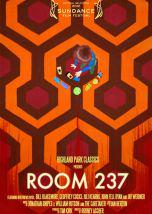
Room 237

   2013    Art
Many movies lend themselves to dramatic interpretations, but none are as rich and far ranging as Stanley Kubrick's The Shining. In LA filmmaker Rodney Ascher's ROOM 237, we hear from people who have developed far-reaching theories and believe they have decoded the hidden symbols and messages buried in the late director's film. Carefully examining The Shining inside out, and forwards and backwards, and backwards and forwards, ROOM 237 as captivating, provocative as it is pure pleasure". It gives voice to the fans and scholars who espouse these theories, reworking the film to match their ideas and intercutting it with layers of dreamlike imagery to illustrate their streams of consciousness. Sometimes outrageous, always engaging, the words of those who were interviewed are given full force by Ascher's compelling vision. Also featured at the 2012 Sundance, Cannes and Toronto film festivals.

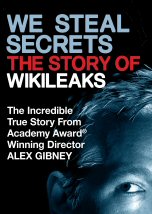
We Steal Secrets: The Story of WikiLeaks

   2013    Culture
In 2006, an Iceland-based outfit called The Sunshine Press launched the website WikiLeaks.org. As run by Australian Internet activist Julian Assange, the site's mandate involved regularly publishing top-secret documents and covert information, often regarding governments and their respective military operations". As might be expected, this set off a firestorm between those who admired the organization's bravado and resourcefulness, and those who argued, not unjustly, that the dissemination of data regarding such events as the U.S. war in Afghanistan could put untold numbers of lives at risk. In We Steal Secrets, Gibney relays the story of the WikiLeaks website from the inside, and moves beyond black and white to penetrate a complex network of activity guided by courage and idealism but also allegedly guilty of ethical insensitivity and hypocrisy. Acclaimed documentarian Alex Gibney (Enron: The Smartest Guys in the Room) takes the reins for this no-holds-barred look at one of the most unusual phenomena of early 21st century media.

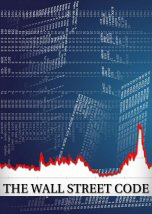
The Wall Street Code

   2013    Science
Super quick computers and advanced mathematical formulas have taken over trading on the financial markets from human beings -algorithms- which seem to have a life of their own. The only ones who understand the system in any way are its architects, the algorithm developers. Haim Bodek is one such algo-developer. After finding some strange wrongdoings he set out on a personal crusade against this elusive system". The machinery behind our financial markets, consisting of mathematical models, data centers and miles and miles of fiber optic cables, is disguised by technological complexity and secrecy. The builders of this financial system are a new breed of Wall Street employees -quants- mathematicians and physicists who are responsible for a technological revolution. Haim Bodek is a quant; he specialized in artificial intelligence and worked for Goldman Sachs. He knows the system from the inside, he helped build it. Haim Bodek was invited to tell his story at the "Battle of the Quants" - a recurring event where quants discuss high-frequency trading, amongst other things. Bodek wrote an algorithm for trading machines that would generate guaranteed income - a money machine that weathered the financial meltdown of 2008. But then from one day to the next the algorithm stopped working.
Top Gear

Top Gear

2012  Technology
Sex Explained

Sex Explained

2020  Medicine
Alien Worlds

Alien Worlds

2020  Science
The Hunt

The Hunt

2015  Nature
Rome

Rome

  History