





Last Watched

"Disco"  Sort by

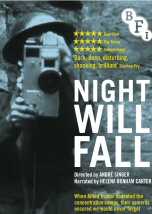
Night Will Fall

   2014    History
Researchers discover film footage from World War II that turns out to be a lost documentary shot by Alfred Hitchcock and Sidney Bernstein in 1945 about German concentration camps liberated by allied troops. When Allied forces liberated the Nazi concentration camps in 1944-45, their terrible discoveries were recorded by army and newsreel cameramen, revealing for the first time the full horror of what had happened. Making use of British, Soviet and American footage, the Ministry of Information’s Sidney Bernstein (later founder of Granada Television) aimed to create a documentary that would provide lasting, undeniable evidence of the Nazis’ unspeakable crimes. He commissioned a wealth of British talent, including editor Stewart McAllister, writer and future cabinet minister Richard Crossman – and, as treatment advisor, his friend Alfred Hitchcock. Yet, despite initial support from the British and US Governments, the film was shelved, and only now, 70 years on, has it been restored and completed by Imperial War Museums. This eloquent, lucid documentary by André Singer (executive producer of the award-winning The Act of Killing) tells the extraordinary story of the filming of the camps and the fate of Bernstein’s project, using original archive footage and eyewitness testimonies.
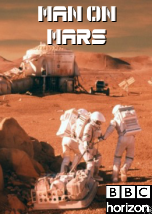
Man on Mars Mission to the Red Planet

   2014    Technology
Let's go behind the scenes at NASA to discover how it is preparing for its most ambitious and daring mission: to land men - and possibly women - on the surface of Mars. It's over 40 years since Neil Armstrong made the first human footprint on the moon. But getting to the red planet would involve a journey of at least three years. Meet the scientists and engineers who are designing new rockets, new space suits and finding ways to help astronauts survive the perils of this long voyage. And it turns out that having the 'right stuff' for a mission to mars might not be quite what you expect.

Alien Planets Revealed

   2014    Science
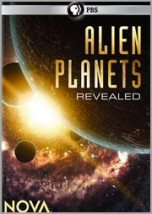
It's a golden age for planet hunters: recently, they've discovered more than 750 planets orbiting stars beyond our sun. Some of them, like a planet called Kepler-22b, might even be able to harbor life. What would that life look like? Combining startling animation with input from expert astrobiologists, Alien Planets Revealed takes viewers on a journey of the imagination as we 'build' aliens from the ground up. What chemical building blocks will make up their genetic code? How will life get started and how will the exotic environment on a planet like Kepler-22b drive evolution? Bringing the creative power of veteran animators together with the latest discoveries in astrobiology, Alien Planets Revealed provides a glimpse of the creatures we might one day encounter beyond our solar system.

That Sugar Film

   2014    Medicine
One man's journey to discover the bitter truth about sugar. Damon Gameau embarks on a unique experiment to document the effects of a high sugar diet on a healthy body, consuming only foods that are commonly perceived as 'healthy'. Through this entertaining and informative journey, Damon highlights some of the issues that plague the sugar industry, and where sugar lurks on supermarket shelves. This will change the way you think about healthy food.

Robots

   2014    Technology
The series heads to the very frontiers of space and science to produce the definitive history of science fiction. What if our creations turn against us? The idea of creating life has fascinated society since the earliest days of science fiction. Robots transports viewers from the first steps of Frankenstein’s monster to the threat provided by the Terminator and the world of Cyberspace. Find out how Rutger Hauer created one of the greatest speeches in all of science fiction for Blade Runner. Discover from Kenny Baker the challenge of acting in Star Wars while inside the body of R2D2, and learn how Anthony Daniels was drawn to the role of C-3PO by concept art modeled closely on the robot from the silent classic Metropolis. The creators of the original Robocop describe how its hidden depths have given it enduring appeal and William Gibson reveals the origins of his seminal novel Neuromancer. From HAL in 2001: A Space Odyssey to the Cylons of the reimagined Battlestar Galactica and the world of The Matrix, this is a journey that asks – what does it mean to be human?
Series: The Real History of Science Fiction

Space

   2014    Art
What if we could explore the vastness of Space? Science fiction has always fed upon our need to explore – to wonder what is out there. Space journeys from Jules Verne’s earliest ideas about attempts to leave our planet, to the Star Wars far away galaxy through to Nichelle Nichols revealing how her groundbreaking role as Lt. Uhura in Star Trek led to her participation in the recruitment of NASA’s astronauts. It explores the deep sea inspiration for Avatar, finds out why Ursula K Le Guin wrote The Left Hand of Darkness and discovers how Stanley Kubrick was able to make 2001: A Space Odyssey seem so believable. In addition, the program looks at the way Dune and The Mars Trilogy embraced the challenge of world building and discusses the appeal of the beaten up ‘dirty space’ of Dark Star and Firefly. From the horrifying scenes of Alien, to the epic spectacle of Star Wars, this is a journey to the stars and the alien encounters that await us there.
Series: The Real History of Science Fiction
Dinosaur Planet

Dinosaur Planet

2003  Science
History of the Eagles

History of the Eagles

2013  History
The Last Czars

The Last Czars

2019  History
Human Universe

Human Universe

2014  History
Top Gear

Top Gear

2012  Technology
Minimalism

Minimalism

2015  Culture
Natural World

Natural World

2015  Nature