



Last Watched

"Wildlife"  Sort by

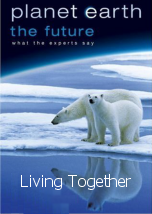
Living Together

   2006    Nature
The documentary deals with the future of conservation. It begins by looking at previous efforts. The 'Save The Whales' campaign, which started in the 1960s, is seen to have had a limited effect, as whaling continues and fish stocks also decline. In the 1990s, as head of the Kenya Wildlife Service, Richard Leakey took on the poachers by employing armed units. Although it was successful in saving elephants, the policy was detrimental to the Maasai people, who were forced from their land. The need for "fortress" areas is questioned, and the recently highlighted Raja Ampat coral reef in Indonesia is an example. The more tourism it generates, the greater the potential for damage — and inevitable coastal construction. Sustainable development is viewed as controversial, and one contributor perceives it to currently be a "contradiction in terms". Trophy hunting is also contentious. Those that support it argue that it generates wealth for local economies, while its opponents point to the reducing numbers of species such as the markhor. Ecotourism is shown to be beneficial, as it is in the interests of its providers to protect their environments. However, in some areas, such as the Borneo rainforests, the great diversity of species is being replaced by monocultures. The role of both religion and the media in conservation is argued to be extremely important. Contributors to the programme admit a degree of worry about the future, but also optimism.
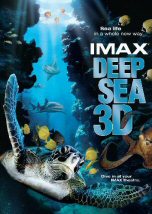
Deep Sea

   2006    Nature    3D    HD
An astonishing close encounter with some of the most exotic creatures inhabiting the hidden depths. In the realm of the giant octopus, the rainbow nudibranch (sea slug), and the Scorpion fish, viewers become a fearless undersea explorers, discovering the strange and unusual partnerships these 'star wars' creatures forge to ensure their survival, and learning how this cooperation allows life in this enchanting world to flourish. Filmmaker Howard Hall guides an astonishing adventure. Johnny Depp and Kate Winslet narrate as Green Sea Turtles gather so Surgeonfish can strip harmful algae from their shells. A Humboldt Squid changes color four times per second like a flashing strobe light. A Mantis Shrimp’s claws have the speed of a bullet in battling a hungry octopus. Brace yourself to be submerged in a wondrous new dimension.

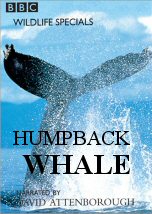
Humpback Whale

   2006    Nature
Few sounds are more beautiful or moving than the underwater songs of the humpback whale. Male whales compete with their songs, which often last for 10 minutes at a time, and can be repeated for hours on end. Whales separated by thousands of miles of sea will sing almost identical songs. Researchers have found that the songs change throughout the breeding months, following a mysterious pattern repeated across the waves. Whales also use sound to hunt. To catch herring, humpback whales release a stream of bubbles to form a shimmering, circular fishing net. Emitting a repetitive loud scream, they scare the fish into a tight ball, then lunge out of the water to swallow the shoal whole. Now it seems that the long-held image of the gentle giant must change to one of a ferocious and opportunistic hunter.

Wild South America: Lost Worlds

   2005    Nature
A major new series exploring the wildlife of South America. This is a breathtaking aerial journey through the most spectacular locations on the continent, from the icy peaks of the Andes to the Amazon jungle and the Atacama desert. These extreme conditions are home to a mind-boggling variety of creatures, many of them rarely seen before on television.
Series: Wild South America

Andes

   2005    Nature
This edition features a spectacular journey along the Andes, the world's longest mountain range, stretching from the equator almost to Antarctica. In this harsh and unforgiving landscape, wildlife such as bears, pumas, condors and flamingos fight for survival in the numbing cold, ferocious winds and thin air.
Series: Wild South America

Genesis. Where Are We Coming From

   2005    Nature
The cycle of life of a handful of different animals is captured on film in a whole new way in this documentary. Using special motion-control photography equipment, Genesis allows filmgoers to view animal behaviors which are too small, too slow, or too difficult to normally be seen with the naked eye, including a chick hatching its way out from inside an egg, jellyfish drying into nothing under the heat of the sun, or a snake slowly swallowing prey bigger than itself. This footage is accompanied by narration from Sotigui Kouyate, who uses simple props and easily understandable analogies to explain the science behind what its shown on screen. Genesis was directed by Claude Nuridsany and Marie Perennou, who previously created another acclaimed scientific documentary, Microcosmos.
Latino Americans

Latino Americans

2013  History
Planet Earth

Planet Earth

2007  Nature
Reel Rock

Reel Rock

2015  Culture
Leaving Neverland

Leaving Neverland

2019  Culture
The Jinx

The Jinx

2015  History
Planet Earth II

Planet Earth II

2016  Nature
Rome

Rome

  History