






Last Watched

"Cell"  Sort by

Time

   2014    Art
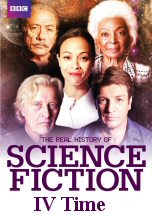
What if we could travel not just through space, but through time itself? If you could travel through time, would you change the past or the future? What if you found it couldn’t be changed? What price does the time traveller -- and the people they are closest to -- pay? This is a journey from H. G. Wells' The Time Machine through ideas like The Grandfather Paradox and The Butterfly Effect to the professional time traveller that is the ever popular Doctor Who. Steven Moffat, David Tennant, Karen Gillan, and Neil Gaiman offer a unique perspective on the Doctor. Edward James Olmos reveals the hidden meaning of the language he created for the vision of the future that is Blade Runner. Bob Gale and Christopher Lloyd take us behind the scenes of Back to the Future, while Ed Solomon describes the joy of solving a time travel conundrum for Bill & Ted’s Excellent Adventure. But what would be the physical and emotional cost to the time traveller? Audrey Niffenegger explains what inspired her novel The Time Traveller’s Wife. And what if someone from the future tried to travel back in time to warn us? Would we believe them? From the apocalyptic tones of 12 Monkeys to the drama of Quantum Leap and the comedy of Groundhog Day, time travel is a subject that has been irresistible to the creators of every type of science fiction.
Series: The Real History of Science Fiction
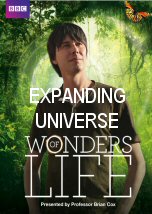

Expanding Universe

   2013    Science
Brian travels across the US and encounters some astonishing creatures that reveal how the senses evolved. It is a story that takes him through life's journey, from single-celled organisms to sentient beings.
Series: Wonders of Life

Changing War

   2011    History
Troop withdrawals begin as the Americans train their ARVN allies to take over the war. Gery Benedetti patrols the hostile waters of the Mekong Delta. James Anderson leads a battalion into Cambodia after Nixon's controversial order. Don DeVore struggles to survive a fierce night attack, and Anne Purcell gets promising news about her husband.
Series: Vietnam in HD

Peace with Honor

   2011    History
Bob Clewell's helicopter crew comes under intense fire in one of the final operations of the war. Joe Galloway returns to Vietnam and in Washington, D.C., Barry Romo throws down his medals in protest. The last American troops return home and POW wife Anne Purcell awaits word of her husband's fate. The fall of Saigon brings the unification of Vietnam.
Series: Vietnam in HD

Adoration in the Forest

   2010    Art
Painted over five centuries ago, Filippo Lippi's nativity is like none other: it shows the birth of Christ in a dark, wooded wilderness. There are no shepherds, kings, ox, ass – there is no Joseph. Its beauty inspired Michelangelo, Leonardo da Vinci and Botticelli. But it also conceals a deeply personal story. It was painted for Cosimo de Medici, a wealthy banker who feared that his money was dragging him straight to hell. The artist's life was equally surprising. One of the most celebrated painters of his day, Filippo Lippi was also a Carmelite friar, but he was no stranger to the temptations of the flesh, to which he frequently yielded. Shortly before painting his Adoration, he caused uproar by seducing a twenty year-old nun. His paintings rejoice not only in divine beauty, but in the beauty of women. In later times, the Adoration's history was interwoven with that of rulers and dictators. It became a bargaining chip after Napoleon's allies seized twenty merchant ships. And in the 20th century, it was hidden by the Nazis in a potassium mine, where specialist american officers, known as Monuments Men, stumbled upon it. they were now told to get it ready to be shipped out. In an unprecedented turn of events they refused. This is the only known case in the whole of the Second World War of American officers refusing an order. It was sent to the National Gallery of Art, but in 1949 Lippi's Adoration was returned to Germany.
Series: The Private Life of a Masterpiece

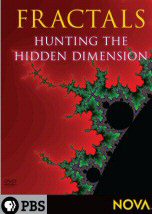
Fractals Hunting the Hidden Dimension

   2010    Science
The ultimate adventure in scientific inquiry, this fascinating program follows the exploits of a small group of pioneering mathematicians who discovered a whole area of study that is revolutionizing all branches of understanding in the world: fractal geometry. Fractals are most recognized as a series of circular shapes with a border surrounded by jagged "tail-like" objects. The program, aimed at the average viewer does a fine job of explaining the background of fractals, first by beginning with the story of Pixar co-founder, Loren Carpenter's work at Boeing, developing 3D terrain from scratch using fractals. From there the program starts at the beginning with an introduction to Benoit Mandelbrot and his revolutionary work. The explanations are full of solid factual information but never talk above the level of a viewer who has some understanding of basic mathematical principles. Once the concept is presented the program spends the rest of the time showing how prevalent the fractal is in life. For a program about a mathematical concept, "Fractals" is very engaging, showing how the process was applied to special effects as far back as the Genesis planet from "Star Trek II" all the way to the spectacular finale on Mustafar in "Star Wars: Episode III." I found myself astonished at how fractals were the source of the lava in constant motion and action during the Obi-Wan/Anakin fight. What is more amazing is when the program delves into practical applications such as cell phone antennas, and eventually the human body. For the average person who enjoys watching science related programs, even on a sporadic basis, "Fractals" will prove to be a very worthwhile experience. The program is well produced, integrating talking head interviews (including some with Mandelbrot himself) with standard "in the field" footage. The structure of the program is very logical and never finds itself jumping around without direction. In simplest terms, this is a program as elegant as the designs it focuses on.