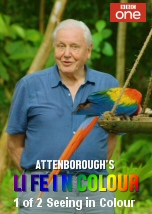
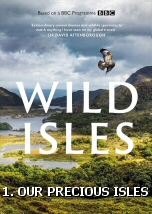
In the first episode, Sir David Attenborough reveals the unexpected wildlife riches of the British Isles, showcasing the dramatic and spectacular habitats that rival any across the globe. This journey uncovers the diversity of life in the UK's unique landscapes, from the intricate world of bumblebees to the swift lives of kingfishers. The episode captures extraordinary scenes of nature, including killer whales preying on seals, golden eagles in the Scottish mountains, the cunning tactics of woodland plants, and the perilous life of puffins evading gulls. It highlights Britain's geological diversity as a cornerstone of its natural wealth, contributing to an array of habitats and supporting a wide range of life. Britain's importance extends to being a haven for migratory birds, with our seas feeding 65% of the world's gannets and supporting the largest colony of northern gannets on Scotland's Bass Rock. The west coast of Scotland offers sanctuary to barnacle geese due to its abundant food and mild climate, though they remain vigilant against hunting sea eagles. Despite these natural treasures, Britain faces challenges as one of the most nature-depleted countries globally. Sir David Attenborough emphasizes the need to conserve and restore these wild isles for the enjoyment and benefit of future generations.
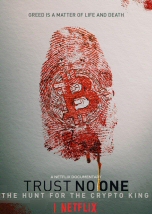
This is the story of Gerald Cotten and the many people who ended up with empty bank accounts after investing in his Bitcoin cryptocurrency exchange, QuadrigaCX. What does a crypto exchange do? The movie explains it concisely and it almost makes sense: A guy like Cotten takes an investment, converts it to Bitcoin and trades it in hopes of turning a profit, kind of like a stock day trader does. Cotten ’s described as a nerdy guy who felt like an outcast, but found a community of like-minded types in the cryptocurrency world. Cotten was in India when he got sick and unexpectedly died; he was 30. At the time, QuadrigaCX was Canada’s biggest crypto exchange, holding north of $200 million. But nobody could access the keys and passwords to the company’s accounts and, against conventional wisdom, the company had no safeguards to stop such a thing from happening. Everyone who invested their money was left grasping at empty air. Internet forums foster ideas such as Cotten faked his death and took the money. The journalists and forensic accountants who lend the voice of reason, explores the oddities in the Cotten narrative, ruling out some of the crazier stuff in a quest for the truth.
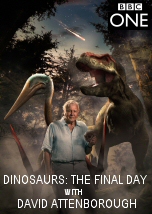
Sir David Attenborough presents this landmark documentary which brings to life, in unprecedented detail, the lost world of the very last days of the dinosaurs. Searching in the hills of North Dakota, palaeontologist Robert DePalma makes an incredible discovery in a prehistoric graveyard known as Tanis - fossilised creatures, astonishingly well preserved like the bodies found at Pompeii. Whilst DePalma hunts for the evidence that can shed light on the final days of the dinosaurs, state-of-the-art VFX transports Sir David back in time to the Late Cretaceous to witness the creatures who lived at Tanis at the end of the Age of Dinosaurs. Meanwhile, cutting edge scanning techniques reveal fossilised secrets that could change our understanding of the dinosaurs' extinction once and for all.
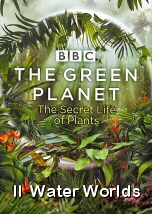
Water plants create some of the most beautiful, bizarre and important habitats on earth. To hold on in torrents, plants use a kind of superglue. Some are armed with vicious weapons to fight titanic battles for space. Others form perfect spheres and escape from animal enemies by rolling. Where nutrients are washed away, plants turn into hunters of animals, laying traps and even counting to ensure their success. In this episode we explore those watery worlds with David Attenborough, from Croatia to Brazil, from Colombia to Thailand, the brilliantly coloured flowers smother lakes, and in one magical river in Brazil, the water bubbles like champagne as plants create the atmosphere itself.
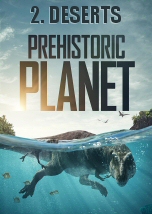
In the second episode, Dreadnoughtus males compete for the right to mate. Lizards are hunted by Velociraptor among a group of sleeping Tarbosaurus. A Mononykus forages for termites and investigates new food options after a brief rainstorm. Several types of dinosaurs congregate around a watering hole in Mongolia. Above the deserts of North Africa, aerial combat ensues as male Barbaridactylus pterosaurs fight for the attention of females below. A herd of Secernosaurus brave the harsh gypsum dunes in search of nourishment.
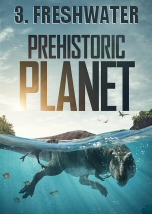
In the third episode, a Velociraptor hunts pterosaurs on a cliffside by a waterfall. A battle-scarred Tyrannosaurus nurses his wounds and encounters a newcomer. With its feathered body and duck bill, the eight-ton Deinocheirus wades through an Asian wetland in search of relief from pesky biting flies. A female Quetzalcoatlus builds and guards her nest. A mother Masiakasaurus and her family hunt crabs. Elasmosaurs enter an estuary in search of fish.







Britain's importance extends to being a haven for migratory birds, with our seas feeding 65% of the world's gannets and supporting the largest colony of northern gannets on Scotland's Bass Rock. The west coast of Scotland offers sanctuary to barnacle geese due to its abundant food and mild climate, though they remain vigilant against hunting sea eagles. Despite these natural treasures, Britain faces challenges as one of the most nature-depleted countries globally. Sir David Attenborough emphasizes the need to conserve and restore these wild isles for the enjoyment and benefit of future generations.