Almost everything we know today about the beautiful giant ringed planet comes from Cassini, the NASA mission that launched in 1997 and arrived at Saturn in 2004. Since then, the space probe has been beaming home miraculous images and scientific data, revealing countless wonders about the planet, its rings and 62 moons - including some that could harbor life. When the mission approached its final days, it attempted one last set of daring maneuvers - diving between the innermost ring and the top of Saturn's atmosphere. Aiming to skim less than 2000 miles above the cloud tops, no spacecraft has ever gone so close to Saturn, and hopes were high for incredible observations that could solve major mysteries about the planet's core. But such a daring maneuver comes with many risks and is no slam dunk. In fact, slamming into rocks in the rings is a real possibility. Join NASA engineers for the tense and triumphant moments as they find out if their bold re-programming has worked, and discover the wonders that Cassini has revealed over the years.
NASA is on a mission to send humans to Mars within just 15 years, but to reach this next frontier of space exploration, experts must discover new technology and cutting-edge science that protects astronauts from the Red Planet's deadliest killers.
NASA's revolutionary Juno Probe had a goal visiting Jupiter -- to reveal the deepest mysteries of the Solar System. Everything we see in the our planetary system today is affected by Jupiter somehow in the past or now. So in many ways, Juno is actually giving us a view into the history of the Solar System. But there are many other questions. Does Jupiter have a core? Why it has a surprisingly warm atmosphere? What's driving Jupiter's storms? What is going on its weird cyclones, its gigantic swirls? The auroras of Jupiter are tremendously large, bigger than the planet itself. where are they coming from? What we're learning, what we're unlocking, it's mind-blowing.
This documentary journeys with the scientists into the heart of a giant. Juno is the Nasa mission designed to peer through Jupiter's swirling clouds and reveal the wonders within. By projecting a 70-foot-wide, life-size Juno on a Houston rooftop, Scott Bolton, head of Juno, shows us how its fragile electronics are encased in 200kg of titanium. As Scott puts it, 'we had to build an armoured tank to go there.' Professor Andrew Ingersoll, Juno's space weatherman, reveals they have seen lightning inside Jupiter, perhaps a thousand times more powerful than Earth's lightning. This might be evidence for huge quantities of water inside Jupiter. Under the extreme conditions of Jupiter thousands of miles under the surface, hydrogen becomes a liquid metal. Juno is finding out how much liquid metallic hydrogen is inside Jupiter, and scientists hope to better understand how this flowing metal produces the most powerful aurora in the Solar System. But what is at Jupiter's heart? In Nice, Prof Tristan Guillot explains how Juno uses gravity to map the planet's centre. This can take scientists back to the earliest days of the solar system, because Jupiter is the oldest planet and it should contain clues to its own creation. By chalking out an outline of the Jupiter, Tristan reveals there is a huge rocky core - perhaps ten times the mass of Earth.
A look at two missions attempting one of the most difficult feats of space exploration - to collect a rock from another world. The film checks in on the US and Japanese attempts to bring a piece of an asteroid back to Earth. The missions have taken decades of planning, but the results will be worth it. We find out how studying these space rocks can teach us about the origins of our solar system and may one day help save Earth from a catastrophic collision.
The attempt to send and land astronauts on Mars risks billions of dollars and the lives of those brave enough to attempt it. Is the possible benefit really worth the risk? And is it really achievable? Guiding us through this ethical and scientific minefield is Dr Kevin Fong. Kevin's diverse background in astrophysics, aeronautics and medicine makes him uniquely placed to understand the technical and human challenges of this perilous journey. He leads us through the journey to Mars stage by stage. For Kevin, not only is this the toughest journey we will ever attempt, it is one that he feels we ultimately must make if we are to survive as a species.















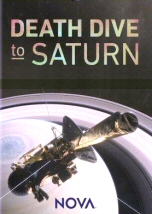










Aiming to skim less than 2000 miles above the cloud tops, no spacecraft has ever gone so close to Saturn, and hopes were high for incredible observations that could solve major mysteries about the planet's core. But such a daring maneuver comes with many risks and is no slam dunk. In fact, slamming into rocks in the rings is a real possibility. Join NASA engineers for the tense and triumphant moments as they find out if their bold re-programming has worked, and discover the wonders that Cassini has revealed over the years.