


Last Watched

"Work"  Sort by

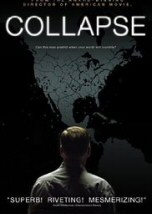
Collapse

   2009    Culture
Michael Ruppert is an independent journalist who has made a minor career out of telling people news that most folks do not want to know. Ruppert, a former police officer, predicted the Wall Street debacle of 2008 several years before the fact, at a time when most analysts were still imagining infinite growth for the stock market and major investment banks. Since then, his vision of the world's future has grown only darker. As Ruppert sees it, civilization and the global economy has yet to wean itself off fossil fuels, and when the world's supply of oil finally runs out, it will lead to a global financial catastrophe that will leave no one unscathed. But while most of what Ruppert has to say bears the ring of truth, there's a small audience for his dire message -- the primary medium for his work is a self-published newsletter, and his most recent book has done so poorly in the marketplace that he faces eviction from his home. Is Ruppert right? And if he is, why doesn't anyone care? Filmmaker Chris Smith profiles Michael Ruppert and gives him a chance to explain his apocalyptic vision of the future at length
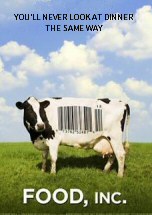
Food Inc

   2009    Technology
Filmmaker Robert Kenner lifts the veil on our nation's food industry, exposing the highly mechanized underbelly that's been hidden from the American consumer with the consent of our government's regulatory agencies, USDA and FDA. Our nation's food supply is now controlled by a handful of corporations that often put profit ahead of consumer health, the livelihood of the American farmer, the safety of workers and our own environment. We have bigger-breasted chickens, the perfect pork chop, insecticide-resistant soybean seeds, even tomatoes that won't go bad, but we also have new strains of e coli--the harmful bacteria that cause illness for an estimated 73,000 Americans annually. We are riddled with widespread obesity, particularly among children, and an epidemic level of diabetes among adults Featuring interviews with such experts as Eric Schlosser (Fast Food Nation), Michael Pollan (The Omnivore's Dilemma) along with forward thinking social entrepreneurs like Stonyfield Farms' Gary Hirschberg and Polyface Farms' Joe Salatin, the film reveals surprising--and often shocking truths--about what we eat, how it's produced, who we have become as a nation and where we are going from here.

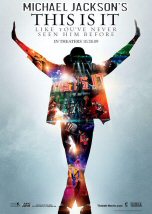
This Is It

   2009    Art    3D    HD
The film offers Jackson fans and music lovers worldwide a rare, behind-the-scenes look at the performer as he developed, created and rehearsed for his sold-out concerts that would have taken place beginning this summer in London's O2 Arena. Chronicling the months from March through June, 2009, the film is produced with the full support of the Estate of Michael Jackson and drawn from more than one hundred hours of behind-the-scenes footage, featuring Jackson rehearsing a number of his songs for the show.
Audiences will be given a privileged and private look at Jackson as he has never been seen before. "Michael Jackson's This Is It", in raw and candid detail, captures the singer, dancer, filmmaker, architect, creative genius, and great artist at work as he creates and perfects his final show.

Objectified

   2009    Technology
A feature-length documentary about our complex relationship with manufactured objects and, by extension, the people who design them. It's a look at the creativity at work behind everything from toothbrushes to tech gadgets. It's about the designers who re-examine, re-evaluate and re-invent our manufactured environment on a daily basis. It's about personal expression, identity, consumerism, and sustainability.

The Great Salmon Run

   2009    Nature
Every year grizzly bear families in North America depend for their survival on a spectacular natural event: the return of hundreds of millions of salmon from the Pacific Ocean to the mountain streams where they were born. The salmon travel thousands of miles to spawn and then die. The great run not only provides food for bears, but for killer whales, wolves, bald eagles, and even the forest itself. The question is: will the salmon return in time to keep hungry bears alive?
A mother grizzly and her cubs emerge from their den high in snowy Alaskan mountains. Filming from the air the team capture a TV first, following the bears as they negotiate a near vertical slope on their journey to the coast where they await the return of the salmon. Meanwhile, the salmon are making their way to the to river mouths where they must swim upstream and against the current. The programme reveals how they tackle the torrents and leap over waterfalls, a feat equivalent to a human jumping over a house. Dozens of hungry bears eagerly await the salmon that make it up river. In another TV first, underwater cameras record the ingenuity and fancy footwork they use to collect dead salmon from the bottom of deep pools.
Series: Nature Great Events

The Great Feast

   2009    Nature
Every summer in the seas off Alaska humpback whales, sea lions and killer whales depend on an explosion of plant life, the plankton bloom. It transforms these seas into the richest on Earth. But will these animals survive to enjoy the great feast? The summer sun sparks the growth of phytoplankton, microscopic floating plants which can bloom in such vast numbers that they eclipse even the Amazon rainforest in sheer abundance of plant life. Remarkably, it is these minute plants that are the basis of all life here. But both whales and sea lions have obstacles to overcome before they can enjoy the feast. Humpback whales migrate 3,000 miles from Hawaii, and during their 3 month voyage lose a third of their body weight. In a heart-rending scene a mother sea lion loses her pup in a violent summer storm, while another dramatic sequence shows a group of killer whales working together to kill a huge male sea lion.
In late summer the plankton bloom is at its height. Vast shoals of herring gather to feed on it, diving birds round the fish up into a bait ball and then a humpback whale roars in to scoop up the entire ball of herring in one huge mouthful. When a dozen whales work together they employ the ultimate method of co-operative fishing - bubble net feeding. One whale blows a ring of bubbles to engulf the fish and then they charge in as one. Filmed from the surface, underwater and, for the first time, from the air, we reveal how these giant hunters can catch a tonne of fish every day.
Series: Nature Great Events
Planet Earth III

Planet Earth III

2023  Nature
Life in the Undergrowth

Life in the Undergrowth

2005  Nature
Space Race

Space Race

2005  Technology
The Crime of the Century

The Crime of the Century

2021  Medicine
Wild Wild Country

Wild Wild Country

2018  Culture
The Virtual Revolution

The Virtual Revolution

2010  Technology
The Cell

The Cell

  Science