











Last Watched

"REM"  Sort by

The Buddha

   2010    History
After 400 BC, a new philosophy was born in South east Asia, generated from the ideas of Buddha, a mysterious Prince from India who gained enlightenment while he sat under a large, shapely fig tree. He remains one of the most legendary and influential of all religious progenitors, but what of his actual life? In this biographical documentary, director David Grubin tells the historical tale of Gautama Buddha (563-483 BC), from his initial enlightenment through his death around the age of 80. In the process, Grubin makes an unusual point: that Gautama never once claimed to be God or God's emissary, but instead sought to find a way to bring peace and alleviation from suffering to others in a cruel and often insane world. In telling this story, Grubin combines a number of elements including original animations, testimony by contemporary Buddhists such as the 14th Dalai Lama Tenzin Gyatso, glimpses of sculptures and paintings that help tell Gautama's story, and much more. Narrated by Richard Gere
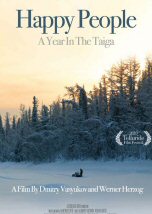
Happy People A Year in the Taiga

   2010    Culture
In the center of the story is the life of the indigenous people of the village Bakhtia at the river Yenisei in the Siberian Taiga. The camera follows the protagonists in the village over a period of a year. The natives, whose daily routines have barely changed over the last centuries, keep living their lives according to their own cultural traditions. Werner Herzog and Russian co-director Dmitry Vasyukov takes viewers on yet another unforgettable journey into remote and extreme natural landscapes. The acclaimed filmmaker presents this visually stunning documentary about indigenous people living in the heart of the Siberian Taiga. Deep in the wilderness, far away from civilization, 300 people inhabit the small village of Bakhtia at the river Yenisei. There are only two ways to reach this outpost: by helicopter or boat. There's no telephone, running water or medical aid. Follow the Siberian trappers through all four seasons of the year to tell the story of a culture virtually untouched by modernity.

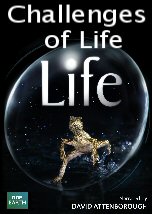
Life: Challenges of Life

   2009    Nature
Four years in the making, Life will set a new benchmark in family entertainment and natural history epics. Many animals and plants go to extremes to give themselves a chance. Aerial photography reveals how bottle-nosed dolphins trap fish in a ring of mud, and time-lapse cameras show how the Venus flytrap ensnares insect victims. The strawberry frog carries a tadpole high into a tree and drops it in a water-filled bromeliad. Fledgling chinstrap penguins undertake a heroic and tragic journey through the broken ice to get out to sea. Many can barely swim and the formidable leopard seal lies in wait
Series: Life

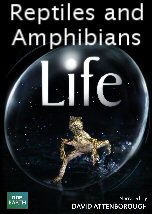
Life: Reptiles and Amphibians

   2009    Nature
Reptiles and amphibians look like hang-overs from the past. But they overcome their shortcomings through amazing innovation. The pebble toad turns into a rubber ball to roll and bounce from its enemies. Extreme slow-motion shows how a Jesus Christ lizard runs on water, and how a chameleon fires an extendible tongue at its prey with unfailing accuracy. The camera dives with a Niuean sea snake, which must breed on land but avoids predators by swimming to an air bubble at the end of an underwater tunnel. In a TV first, Komodo dragons hunt a huge water-buffalo, biting it to inject venom, then waiting for weeks until it dies. Ten dragons strip the carcass to the bone in four hours.
Series: Life

Sea of Cortez

   2009    Nature
The Sea of Cortez, also known as the Gulf of California, is a unique corner of the Pacific Ocean. This remarkable young sea is thought to be around five million years old and home to nearly 900 species of fish and the widest variety of whales and dolphins found anywhere on Earth. Some of the greatest changes threatening the world's oceans today can be seen in this stretch of water.
Series: Oceans

The Red Sea

   2009    Nature
The Red Sea is one of the youngest oceans in the world and one of the warmest. The northern region, with its diverse array of marine life, is one of the most visited dive locations on earth while the southern end remains virtually unexplored. It's a global hotspot for marine biology and an important trade route throughout human history, linking the trade goods of India and the Far East with the markets of Egypt and Europe.
Series: Oceans