

Last Watched

"REM"  Sort by

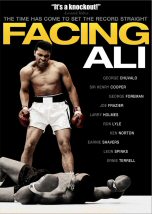
Facing Ali

   2009    Culture
Muhammad Ali was arguably the greatest boxer of the 20th century, and that rare fighter whose presence in the culture of the day was equal to (or perhaps even greater than) his remarkable skills in the ring. Ali was a superb fighter who squared off against a variety of gifted athletes during his career, and filmmaker Pete McCormack offers a new perspective on Ali through this documentary, in which some of his opponents speak about their experiences with the man. Facing Ali includes interviews with Joe Frazier, who speaks of the bitterness that still remains of his rivalry with Ali; George Chuvalo, a Canadian fighter who recalls that while Ali defeated him, he went dancing with his wife afterward while the winner went to the hospital; George Foreman, whose memories include a powerful punch that Ali chose not to land; Leon Spinks, whose 1978 upset victory over Ali thrust him into a level of fame he was not prepared to handle; Ernie Terrell, who discusses the technique and strategy behind Ali's approach; and many more.
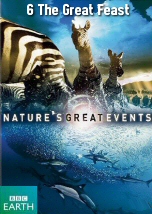

The Great Feast

   2009    Nature
Every summer in the seas off Alaska humpback whales, sea lions and killer whales depend on an explosion of plant life, the plankton bloom. It transforms these seas into the richest on Earth. But will these animals survive to enjoy the great feast? The summer sun sparks the growth of phytoplankton, microscopic floating plants which can bloom in such vast numbers that they eclipse even the Amazon rainforest in sheer abundance of plant life. Remarkably, it is these minute plants that are the basis of all life here. But both whales and sea lions have obstacles to overcome before they can enjoy the feast. Humpback whales migrate 3,000 miles from Hawaii, and during their 3 month voyage lose a third of their body weight. In a heart-rending scene a mother sea lion loses her pup in a violent summer storm, while another dramatic sequence shows a group of killer whales working together to kill a huge male sea lion.
In late summer the plankton bloom is at its height. Vast shoals of herring gather to feed on it, diving birds round the fish up into a bait ball and then a humpback whale roars in to scoop up the entire ball of herring in one huge mouthful. When a dozen whales work together they employ the ultimate method of co-operative fishing - bubble net feeding. One whale blows a ring of bubbles to engulf the fish and then they charge in as one. Filmed from the surface, underwater and, for the first time, from the air, we reveal how these giant hunters can catch a tonne of fish every day.
Series: Nature Great Events

Is Alcohol Worse than Ecstasy

   2008    Medicine
The drug policies have remained unchanged over the last 40 years so should they be reformed in the light of new research? Recent research has analysed the link between the harmful effects of drugs relative to their current classification by law with some startling conclusions. Perhaps most startling of all is that alcohol, solvents and tobacco (all unclassified drugs) are rated more dangerous than ecstasy, 4-MTA and LSD (all class A drugs).

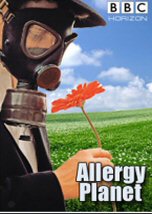
Allergy Planet

   2008    Medicine
We are in the grip of an allergy epidemic. 50 years ago one in 30 were affected, but in Britain today it is closer to one in three. Why this should be is one of modern medicine's greatest puzzles. In search of answers, Horizon travels round the globe, from the remotest inhabited island to the polluted centres of California and the UK. We meet sufferers and the scientists who have dedicated their lives trying to answer the mystery of why we are becoming allergic to our world.

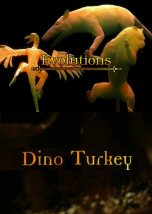
Dino Turkey

   2008    Science
From small viscous meat eaters to vegetarian giants, dinosaurs came in all shapes and sizes. Remarkable new evidence suggests that one dinosaur did not become extinct but evolved into a new animal species we all know today. Discover the missing link between the velociraptor and modern day birds.
Series: Evolutions

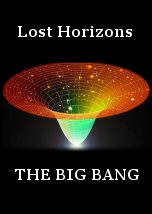
Lost Horizons: The Big Bang

   2008    Science
Professor Jim Al Khalili from the University of Surrey delves into over 50 years of the BBC science archive to tell the story behind the emergence of one of the greatest theories of modern science, the Big Bang. The remarkable idea that our universe simply began from nothing has not always been accepted with the conviction it is today and, from fiercely disputed leftfield beginnings, took the best part of the 20th century to emerge as the triumphant explanation of how the universe began. Using curious horn-shaped antennas, U-2 spy planes, satellites and particle accelerators, scientists have slowly pieced together the cosmological jigsaw, and this documentary charts the overwhelming evidence for a universe created by a Big Bang.