



Last Watched

"Disco"  Sort by

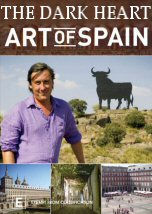
Art of Spain: The Dark Heart

   2008    Art
Graham-Dixon journeys to the country’s scorched centre to explore Spanish art of the 16th and 17th centuries. From the mystical world of El Greco to the tender genius of Velazquez, this was a moment so extraordinary it became known as the Golden Age. But beneath the glittering surface was a dark and savage heart. Travelling from the architectural jewel of Toledo to majestic Madrid, Andrew Graham-Dixon traces the rise and fall of the Spanish Empire, the brutal conquest of the New World, and the religious madness of the Inquisition, to discover how a history so violent could produce some of the most beautiful art ever seen.
Series: Art of Spain
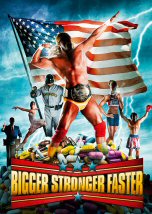
Bigger, Stronger, Faster

   2008    Culture
Americans define themselves in the superlative: we are the biggest, strongest, fastest country in the world. They reward above all else: winning – at sport, at business and at war. Metaphorically is a nation on steroids. Is it any wonder that so many of their heroes are on performance enhancing drugs? A film that unflinchingly explores our win-at-all-cost culture. Bigger, Stronger, Faster is a first-person narrative, including US Congressmen, professional athletes, medical experts and everyday gym rats. When you discover that your heroes have all broken the rules, do you follow the rules, or do you follow your heroes?

The Genius of Charles Darwin: The Fifth Ape

   2008    Culture
Richard Dawkins deals with some of the philosophical and social ramifications of the theory of evolution. Dawkins starts out in Kenya, speaking with palaeontologist Richard Leakey. He then visits Christ is the Answer Ministries, Kenya's largest Pentecostal church, to interview Bishop Bonifes Adoyo. Adoyo has led the movement to press Kenya's national museum to sideline its collection of hominid bones pointing to man's evolution from ape to human.[5] The collection includes the Turkana Boy discovered by Kamoya Kimeu, a member of a team led by Richard Leakey in 1984. Dawkins discusses social darwinism and eugenics, explaining how these are not versions of natural selection, and that 'Darwin has been wrongly tainted'. He then meets with evolutionary psychologist Steven Pinker to discuss how morals can be compatible with natural selection. He goes on to explaining sexual selection, with peafowls as an example. To find out whether sexual selection plays a role for altruism and kindness among humans, he visits women who are looking for sperm donors, as well as a sperm bank manager. Dawkins also explains kin selection and selfish genes.

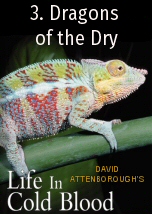
Dragons of the Dry

   2008    Nature
About 340 million years ago a brand new family of animals was evolving in the primeval swamps. They were to go one step further than the amphibians who had emerged onto dry and before them. For they would eventually completely cut their ties with water. They were the ancestors of todays lizards. They evolved scaly impermeable skins and moved up into the forests. They diversified into a multitude of different shapes and sizes. They developed signalling systems to communicate with one another. And they squabbled as animals do. For food they hunted insects that were already well established on the land in great numbers. And here without returning to water they produced their families. They powered their bodies not only with food but with the heat that they drew directly from the sun.
As they diversified so they spread into the harshest of the lands habitats. The baking waterless deserts which eventually they would come to dominate. Discover jacky lizards that wave, wrestling beaded lizards and the the world's smallest chameleon, which is no bigger than his thumbnail, and the biggest lizard in Australia.
Series: Life In Cold Blood

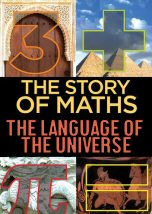
The Story of Maths The Language of the Universe

   2008    Science
This four-part British television series outlines aspects of the history of mathematics. Written and presented by University of Oxford professor Marcus du Sautoy, it is a co-production between the Open University and the BBC. In the first episode, Marcus du Sautoy in Egypt uncovers use of a decimal system based on ten fingers of the hand and discovers that the way we tell the time is based on the Babylonian Base 60 number system. In Greece, he looks at the contributions of some of the giants of mathematics including Plato, Archimedes and Pythagoras, who is credited with beginning the transformation of mathematics from a counting tool into the analytical subject of today. A controversial figure, Pythagoras’ teachings were considered suspect and his followers seen as social outcasts and a little be strange and not in the norm. There is a legend going around that one of his followers, Hippasus, was drowned when he announced his discovery of irrational numbers. As well as his work on the properties of right angled triangles, Pythagoras developed another important theory after observing musical instruments. He discovered that the intervals between harmonious musical notes are always in whole number intervals.
Series: The Story of Maths

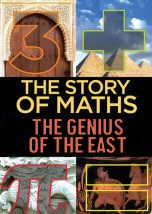
The Story of Maths The Genius of the East

   2008    Science
When ancient Greece fell into decline, mathematical progress stagnated as Europe entered the Dark Ages, but in the East mathematics reached new heights. In the second episode, Du Sautoy explores how maths helped build imperial China and discovers how the symbol for the number zero was invented in India. He also looks at the Middle Eastern invention of algebra and how mathematicians such as Fibonacci spread Eastern knowledge to the West.
Series: The Story of Maths