Three years in the making, Francis Whately’s film is a social and musical history of (probably) the world’s greatest music festival, as told by its principal curators, Michael and Emily Eavis, and many of the key artists who’ve appeared there between 1970 and 2019 – Billie Eilish, Thom Yorke, Florence Welch, Dua Lipa, The Levellers, Aswad, Orbital, Fatboy Slim, Linda Lewis, Noel Gallagher, Ed O’Brien, Chris Martin, Stormzy and more. Balancing the driving forces of social conscience and hedonism, Glastonbury has always been both a world apart and a barometer of the state of the nation. Looking at the hippie days, CND, the contribution of the travellers, dance music, Britpop, The Wall, the impact of television and the first black British solo headliner, this film takes viewers backstage and deep into the archive to reveal the forces that have driven this alternative nation between utopia and dystopia, the greatest night of your life and a muddy field in the middle of nowhere. This is not a chronological plod through the festival’s evolution so much as a thematic and story-driven exploration of the peaks and troughs, and the agonies and ecstasies, that have shaped Glastonbury’s 50 years and counting.
As the world enters a phase of aggressive competition over untapped ocean floor resources, countries are scrambling to stake their claims. The vast economic potential on offer has made the seabed the ultimate frontier in a new Age of Exploration. China's research vessels in particular have been active in waters right across the globe. Through our exhaustive analysis of huge volumes of Chinese ship tracking data, from sand dredgers to survey vessels, we piece together a puzzle that reveals a new hidden power struggle over increasingly critical submarine resources.
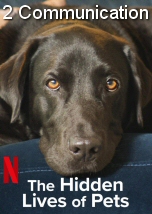
What If we could talk to animals? For as long as we've shared our lives with pets, we've been seeking better ways to communicate with them. In Washington state, Alexis Devine and her sheepadoodle Bunny think they've found a way of making communication a reality. Alexis went further than most, with a set of communication buttons, each programmed with a pre-recorded word to help humans and animals speak the same language. She has 90 buttons with which to express herself and even seems to combine them into simple sentences. Bunny is paving the way in pet communication. The undisputed masters of verbal communication are our pet parrots. They have mastered the art of vocal expression. Some parrots have even learned to fool devices designed to recognize human voices.
Our super friends in the animal world possess so many hidden superpowers. In the third episode we meet heat-seeking dogs, GPS-outfitted cats, and a sporty goldfish with squad goals. When we think we know them inside out, dogs surprise us with something new. what sensory superpower have dogs been hiding all this time? They have a thermal sensor in the tip of his nose. In the wild, a dog could use his thermal nose to spot the heat of a prey animal, allowing him to hunt even if his other senses were impaired. It also explains that uncanny knack for stealing a warm seat.
Mikel Arteta has been named Premier League Manager of the Month for March. And considering they were rock bottom in mid-September, having lost the first 3 matches, look where they are now. There's an argument to be made that Arteta should be manager of the season right now. But Arsenal suffer a string of defeats and struggle to find their form putting their top 4 place at risk. Losing vital players to injury means Mikel Arteta looks to his more inexperienced players to bring momentum back to the squad.
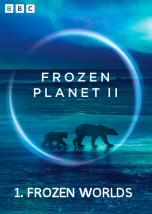
Journeying from pole to pole, The series 'Frozen Planet II' reveals surprising worlds that exist across the planet and the remarkable animals that make them their home. In a fragile world of beauty and hostility, nature finds a way to survive and thrive. David Attenborough explores a planet on the brink of major change. In the first episode, we begin our journey in the far south, in the most hostile place on earth, the frozen continent of Antarctica. After being raised on the ice in winter, emperor penguin chicks find themselves abandoned by their parents in spring. To survive, they must find their own way across the treacherous sea ice to the rich waters of the Southern Ocean. The waters surrounding Antarctica may be the richest of all, but they are also home to an exceptionally sophisticated predator, the killer whale. To reach their favored prey, Weddell seals, a family of killer whales have learnt to generate their own waves, washing the seals off their ice floes. It’s a technique that has been passed down over generations and is coordinated by the family matriarch, who can be over 100 years old. Leaving Antarctica and travelling north, we discover frozen habitats that are created by altitude. The greatest of these is the Himalaya, the tallest mountain range on earth, which contains so much ice and snow it is known as the third pole. In the shadow of the Himalaya lies a vast frozen grassy plain that is home to the fluffiest cat in the world, Pallas’s cat. It may have extremely dense fur, but if it’s to survive the Mongolian winter, it needs to catch lots of gerbils and voles. Easier said than done when you only have short legs and paws that are sensitive to the cold. North of the Great Steppe lies the boreal forest, which encircles the continents of North America, Europe and Asia, and remains frozen for six months of the year. Prowling these forests in the far east of Russia is the Siberian tiger, the largest cat in the world. In winter, it is on the lookout for black bears hibernating in caves, a high-risk strategy that only a cat of this size would attempt. Above the boreal forest, we cross into the Arctic Circle, where conditions become so extreme that trees can no longer grow. This is the tundra. Living here are relics of the last ice age, musk ox. In spring, their calves face a far greater danger than the cold, grizzly bears. Encounters can be brutal, but if just a few calves survive the gauntlet, the herd’s future is secure. To the north of the tundra is the Arctic Ocean, the only ocean that can completely freeze over. Living here is one of the most peculiar animals on earth, the hooded seal. Males have extraordinary inflatable noses, producing a bright red balloon out of their left nostrils. One male hopes this will make him irresistible. All of the frozen habitats share one thing in common: the threat posed by today’s climate change. Travelling to the island of Greenland, home to the largest body of ice in the northern hemisphere, we witness how global warming is melting its ice cap at faster rates than ever before, with profound consequences for global sea levels. Lastly, we visit the Arctic’s most iconic resident, the polar bear, as a mother bear struggles to provide for her cubs in a world of shrinking sea ice.







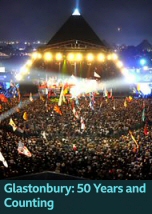








Balancing the driving forces of social conscience and hedonism, Glastonbury has always been both a world apart and a barometer of the state of the nation. Looking at the hippie days, CND, the contribution of the travellers, dance music, Britpop, The Wall, the impact of television and the first black British solo headliner, this film takes viewers backstage and deep into the archive to reveal the forces that have driven this alternative nation between utopia and dystopia, the greatest night of your life and a muddy field in the middle of nowhere.
This is not a chronological plod through the festival’s evolution so much as a thematic and story-driven exploration of the peaks and troughs, and the agonies and ecstasies, that have shaped Glastonbury’s 50 years and counting.