Agnes Varda, one of the leading lights of France's honored French New Wave cinema era, and professional photographer and muralist, J.R., partake on a special art project. Together, they travel around France in a special box truck equipped as a portable photo booth and traveling printing facility as they take photographs of people around the country. With that inspiration, they also create special colossal mural pictures of individuals, communities and places they want to honor and celebrate. Along the way, the old cinematic veteran and the young artistic idealist enjoy an odd friendship as they chat and explore their views on the world as only they can.
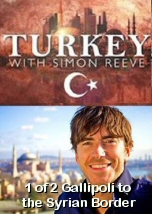
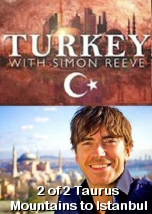
Travel writer Simon Reeve embarks upon two long-distance journeys across Turkey, exploring this dramatic and beautiful country that now finds itself at the centre of world events. In this programme, he visits Istanbul and the beaches and crystal clear waters of the Aegean Sea, before ending up at the war-torn border with Syria. In the region thought to have been the origin of the first vineyards, Simon meets a producer now trying to sell wine in a Muslim country with an increasingly conservative government. In Istanbul, he meets some of the people shaping modern Turkey, from loyal supporters of the nation's controversial and authoritarian president to the master builder constructing one of the world's largest mosques and the notorious billionaire cashing in on a Turkish property boom. Along Turkey's famous Turquoise Coast, Simon has a taste of luxury at the country's most expensive hotel, but discovers an industry on its knees as war in Syria and deadly terror attacks keep millions of holidaymakers away.
In the Taurus Mountains Simon stays with descendants of the original Turks, nomads known as Yoruks, whose lifestyle is under threat from the modern world and an increasingly religious government. They're not the only minority at odds with the authorities in Turkey; Simon sees first-hand the devastating effects of fighting in the country's Kurdish region. In an area where the government has detained foreign journalists, Simon gathers unique footage in the aftermath of a crackdown on Kurdish militants - the wholesale destruction of the historic centre of one of Turkey's oldest cities. Away from the conflict in the south, Simon heads towards the Black Sea coast. He meets a wildlife conservationist protecting Turkey's population of brown bears, and villagers who still communicate over long distances using an ancient bird language. In the country's capital he meets a victim of President Erdogan's authoritarian purge of people accused of complicity in the failed coup against him. Finally Simon's journey comes full circle when he returns to Istanbul - home to the new craze of 'Ottomania', a celebration of the vast empire that preceded modern Turkey. Simon visits the set of one of the world's most popular TV dramas - even getting a speaking role - based in the court of an Ottoman sultan
This episode tells the tale of what's broadly considered China's most creative dynasty - the Song (960-1279). Michael Wood heads to the city of Kaifeng, the greatest city in the world before the 19th century. Here in Twin Dragon Alley, locals tell him the legend of the baby boys who became emperors. He explores the ideas and inventions that made the Song one of greatest eras in world culture, helped by China's most famous work of art, the Kaifeng scroll, which shows the life of the city in around 1120. A chef makes Michael a recipe from a Song cookbook, while a guide to 'how to live happy, healthy lives for old people', published in 1085 and still in print, is discussed with local women doing their morning exercises. The Song was also a great era for scientific advance in China. Michael steers a huge working replica of an astronomical clock, made by China's Leonardo da Vinci. Then at a crunch Chinese Premier League match, Michael tells us the Chinese invented football! The golden age of the northern Song ended in 1127, when invaders sacked Kaifeng, but they survived in the south. At their new capital, Hangzhou, Wood joins locals dancing by the West Lake, while in the countryside he meets Mr Xie with his records of 40 generations of ancestors. The final defeat of the Song took place in a naval battle in the estuary of the Pearl River in 1279. When all was lost, rather than surrender to the Mongols, a loyal minister jumped into the sea with the young boy emperor in his arms. 'So ended the glory of the Song', Wood concludes, 'but a new age would arise... as in China, it always has!'.
China's last empire, the Qing, lasted from 1644 to 1912. It began in violence and war as the Manchus swept down from the north, but invaders became emperors, with three generations of one family ruling the country. Among them, Michael Wood argues, was China's greatest emperor - Kangxi.
Under the Qing, China doubled in size to include Xinjiang in the far west, as well as Mongolia and Tibet, creating the essential shape of China today. The new dynasty tolerated a diversity of cultures and religions, including Islam. In Kaifeng, Michael visits a women's mosque with a female imam, a delightful scene that ends with laughter and selfies! The Qing also undertook huge cultural enterprises. At a traditional printing house where the wood blocks are hand-carved, we see how the Complete Tang Poems were reproduced - all 48,000 of them. We travel through the wintry countryside to a remote village where a hardy audience watch open-air opera in the snow and visit a painter's studio, and 'storytelling' houses in Yangzhou. In the 18th century, China was arguably the greatest economy in the world, and we get a fabulous sense of the rich culture that came with prosperity. But then came the clash with the British, in the first Opium War, when a British expedition destroyed the Qing navy and extracted territory and trading rights. We leave with a glimpse of the future. 'Every dynasty has risen and declined,' says Michael, 'and has needed new life to regenerate, and this time the catalyst was the British.' Among the ports China ceded was an almost uninhabited island, Hong Kong, one of today's greatest financial centres, and Shanghai, a small town then but now one of the greatest cities in world.
Between 1850 and 1950, three cataclysmic revolutions shook China to the core, but out of them, today's China emerged. The film begins in Canton with the meeting of a US missionary and a Chinese student. Inspired by the Christian story and calling himself God's second son, Hong unleashed the bloodiest war of the 19th century, the Taiping Rebellion. As imperial China weakened, foreign influence grew. Treaty ports expanded, bringing growth and wealth, trams, railways and western sensibilities. But this provoked another surge of violence, the Boxer Rebellion, an attack against the foreigners, which was crushed by those same foreigners, who extorted a huge indemnity - $60 billion in today's money. Then in 1912, the empire fell, and many groups contested China's future. In World War I, China sent 100,000 men to the western front, only to be humiliated at Versailles when German colonies in China were handed to Japan. Between the two world wars, the disparity between rich and poor, city and countryside increased. We visit Hong Kong's Peninsular Hotel in the jazz age and then follow Mao on the Long March to Yan'an, the heartland of revolution. World War II came to China two years earlier than it did in the west. Wood talks to a survivor of the Japanese massacre of Nanjing in 1937 and then charts the triumph of the communists, before ending the story with Mao's death and the boom time of the last 30 years. The series ends with the warmth of the Chinese family and, at Beijing's Altar of Heaven, a final haunting glimpse of eternal China.






With that inspiration, they also create special colossal mural pictures of individuals, communities and places they want to honor and celebrate. Along the way, the old cinematic veteran and the young artistic idealist enjoy an odd friendship as they chat and explore their views on the world as only they can.