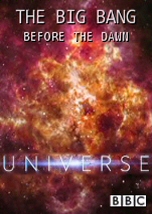
How did the universe come to be? Thanks to a series of discoveries, our most powerful space missions have unravelled 13.8 billion years of cosmic evolution and revealed the story of our universe from its birth all the way to the arrival of our nascent civilization. Our guide on this odyssey back to the dawn of time is light. Telescopes are time machines - by looking out into the distant universe, they open a window to the past. One telescope more than any other has helped us journey through the history of the universe: NASA’s Hubble Space Telescope. Remarkably, Hubble has even found one of the first galaxies ever to exist in the universe, which was born some 13.4 billion years ago. It's a discovery that hints at the beginnings of our own Milky Way. Vivid CGI brings this ancient galaxy to life, allowing us to witness for ourselves the first dawn. It was the beginning of a relationship between stars and planets that would, on a faraway world, lead to the origin of life - and ultimately to us. Hubble’s incredible discoveries have allowed scientists to piece together much of our cosmic story, but it cannot take us back to the most important moment in history: the Big Bang. For decades, the moment the universe began was the subject of pure speculation, but by combining astronomy and cosmology, scientists have finally found a way to put their theories to the test and study the momentous events that took place during the Big Bang. They can do this because the European Space Agency’s Planck space telescope has seen the afterglow of the Big Bang itself – something we call the Cosmic Microwave Background. The unparalleled detail Planck gave us has helped confirm something remarkable: the Big Bang may not be the beginning. There was a time before the dawn – a place beyond anything we can comprehend. Professor Brian Cox transports us back to the fraction of a second before the Big Bang, when the seeds of our universe were planted.
Scientists on the BICEP and Planck missions are attempting to solve a mystery about the earliest moments of our universe, by searching for patterns in the Cosmic Microwave Background (CMB). If successful, the missions will help to answer the biggest question anyone can ask: how did our universe begin?
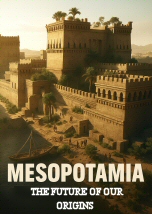
Embark on a breathtaking journey through time as the cradle of civilization is brought to life like never before. With stunning visuals and immersive storytelling, this documentary follows Iraqi-born writer Jawad Bashara as he returns to his homeland after decades in exile, determined to preserve the rich cultural legacy of ancient Mesopotamia—now under threat from war and destruction. Guided by cutting-edge archaeology and heartfelt personal reflection, the film explores the wonders of Sumer, Babylon, and Assyria while asking a profound question: how can understanding our ancient past help shape a better future? A visually spectacular and emotionally powerful experience that connects history, identity, and resilience—this is more than a documentary; it’s a rediscovery of who we are.
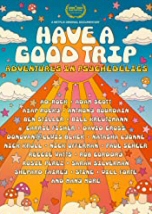
Mixing comedy with a thorough investigation of psychedelics, the film explores the pros, cons, science, history, future, pop cultural impact, and cosmic possibilities of hallucinogens. The documentary features comedic tripping stories from A-list actors, comedians, and musicians. Star-studded reenactments and trippy animations bring their surreal hallucinations to life. 'Have a Good Trip' tackles the big questions: Can psychedelics have a powerful role in treating depression, addiction, and helping us confront our own mortality? Are we all made of the same stuff? Is love really all we need? Can trees talk?
In just over 100 days, a new coronavirus has taken an unprepared world by storm, infiltrating every corner of the globe, sending entire nations into lockdown, killing thousands and infecting countless more. Across the world, governments are scrambling to react, hospitals are struggling to cope and an increasingly anxious public are starting to panic. The world's media is awash with data, information and misinformation. But what are the facts? What is COVID-19 and why is this strain of coronavirus so dangerous? What happens in our bodies when the virus attacks? How does this compare to previous pandemics? What do all the the numbers really mean, and how can data modelling help us look for an exit strategy? This programme investigates the scientific facts and figures behind the biggest public health crisis in living memory, and explores the latest research from the frontline of the medical and scientific fightback.
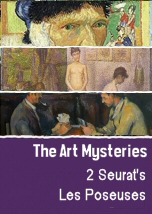
Hanging in the Barnes Foundation in Philadelphia, Seurat’s Les Poseuses is probably his least-known painting. It is also a picture brimming with codes and hidden meanings. It shows three nudes in the artist’s studio, but included in the background is Seurat’s famous masterpiece, A Sunday Afternoon on the Island of La Grande Jatte. Why is it there? What is it trying to say? Why two pictures at once? Waldemar Januszczak investigates.







Hubble’s incredible discoveries have allowed scientists to piece together much of our cosmic story, but it cannot take us back to the most important moment in history: the Big Bang. For decades, the moment the universe began was the subject of pure speculation, but by combining astronomy and cosmology, scientists have finally found a way to put their theories to the test and study the momentous events that took place during the Big Bang. They can do this because the European Space Agency’s Planck space telescope has seen the afterglow of the Big Bang itself – something we call the Cosmic Microwave Background. The unparalleled detail Planck gave us has helped confirm something remarkable: the Big Bang may not be the beginning. There was a time before the dawn – a place beyond anything we can comprehend. Professor Brian Cox transports us back to the fraction of a second before the Big Bang, when the seeds of our universe were planted.