Fathom is a visual and aural wonder of a documentary that follows researchers working to finally decode the communication of humpback whales. Dr. Ellen Garland and Dr. Michelle Fournet embark on parallel journeys on opposite sides of the world, as they seek to better understand whale culture and communication. The film uniquely reveals a deep commitment and reverence to the scientific process and the universal human need to seek answers about the world around us. From hypothesis to groundbreaking experiences in the field, 'Fathom' showcases the passion, curiosity, collaboration, perseverance and work it takes for leading scientists to make scientific discoveries.
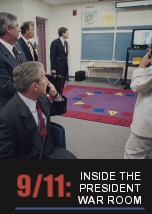
Twenty years ago, at 9.03am on 11 September 2001, America was under attack. President George W Bush was sitting in front of seven-year-olds in a classroom in Florida. Members of the president’s security detail thought the next plane could be aimed at them. The film is a claustrophobic clock-ticking thriller and tells the story of the presidency on arguably the most consequential day in recent history. As the clock ticks, the administration makes the greatest decisions of their lives: should they order fighter jets to shoot on American civilians? Should the president declare war or calm a battered nation? How would the leadership of the most powerful nation on earth grapple with the national and international implications? This documentary tells the definitive story of the Bush administration through 12 hours of that momentous day, with first-hand testimony from President Bush, Vice-President Dick Cheney, National Security Advisor Condoleezza Rice and other senior staff who had their hands on the levers of power. The events of that day led to two decades of conflict in Afghanistan and Iraq. As America and its allies now withdraw from Afghanistan and the Taliban resume control, this is the story of how it all began.
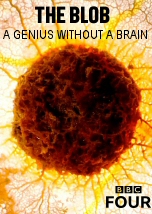
Not an animal, nor a plant, nor fungi, the blob is one giant single cell whose amazing capacities are leading pioneer scientists to a very new world – that of brainless intelligence. More commonly known as slime mould, this extraordinary one-billion-year-old organism challenges our understanding in many different fields. This fascinating documentary follows top experts from Europe, Japan and the US on a scientific investigation into this most surprising organism.
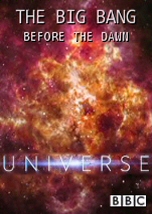
How did the universe come to be? Thanks to a series of discoveries, our most powerful space missions have unravelled 13.8 billion years of cosmic evolution and revealed the story of our universe from its birth all the way to the arrival of our nascent civilization. Our guide on this odyssey back to the dawn of time is light. Telescopes are time machines - by looking out into the distant universe, they open a window to the past. One telescope more than any other has helped us journey through the history of the universe: NASA’s Hubble Space Telescope. Remarkably, Hubble has even found one of the first galaxies ever to exist in the universe, which was born some 13.4 billion years ago. It's a discovery that hints at the beginnings of our own Milky Way. Vivid CGI brings this ancient galaxy to life, allowing us to witness for ourselves the first dawn. It was the beginning of a relationship between stars and planets that would, on a faraway world, lead to the origin of life - and ultimately to us. Hubble’s incredible discoveries have allowed scientists to piece together much of our cosmic story, but it cannot take us back to the most important moment in history: the Big Bang. For decades, the moment the universe began was the subject of pure speculation, but by combining astronomy and cosmology, scientists have finally found a way to put their theories to the test and study the momentous events that took place during the Big Bang. They can do this because the European Space Agency’s Planck space telescope has seen the afterglow of the Big Bang itself – something we call the Cosmic Microwave Background. The unparalleled detail Planck gave us has helped confirm something remarkable: the Big Bang may not be the beginning. There was a time before the dawn – a place beyond anything we can comprehend. Professor Brian Cox transports us back to the fraction of a second before the Big Bang, when the seeds of our universe were planted.
This widely praised by critics film was created with cooperation from Paul McCartney, Ringo Starr and the widows of John Lennon and George Harrison. Filmmaker Peter Jackson delves into invaluable footage archives to make a film that shows the truth about the Beatles recording together the album Let it Be, which had the working title of Get Back. The production employed film restoration techniques developed for Jackson's previous works on sixty hours of film footage and 150 hours of audio, spending four years in editing the series. The final cut covers 21 days in the studio with the Beatles and climaxes with the full 42-minute rooftop concert. In part I, the Beatles begin rehearsing at Twickenham Studios for what is at first meant to be a television special about the recording of their next album leading up to a live show at a location to be determined. During the sessions, Paul McCartney and George Harrison play some songs that would later appear on their respective solo albums. After seven days of rehearsals, Harrison abruptly leaves the group.
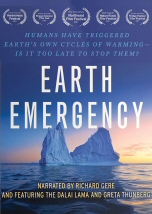
This revealing film examines how human activity is setting off dangerous warming loops that are pushing the climate to a point of no return - and what we need to do to stop them. With captivating illustrations, stunning footage and interviews with leading climate scientists as well as support from Greta Thunberg and the Dalai Lama, 'Earth Emergency' adds the missing piece of the climate puzzle. Narrated by Richard Gere, the film examines four of the major warming feedback loops threatening our planet: Forests, Permafrost, Albedo and Atmosphere.











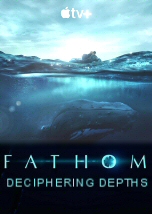




From hypothesis to groundbreaking experiences in the field, 'Fathom' showcases the passion, curiosity, collaboration, perseverance and work it takes for leading scientists to make scientific discoveries.