The final episode of the series ponders the fate of planet Earth. Neil deGrasse Tyson opens with a reflection on science and those who help us understand it: 'We all feel the weight of the shadows on our future, but in another time, every bit as ominous as our own, there were those who could see a way through the darkness to find a star to steer by.' The young Carl Sagan and Neil Tyson first discovered their passion for science at the NY World's Fairs of the past. We visit the dazzling Pavilions of the 2039 NY World's Fair, where problems we currently think intractable have been plausibly solved through public commitment and scientific imagination. And our baby is a woman now, with a baby of her own and a future bright with possibilities.
Yep, the Dennis Rodman episode. The eccentric forward shows his worth on the floor while stirring up drama away from it, including a wild midseason trip to Las Vegas. Rodman's attitude and energy help the team win. The Bulls struggle to push past the 'Bad Boy' Pistons, losing to Detroit in the 1988, 1989 and 1990 playoffs. There is no love lost between the Eastern Conference rivals.
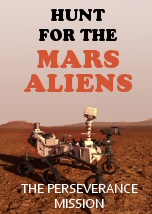
NASA's brand-new Mars rover is on the hunt for alien life, and with the help of cutting-edge engineering, scientists embark on a search for fossilized remains, which might prove the Red Planet was once home to a vast ocean and extraterrestrial life. Perseverance carries seven scientific instruments to study the Martian surface at Jezero crater. It carries several cameras and two microphones. The rover is accompanied by the helicopter Ingenuity, which will help Perseverance to scout for locations to study.
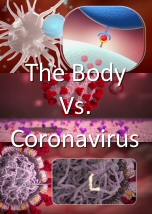
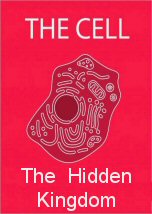
How can we cope with the tricky coronavirus now rampant worldwide? As the pandemic tightens its grip on the world, there are important unanswered questions about this novel virus: Why does this infection spread so rapidly from people with no symptoms? Why do some people become critical while others don't? Will a definitive treatment be found? The underlying key to these questions lie in our immune system. Immune cells are microscopic warriors, combating viruses and another pathogens. Through the high-tech 'eyes' of next-generation microscopes and computer-generated imagery, we will see how our immune defense corps combat against microbes and what mechanism is expected to help develop treatment.
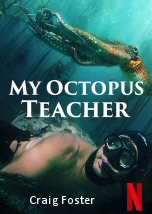
A filmmaker forges an unusual friendship with an octopus living in a South African kelp forest, learning as the animal shares the mysteries of her world. After years of swimming every day in the freezing ocean at the tip of Africa, Craig Foster meets an unlikely teacher: a young octopus who displays remarkable curiosity. Visiting her den and tracking her movements for months on end he eventually wins the animal's trust and they develop a never before seen bond between human and wild animal.
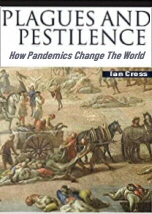
COVID-19 is far from the first pandemic to wreak havoc in the world. A long line of infectious diseases have devastated and in some cases destroyed entire societies. Almost all of them started in animals and made the jump to humans. The Black Death spread across Europe and Asia in the 14th century leaving millions dead in its wake. Between the 15th and 18th centuries, European colonists brought smallpox to the Americas, the Pacific region and to Australia. In Europe, the 17th century saw a series of major epidemics. And at the end of the First World War, more people died of the Spanish flu than on the battlefield. This documentary examines the causes of these epidemics - whether it be lack of hygiene, interaction with animals, overcrowding, or the growth of cities - and how people travelling helped to spread disease and promote pandemics. It also sheds a light on the impact these infectious diseases have had on politics and societal change. Over the centuries, scientists managed to develop treatments and medicines to help control or even eradicate infectious diseases. Virologists are facing that task again with the coronavirus, as the world frantically searches for ways to overcome a pandemic which threatens our modern way of life.








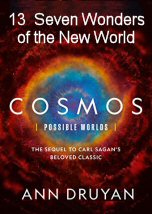




The young Carl Sagan and Neil Tyson first discovered their passion for science at the NY World's Fairs of the past. We visit the dazzling Pavilions of the 2039 NY World's Fair, where problems we currently think intractable have been plausibly solved through public commitment and scientific imagination. And our baby is a woman now, with a baby of her own and a future bright with possibilities.