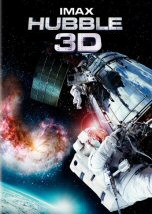
Now in HD and with a new 3D version. In May 2009, NASA astronauts embark on a mission to perform maintenance and repairs to the Hubble Space Telescope. As they go about their tasks, danger and beauty are never far away. The nature of space indicates that even the simplest routine can go fatally awry, while amazing photographs taken by the telescope celebrate the wonder of Earth's celestial surroundings. An IMAX 3D camera chronicled the effort of 7 astronauts aboard the Space Shuttle Atlantis to repair the Hubble Space Telescope.
Learn about what the moon is made and its formation; how it played a role in the evolution of life on Earth; and the future plans of NASA to establish a permanent base on the surface. Know more about moons on other planets.
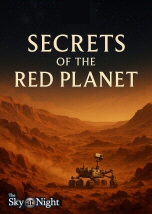
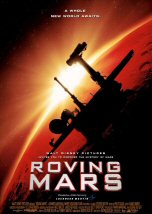
Join the Mars rovers Spirit and Opportunity for an awe-inspiring journey to the surface of the mysterious red planet. Through the eyes of these two intrepid, death-defying rovers, and with NASA scientists and engineers at your side, you’ll see Mars in a way no one ever has before. You’ll feel what it is like to stand on the startling surface of the planet that’s intrigued mankind for eons. And you’ll uncover its ultimate mystery: Is there life on Mars? Roving Mars – it’s the ride of a lifetime.
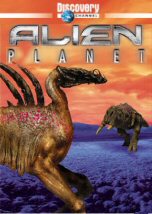
The computer animated drama takes place on Darwin IV, a planet 6.5 light years from earth, with 2 suns and 60% of Earth's gravity. Earth sends a pilot mission with three probes. This robotic fleet is responsible for finding and assessing any life forms on Darwin IV. The probes soon find themselves in the middle of a developed ecosystem teeming with diversity of life of all sizes. "Alien Planet" is motivated by real science missions, such as the NASA Origins Program and the NASA / JPL Planet-Finder Mission, as well as the European Space Agency's Darwin Project. It is a cosmic expedition along side Stephen Hawking, Michio Kaku, Jack Horner, Craig Venter, and George Lucas, and NASA's Chief Scientist Jim Garvin. No longer just the domain of science fiction, "Alien Planet" dramatizes an exciting and possible answer to what alien life really looks like and when we'll find it.
Beginning with the separation of the fuzzy thinking and pious fraud of astrology from the careful observations of astronomy, Sagan follows the development of astronomical observation. Beginning with constellations and ceremonial calendars (such as those of the Anasazi), the story moves to the debate between Earth and Sun-centered models: Ptolemy and the geocentric worldview, Copernicus' theory, the data-gathering of Tycho Brahe, and the achievements of Johannes Kepler (Kepler's laws of planetary motion and the first science-fiction novel).
Many argue that flying saucers and other extra-terrestrial space ships continuously visit the earth. If that were true, what kinds of technologies would such alien spacecraft require? And do eyewitness reports of UFO sightings jibe with modern theories of how interstellar travel might be possible? Authors, astronomers and theoretical physicists weigh in with the blueprints for inertia-canceling devices, nuclear-powered craft, antimatter propulsion systems and even warp drives. Based on Einstein's theories and countless scientific studies, we'll find out how these visitors might bridge the vast distances between the stars. And if they could survive such hazardous journeys, are they flesh and blood or intelligent machines?















An IMAX 3D camera chronicled the effort of 7 astronauts aboard the Space Shuttle Atlantis to repair the Hubble Space Telescope.