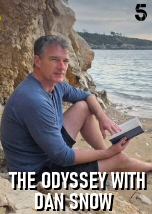
Dan Snow follows the route of Odysseus across the Mediterranean, beginning with the world of Troy and the Bronze Age warriors who inspired Homer’s epic. Sailing through Greece and the Ionian islands, he explores places traditionally associated with the Cyclops, Circe, the Sirens and other episodes of the hero’s long journey home, while examining the archaeology and historical evidence behind the legends. Along the way, Dan asks how much of the story may preserve memories of real places, peoples and events from the ancient Greek world. His voyage ends at Ithaca, where Odysseus’s struggle to return to his family reaches its climax. Combining myth, history, archaeology and travel, this documentary reveals how one ancient story became one of the most influential adventures ever told.
Few managers have changed football as dramatically—or divided opinion as fiercely—as José Mourinho. From his explosive arrival at Chelsea in 2004, where confidence, tactical brilliance and relentless ambition quickly earned him the name The Special One, this documentary follows the rise of a coach who turned winning into an obsession and himself into one of the most recognizable figures in world sport. Frank Lampard, John Terry, Sir Alex Ferguson and other key voices recall the intensity of those early years, while Mourinho reflects on the victories, power struggles and confrontations that shaped both his teams and his reputation. The story then moves through his extraordinary triumphs at Inter Milan and the ferocious challenge of Real Madrid, where he set out to break Barcelona’s dominance and reignite one of football’s greatest rivalries. Zlatan Ibrahimović, Luís Figo, Iker Casillas, Samuel Eto’o and others offer an insider’s view of a manager capable of inspiring fierce loyalty, provoking bitter conflict and transforming the mentality of entire clubs. Presented here with all three episodes combined into a single video, viewers can follow the complete journey without interruption—from the birth of “The Special One” to the battles, trophies, controversies and personal sacrifices that made Mourinho one of football’s most successful and compelling managers.
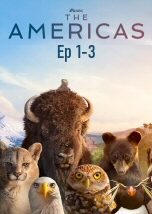
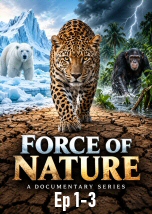
Across two continents and from one pole to the other, this spectacular wildlife series explores the wonders, mysteries and fragilities of the Americas. Narrated by Tom Hanks, it reveals extraordinary animal behaviour, dramatic struggles for survival and some of the planet’s most varied landscapes, from frozen wilderness and ancient forests to deserts, tropical seas and vast grasslands. Filmed over five years and more than 180 expeditions, the series combines intimate wildlife stories with remarkable natural spectacles, showing both the resilience of life and the delicate balance on which these ecosystems depend. In the first three episodes, the journey begins along the Atlantic Coast, where wild horses battle, bald eagles pursue ospreys, sharks move among great shoals of fish, raccoons adapt to city life and black bears search ancient forests for food. It then heads south into Mexico, where deserts meet the tropics and pygmy owls, hunting orcas, orchid bees and mysterious creatures in flooded caves reveal a hidden world of astonishing diversity. Finally, the Wild West brings an even harsher test of survival, as coyotes face a snowbound Yellowstone, hundreds of rattlesnakes emerge from their winter refuges, woodpeckers compete to store food, bison clash across the Great Plains and immense gatherings of cranes continue one of nature’s most ancient migrations.
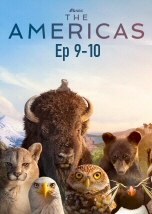
In the final two episodes, the journey reaches the Pacific edge of North America and the remote wilderness of Patagonia, two spectacular regions shaped by powerful oceans, towering forests and extreme weather. Along the West Coast, wolves comb the shoreline for food, sea otters battle crashing surf, blue whales gather in a rare display of speed and movement, and giant Pacific octopuses devote everything to protecting the next generation. High in the redwood canopy, even tiny salamanders perform extraordinary leaps to survive, revealing how life has adapted to one of the continent’s most dramatic coastal environments. The series then travels to the far south of the Americas, where Patagonia delivers a fittingly wild finale. Pumas stalk guanacos through snowy mountains, rockhopper penguins fight their way through violent waves to reach their colonies, giant stag beetles climb immense trees to compete for mates, and elephant seals clash for dominance along the coast. In one of the most remarkable scenes, a family of orcas passes down a dangerous hunting technique from one generation to the next, showing how survival here depends not only on strength, but also on experience, cooperation and learning.
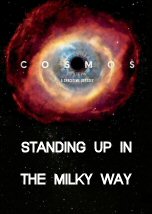
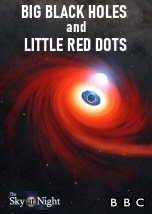
Professor Brian Cox joins Chris Lintott and the team to investigate one of the most intriguing new mysteries in modern astronomy. Observations from the James Webb Space Telescope have revealed hundreds of compact, extraordinarily bright objects known as “little red dots”, appearing less than a billion years after the Big Bang. Many may hide rapidly growing supermassive black holes, raising a profound question: how could such enormous objects have formed so early in cosmic history? The journey begins with the strange physics of black holes themselves, from event horizons and singularities to the supermassive black hole at the centre of the Milky Way and the gigantic black hole in the galaxy M87. With cosmologist Emma Chapman and Professor Sadegh Khochfar, the programme explores radical explanations for these ancient monsters, including primordial black holes born soon after the Big Bang and massive black holes formed directly from collapsing clouds of gas, bypassing stars altogether. Cutting-edge computer simulations recreate the first billion years of the universe and reveal how the earliest galaxies and black holes may have emerged within the cosmic web. These discoveries are forcing astronomers to reconsider not only how supermassive black holes grow, but how galaxies and the early universe itself evolved.
As climate chaos intensifies, animals across the planet are being pushed into conditions their bodies and instincts were never designed to face. Floods arrive where drought once ruled, storms grow stronger, seas warm and familiar habitats disappear. Narrated by Andrew Lincoln, this six-part natural history series follows wildlife confronting these extremes at close range, revealing not only the destructive power of a changing climate but also the extraordinary ingenuity, resilience and adaptability animals use to survive. In the first three episodes, the struggle begins on an increasingly extreme Earth. Burrowing owls on the North American Great Plains race to protect their chicks from tornadoes, cheetahs in Kenya battle record floods, polar bears search for vanishing sea ice and chimpanzees survive severe drought by digging their own filtered water holes. Rising waters then transform entire ecosystems: pygmy elephants face monsoon floods in Borneo, a platypus is swept into a violent flash flood in Australia, and a lone lioness in the Kalahari turns an unexpected flood into a rare hunting opportunity. Finally, along the world’s coasts, Caribbean flamingos confront a category-five hurricane, anole lizards cling on through violent winds, California sea otters struggle through huge storms and collapsing kelp forests, while clownfish on the Great Barrier Reef face a marine heatwave that threatens the very anemones on which their families depend.











Along the way, Dan asks how much of the story may preserve memories of real places, peoples and events from the ancient Greek world. His voyage ends at Ithaca, where Odysseus’s struggle to return to his family reaches its climax. Combining myth, history, archaeology and travel, this documentary reveals how one ancient story became one of the most influential adventures ever told.