Bitcoin, the beautiful anonymity of cash, but cash that wasn't printed by governments. Instead, it was made by a bit of code, powered by citizens of the internet, and you could trust it. Today, anyone can buy cryptocurrency. A few signups, type in your credit card number, and trade in your money for digital cash. And with a few more steps, you can use Bitcoin to buy what the majority of Bitcoin is spent on: Illegal services. Virtual currencies can pose challenges for law enforcement, given the appeal they have among those seeking to conceal. Is digital cash the next revolution? Learn about this anonymous currency and why it's so coveted.
Two and a half thousand years ago, the Greek philosopher Socrates worried that the wide use of writing would have a negative impact on people's minds. He said that writing would create forgetfulness, because people will not use their memories. They would trust the external written characters and not remember themselves. In a world with an ever-growing tech industry, Michael Stevens tries to find out what effect technology has on our brains. He finds Technology isn't just changing our lives, it's changing our brains. In his experiments he tests what just 10 days of gaming does to things like our spatial memory.
The film tells the story of an overlooked genius: Claude Shannon. In a blockbuster paper in 1948, Claude Shannon introduced the notion of a 'bit' and laid the foundation for the information age. His ideas ripple through nearly every aspect of modern life, influencing such diverse fields as communication, computing, cryptography, neuroscience, artificial intelligence, cosmology, linguistics, and genetics. But when interviewed in the 1980s, Shannon was more interested in showing off the gadgets he'd constructed -- juggling robots, a Rubik's Cube solving machine, a wearable computer to win at roulette, a unicycle without pedals, a flame-throwing trumpet -- than rehashing the past. Mixing contemporary interviews, archival film, animation and dialogue drawn from interviews conducted with Shannon himself, The Bit Player tells the story of an overlooked genius who revolutionized the world, but never lost his childlike curiosity.
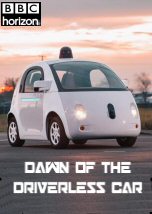
The car has shrunk the world, increased personal freedom and in so many ways expanded our horizons, but there is a flipside. Fumes from car exhausts have helped to destroy our environment, poisoned the air we breathe and killed us in far more straightforward ways. But all that is going to change. Enter a world where cars can drive themselves, a world where we are simply passengers, ferried about by wholesome green compassionate technology which will never ever go wrong. And it is almost here. Explore the artificial intelligence required to replace human drivers for cars themselves, peers into the future driverless world and discovers that, despite the glossy driverless PR (and assuming that they really can be made to work reliably), the reality is that it might not be all good news. From the ethics of driverless car crashes to the impact on jobs, it might be that cars are about to rise up against us in ways that none of us are expecting.
Since 2010, Artificial Intelligence is revolutionized by deep learning, neural networks that discern complex patterns in huge quantities of data and react in real time. A.I. is a primal force, like fire. The same fire that warms us can incinerate our homes; A.I. could enslave mankind -- or, join us in a grand alliance to reach the stars.
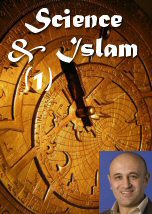
Physicist Jim Al-Khalili travels through Syria, Iran, Tunisia and Spain to tell the story of the great leap in scientific knowledge that took place in the Islamic world between the 8th and 14th centuries. Its legacy is tangible, with terms like algebra, algorithm and alkali all being Arabic in origin and at the very heart of modern science - there would be no modern mathematics or physics without algebra, no computers without algorithms and no chemistry without alkalis. For Baghdad-born Al-Khalili, this is also a personal journey, and on his travels he uncovers a diverse and outward-looking culture, fascinated by learning and obsessed with science. From the great mathematician Al-Khwarizmi, who did much to establish the mathematical tradition we now know as algebra, to Ibn Sina, a pioneer of early medicine whose Canon of Medicine was still in use as recently as the 19th century, Al-Khalili pieces together a remarkable story of the often-overlooked achievements of the early medieval Islamic scientists.










Is digital cash the next revolution? Learn about this anonymous currency and why it's so coveted.