




Last Watched

"Revolution"  Sort by

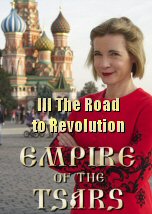
The Road to Revolution

   2017    History
The years 1825-1918 were bloody and traumatic, a period when four tsars tried - and failed - to deal with the growing pressure for constitutional reform and revolution. In 1861, millions of enslaved serfs were freed by the Tsar-Liberator, Alexander II. But Alexander paid the ultimate penalty for opening the Pandora's box of reform when he was later blown up by terrorists on the streets of St Petersburg. Elsewhere, there was repression, denial, war and - in the case of the last tsar, Nicholas II - a fatalistic belief in the power of God, with Nicholas's faith in the notorious holy man Rasputin being a major part in his undoing. Lucy Worsley also details the chilling murder of Nicholas and his family in 1918, and asks whether all of this horror have been avoided.
Series: Empire of the Tsars
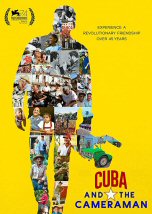
Cuba and the Cameraman

   2017    Culture
For the past 42 years Director Jon Alpert has been following Fidel Castro and three Cuban families affected by his policies. Their lives put us right in the roller coaster of the Cuban Revolution. Because of Alpert's unique access to the island, and the trust and friendships earned over decades, this film is a candid and revealing never-before-seen portrait of Cuba.

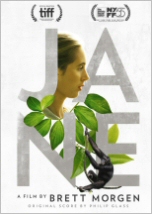
Jane Goodall

   2017    History
Drawing from over 100 hours of never-before-seen footage that has been tucked away in the National Geographic archives for over 50 years, award-winning director Brett Morgen tells the story of Jane Goodall, a woman whose chimpanzee research challenged the male-dominated scientific consensus of her time and revolutionized our understanding of the natural world.
Set to a rich orchestral score from legendary composer Philip Glass, the film offers an unprecedented, intimate portrait of Jane Goodall - a trailblazer who defied the odds to become one of the world's most admired conservationists, her early explorations and research in Tanzania, the relationship with her cameraman and husband Hugo Van Lawick, and the chimpanzees that were the subject of her study.

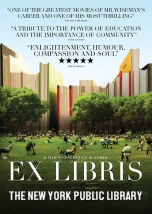
Ex Libris: The New York Public Library

   2017    Culture
The film takes viewers behind the scenes of one of the world’s greatest institutions of learning. The film examines how this legendary establishment has continued to go about its regular activities while adapting to the digital revolution. 'Ex Libris: The New York Public Library' explains how libraries inform and educate in many ways: books, concerts, conferences, classes and much more. This library strives to inspire the study of advanced knowledge and to strengthen the community.

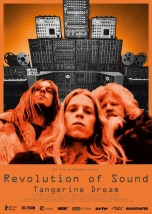
Revolution of Sound: Tangerine Dream

   2017    Art
Edgar Froese, band leader of Tangerine Dream and pioneer of electronic music, is on a lifelong mission to find the ultimate sound. His constant quest takes him and his fellow band members to worldwide success, all the way to the Hollywood studios in Los Angeles. At his death in January 2015, Edgar Froese leaves a legacy of 48 years of music history.
The film shows previously unreleased footage shot by the band leader himself: For the first time, we see the band backstage, on tour in Europe and the US, at photoshoots with Jim Rakete or on holiday at the seaside. Records and interviews with his wife Bianca Froese-Acquaye, with band members, close associates and fellow artists map the unique history of Tangerine Dream: a tribute to the musician Edgar Froese and the era of electronic music.

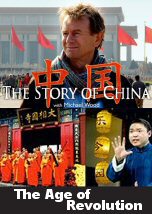
The Age of Revolution

   2016    History
Between 1850 and 1950, three cataclysmic revolutions shook China to the core, but out of them, today's China emerged. The film begins in Canton with the meeting of a US missionary and a Chinese student. Inspired by the Christian story and calling himself God's second son, Hong unleashed the bloodiest war of the 19th century, the Taiping Rebellion.
As imperial China weakened, foreign influence grew. Treaty ports expanded, bringing growth and wealth, trams, railways and western sensibilities. But this provoked another surge of violence, the Boxer Rebellion, an attack against the foreigners, which was crushed by those same foreigners, who extorted a huge indemnity - $60 billion in today's money.
Then in 1912, the empire fell, and many groups contested China's future. In World War I, China sent 100,000 men to the western front, only to be humiliated at Versailles when German colonies in China were handed to Japan. Between the two world wars, the disparity between rich and poor, city and countryside increased. We visit Hong Kong's Peninsular Hotel in the jazz age and then follow Mao on the Long March to Yan'an, the heartland of revolution.
World War II came to China two years earlier than it did in the west. Wood talks to a survivor of the Japanese massacre of Nanjing in 1937 and then charts the triumph of the communists, before ending the story with Mao's death and the boom time of the last 30 years. The series ends with the warmth of the Chinese family and, at Beijing's Altar of Heaven, a final haunting glimpse of eternal China.
Series: The Story of China
How the Universe Works

How the Universe Works

2014  Science
Nature Great Events

Nature Great Events

2009  Nature
Leaving Neverland

Leaving Neverland

2019  Culture
Inside the Medieval Mind

Inside the Medieval Mind

2008  History
Ancient Rome

Ancient Rome

2006  History
Ancient Apocalypse

Ancient Apocalypse

2024  History