Historian Bettany Hughes journeys across ancient Anatolia, modern-day Türkiye, to uncover some of the earliest foundations of civilisation. From Göbeklitepe and Karahantepe to Sardis, Gordion, Ephesus and Cappadocia, she explores how the first settled communities developed agriculture, religion, trade and urban life, while remarkable discoveries such as early monumental buildings, ancient weapons and life-sized human sculptures reveal a world far more sophisticated than once imagined. Moving through landscapes where myth and history constantly overlap, Hughes follows the rise of kingdoms and empires, encounters the world of King Midas, and traces how Anatolia became a crossroads connecting cultures across continents. Presented here with both episodes combined into a single video, the series offers a sweeping archaeological journey into the places where some of humanity’s most important ideas, beliefs and institutions first began to take shape.
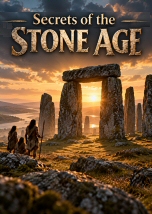
Around 12,000 years ago, humans began one of the most important transformations in history: the shift from hunting and gathering to farming and permanent settlements. Archaeological sites such as Gobekli Tepe reveal how these early communities lived, what they believed and how agriculture transformed diet, population and social life. Across Europe and the Middle East, prehistoric societies also created huge stone monuments, tombs and ceremonial sites, moving blocks weighing many tons with surprisingly limited technology. Presented here with both episodes combined into a single video, the documentary explores the birth of farming, organized communities, belief systems and monumental architecture during the Stone Age.
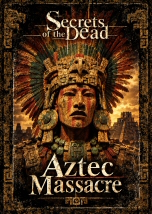
A mass grave at Zultepec, Mexico, containing more than 400 mutilated skeletons forces archaeologists to reconsider one of the most familiar stories of the Spanish conquest. Led by Aztec specialist Elizabeth Baquedano, the investigation follows forensic clues hidden in skulls, bones and artifacts to identify the victims and reconstruct what happened. Some remains prove to be European, including women, while Spanish-made iron objects and evidence of horses link the dead directly to the conquistadors who entered Mexico in the early sixteenth century. The evidence reveals a far more violent confrontation than the traditional image of an easy Spanish victory. Captured Spaniards and members of their entourage appear to have been imprisoned, ritually sacrificed, dismembered and, in some cases, consumed as part of ceremonial practices. By combining archaeology, forensic anthropology and Aztec codices, the documentary shows that indigenous resistance to the conquistadors could be organized, successful and terrifyingly effective, transforming Zultepec into crucial physical evidence of a conflict that history had long oversimplified.
Dan Snow follows the route of Odysseus across the Mediterranean, beginning with the world of Troy and the Bronze Age warriors who inspired Homer’s epic. Sailing through Greece and the Ionian islands, he explores places traditionally associated with the Cyclops, Circe, the Sirens and other episodes of the hero’s long journey home, while examining the archaeology and historical evidence behind the legends. Along the way, Dan asks how much of the story may preserve memories of real places, peoples and events from the ancient Greek world. His voyage ends at Ithaca, where Odysseus’s struggle to return to his family reaches its climax. Combining myth, history, archaeology and travel, this documentary reveals how one ancient story became one of the most influential adventures ever told.
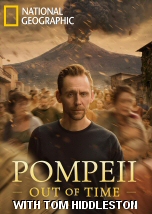
Tom Hiddleston returns to the ancient city that first awakened his fascination with the Roman world, determined to uncover a story far more human than the familiar tale of sudden destruction. Drawing on new archaeological evidence, expert analysis and vivid dramatic reconstruction, he follows three real Romans through the final hours before and during the eruption of Mount Vesuvius: Avianius, a headstrong young apprentice searching for his mother; Julia Felix, a wealthy and independent businesswoman responsible for an entire household; and a veteran soldier who risks everything to help others escape. As earthquakes intensify, ash begins to fall and burning avalanches race towards Pompeii and Herculaneum, every decision becomes a struggle between fear, loyalty and survival. Who understood the warning signs? Who fled, who stayed behind—and whose courage gave others a chance to live? Presented here as one uninterrupted feature containing all three episodes, this extraordinary journey allows viewers to experience the complete disaster from its first tremors to its devastating final surge, revealing Pompeii not simply as a city of death, but as an unforgettable story of ordinary people facing the end of their world.
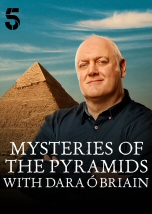
Against the awe-inspiring backdrop of Egypt’s royal pyramids, a journey unfolds that challenges everything we think we know about these ancient giants. Blending rigorous scientific investigation with a sharp sense of curiosity, the exploration dives deep into how these monumental structures were truly built—and why they continue to captivate both scholars and alternative theorists alike. As each layer of myth is peeled back, new questions emerge, revealing a story far more complex and fascinating than the legends suggest. Guided by expert insights and surprising discoveries, the narrative moves between evidence and speculation, confronting controversial ideas while uncovering the remarkable ingenuity of ancient civilizations. What begins as a search for answers quickly becomes a gripping intellectual adventure—one that keeps you questioning, rethinking, and wanting to uncover the next hidden truth behind one of humanity’s greatest mysteries.


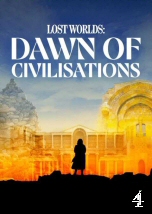






Moving through landscapes where myth and history constantly overlap, Hughes follows the rise of kingdoms and empires, encounters the world of King Midas, and traces how Anatolia became a crossroads connecting cultures across continents. Presented here with both episodes combined into a single video, the series offers a sweeping archaeological journey into the places where some of humanity’s most important ideas, beliefs and institutions first began to take shape.