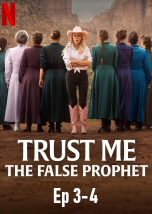
In the final two episodes, the investigation reaches its most intense and disturbing stage as former followers finally begin revealing the full extent of the abuse, fear, and manipulation hidden inside Sam’s inner circle. A key witness opens up to Christine with shocking testimony about Sam’s crimes, while law enforcement closes in after a tense traffic stop in Flagstaff exposes how dangerous the situation has become. As the FBI prepares a major operation, the series builds toward a dramatic confrontation that changes everything for the Samuelites. Even behind bars, Sam refuses to lose control. The final episodes reveal an increasingly unbelievable chain of events involving manipulation, blind devotion, and a brazen kidnapping plot orchestrated from prison itself. At the same time, the documentary follows the emotional struggle of former followers trying to rebuild their lives after years of psychological control. These episodes deliver the most powerful revelations of the series, combining true crime, cult psychology, and emotional testimonies in a finale that feels both disturbing and deeply compelling.
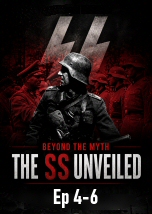
In the final three episodes of the series, the image of elite discipline surrounding the SS is stripped away to reveal a far darker and more disturbing reality. Behind the façade of military excellence lay poorly trained recruits driven not by honor, but by blind ideology and a complete absence of remorse. As their role expands from the battlefield to the brutal control of concentration camps, the narrative exposes how ordinary men became perpetrators of systematic violence, carrying out atrocities with chilling efficiency while maintaining the appearance of normal lives beyond their crimes. These episodes push further into the unsettling contrast between barbarity and everyday existence, showing how members of the SS could participate in unimaginable acts and then return to social settings as if nothing had happened. The story then draws a direct line to the present, confronting the uncomfortable truth that, despite overwhelming historical evidence, remnants of admiration and myth still persist in certain circles. It’s a gripping and unsettling conclusion that forces viewers to question how such distortion of memory can endure—and why it still matters today.
Love on the Spectrum returns with a powerful Season 3, diving even deeper into the real-life experiences of young adults on the autism spectrum as they navigate the unpredictable world of romance. This season introduces a bold new narrative twist — the impact of Social Media, Fame, and Online Expectations on neurodiverse relationships. Set against the backdrop of viral attention and digital pressure, the new cast members are more open, more vulnerable, and more relatable than ever. Their journeys are as heartwarming as they are eye-opening, making Season 3 an unmissable chapter in this groundbreaking series. Authenticity, Vulnerability, and Unexpected Connection take center stage like never before. In the first three episodes, we follow Connor on his very first date after receiving a message from a fan, while Madison, a cheerful artist who loves Disney and Christmas, dives into blind dating for the first time. Returning favorite James tries speed dating with his trademark humor and vulnerability. Meanwhile, Dani and Adan celebrate one year together, Pari dreams of finding love on her own terms, and Tanner continues searching for a real connection. With honesty, emotion, and expert guidance, these episodes capture the beauty, the challenges, and the hope in every step of the journey to love.
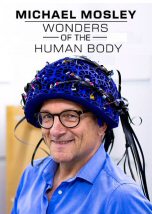
In this film, which spans all episodes of the series, Michael Mosley takes a fascinating journey around the human body to find out how it works. What makes our bodies work and what is really happening on the inside when they go wrong? Using the latest science and medical innovation, Michael delves inside our bodies to reveal the extraordinary marvels which lie within. In each episode, Michael is on the case to find out about a new breakthrough which is dramatically changing how we view or understand the human body. From how new organs might soon be 3D printed to gene therapies that promise to reverse blindness. From test that could predict heart problems years in advance to cold water swimming benefits and risks. Along the way, Michael delivers extra insight in his inimitable way, by offering up his own body for ground-breaking demonstrations. Made by an award winning science and factual production team, this series is packed full of amazing visuals and fascinating facts.
The film documents the English heavy metal band Black Sabbath's final show of their farewell concert tour, The End Tour. The performance was held at the Genting Arena in Birmingham, England, hometown of the band's founding members: vocalist Ozzy Osbourne, guitarist Tony Iommi, bassist Geezer Butler, and drummer Bill Ward. Osbourne, Iommi, and Butler performed this final concert with session drummer Tommy Clufetos in place of Ward, as well as Adam Wakeman on keyboards and guitar. The concert opens with a performance of the song 'Black Sabbath'. The film goes on to show the band performing 'Fairies Wear Boots', 'Under the Sun/Every Day Comes and Goes', 'Into the Void', 'Snowblind', 'War Pigs', 'Hand of Doom', 'Iron Man', and 'Children of the Grave'; at the end of the setlist, the band performs the song 'Paranoid' as an encore. Interspersed with the final concert are interviews with Osbourne, Iommi, and Butler, in which they talk about their careers and past drug addictions. Additionally, Iommi's 2012 lymphoma diagnosis, which impacted the band's 2012–14 reunion tour and the recording of their 2013 album 13, is discussed. The film also features footage of 'The Angelic Sessions'—the band's final studio recordings, which took place in the days following the final show. Of these recordings, the film shows Osbourne, Iommi, and Butler performing 'The Wizard', 'Wicked World', and 'Changes'.
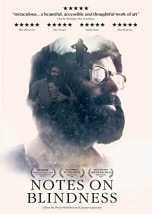
In the summer of 1983, just days before the birth of his first son, writer and theologian John Hull went blind. In order to make sense of the upheaval in his life, he began keeping a diary on audiocassette. Upon their publication in 1990, Oliver Sacks described the work as 'the most extraordinary, precise, deep and beautiful account of blindness I have ever read. It is to my mind a masterpiece.' With exclusive access to these original recordings, Notes On Blindness encompasses dreams, memory and imaginative life, excavating the interior world of blindness.
















Even behind bars, Sam refuses to lose control. The final episodes reveal an increasingly unbelievable chain of events involving manipulation, blind devotion, and a brazen kidnapping plot orchestrated from prison itself. At the same time, the documentary follows the emotional struggle of former followers trying to rebuild their lives after years of psychological control. These episodes deliver the most powerful revelations of the series, combining true crime, cult psychology, and emotional testimonies in a finale that feels both disturbing and deeply compelling.