In the final two episodes, the experiment moves from theory to real life as the twins are forced to take full control of their food choices after moving out on their own. Cooking becomes a daily challenge, exposing how habits, convenience, and culture shape what we eat. At the same time, innovators pushing plant-based alternatives step into the spotlight, as growing concerns around animal products raise urgent questions about health and sustainability. As the study reaches its conclusion, the results are finally revealed. Detailed analyses of weight, gut health, and brain function confront the twins with clear, and sometimes surprising, consequences of their diets. What began as a personal test widens into a broader reflection on the future of food, as momentum builds around a changing food industry and the choices that may redefine how we eat.
Physicist Jim Al-Khalili embarks on an extraordinary quest through 600 million years of evolution to reveal how the human brain — the most complex structure known in the universe — came to exist. With more than 100 billion neurons and 100 trillion connections, it surpasses even the stars of the Milky Way. Through breathtaking science and striking visuals, this documentary uncovers how nature transformed simple nerve cells into the ultimate thinking machine. From the first survival instincts of primates to the dawn of social intelligence, Jim explores how cooperation, relationships and empathy reshaped the brain and made us who we are. Working alongside his wife and leading researchers, he dives into fossil evidence, brain scans and the rise of artificial intelligence to answer one profound question: what makes the biological brain so unique — and can anything ever match it?
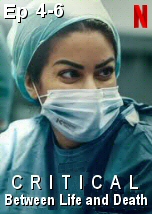
In the final three episodes, the stakes couldn’t be higher. A builder’s life takes a sudden turn after a catastrophic fall through a glass window leaves his hand’s main joint brutally severed. The family of a young assault victim fights to come to terms with the deep personality changes caused by a traumatic brain injury. Meanwhile, a team of orthopedic surgeons faces one of the most delicate pelvis operations imaginable, where a single wrong move could mean irreversible nerve damage. Raw emotion, split-second decisions, and life-altering consequences unfold before your eyes.
Why are ultra-processed foods so irresistible, and how they have come to dominate food culture? Dr Chris van Tulleken features interviews with former food industry insiders who talk openly about the way in which popular foods have been designed to be irresistible. Food companies go to extraordinary lengths to ensure their products connect with consumers - from using brain scans to assess the deliciousness of ice cream to carefully engineering the sound of a crunch. Ultra-processed foods are hyper-delicious and super-convenient, have long shelf lives and are extremely cheap. But a growing body of evidence is linking these products to our declining health.
The film unveils the profound impact of our gut on overall health, an area often overlooked despite its significance. Delving into the complexities of the gut microbiome, this documentary reveals how this ‘second brain’ influences everything from weight management and disease prevention to mental health. By exploring personal stories and scientific research, the film illustrates the dynamic relationship between what we eat and how we feel, urging viewers to reconsider their diets and understand the powerful connection between gut health and wellness. As the documentary progresses, viewers are introduced to cutting-edge research and therapies that are reshaping our understanding of health. Through expert interviews and captivating case studies, ‘Hack Your Health: The Secrets of Your Gut’ not only informs but also inspires a reevaluation of lifestyle choices. This eye-opening journey through the intricate world of gut health highlights the potential for radical improvements in public health, making it a must-watch for anyone interested in the latest advancements in science and wellness.
The documentary, an own production, immerses the viewer in a journey that blends science and philosophy, questioning the nature of time and unveiling a 4-dimensional universe, where space and time are integrated. We are invited to consider a universe in which past, present, and future coexist, suggesting that our linear perception of time might be more of a mental construction than a physical reality. The narrative progresses by exploring how quantum particles exist in states of probability until they are observed, at which point they acquire defined properties. Then, the provocative hypothesis is presented that observation also fixes the temporal dimension of the particles. The sensation of the flow of time and the distinction between past, present, and future are introduced as mental constructions, arising from the human brain's limited capacity to process the complexity of reality. It is then proposed that the mind, by observing itself, fixes itself in the temporal dimension, thus creating the illusion of the present. Finally, the impact of these theories on free will is discussed. This documentary challenges viewers to look beyond their everyday perceptions and consider the possibility that reality is much more complex and fascinating than our immediate experiences suggest. It is an invitation to explore the limits of science, philosophy, and the mind itself in search of answers to some of the deepest questions of existence.
More information on https://www.javier-serrano.blog/Ciencia/representacion_tridimensional_del_universo.php






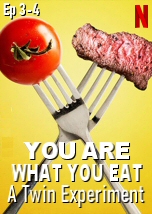







As the study reaches its conclusion, the results are finally revealed. Detailed analyses of weight, gut health, and brain function confront the twins with clear, and sometimes surprising, consequences of their diets. What began as a personal test widens into a broader reflection on the future of food, as momentum builds around a changing food industry and the choices that may redefine how we eat.