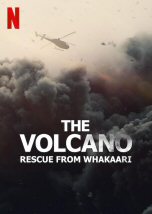
In the final two episodes, the documentary investigates the immense geological forces that continue to reshape our planet. Scientists and adventurers travel to Guatemala's Volcán de Fuego, one of the most active volcanoes on Earth, capturing spectacular eruptions, rivers of lava, and towering ash clouds from astonishingly close range. Along the way, the series reveals how volcanoes are formed, how tectonic plates trigger earthquakes and tsunamis, and how volcanic activity can even create entirely new islands in the middle of the ocean. The journey then turns to one of nature's most breathtaking displays: the Aurora Borealis. In the frozen landscapes of northern Sweden, scientists uncover how powerful storms on the Sun send streams of charged particles towards Earth, illuminating the night sky with vast curtains of color. Combining stunning footage with cutting-edge research, the documentary explores solar activity, space weather, eclipses, and the remarkable connection between our planet and the forces that originate far beyond its atmosphere.
The strategic battle for Guadalcanal became one of the fiercest air campaigns of the Second World War, where exhausted American pilots flying rugged F4F Wildcat fighters and later the more powerful F4U Corsairs faced relentless Japanese Zero fighters in deadly combat above the Pacific. The documentary recreates intense dogfights between carrier-based aircraft, dive bombers, and torpedo planes as both sides fought desperately for control of the skies and the survival of the island campaign. Through gripping firsthand accounts from the men who survived these missions, the episode captures chaotic aerial battles, emergency landings, and the split-second decisions that transformed young pilots into legendary aces in a single day. Every encounter carried enormous consequences not only for Guadalcanal itself, but for the future balance of power across the Pacific. Combining dramatic combat recreations with real veteran testimonies, the episode delivers a tense and highly immersive portrait of aerial warfare during one of the most decisive campaigns of World War II. From surprise ambushes by agile Mitsubishi Zeros to brutal close-range duels involving Wildcats, Dauntless dive bombers, and torpedo aircraft above jungle-covered islands and burning naval fleets, the documentary places viewers directly inside the fear, adrenaline, and exhaustion experienced by the pilots who fought for Guadalcanal. It becomes an especially compelling experience for anyone fascinated by military aviation, aircraft history, and the savage air battles that shaped the Pacific War.
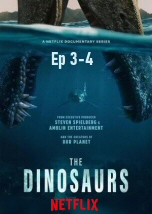
In the final two episodes of the series, produced by Steven Spielberg and narrated by Morgan Freeman, the Age of Dinosaurs reaches its most spectacular and dangerous chapter. After a harsh freeze reshapes life on Earth, the Cretaceous world emerges with rising seas, scattered islands and new hunting grounds where giant reptiles thrive. Pterosaurs glide across the skies searching for food while powerful predators patrol land and ocean in a planet completely ruled by dinosaurs. Among these rulers stands the most formidable hunter of all — Tyrannosaurus rex. Yet while these giants dominate the Earth, the planet itself is slowly changing. Continents drift apart, ecosystems evolve and an unseen threat begins its silent journey through space, foreshadowing the catastrophic event that will one day end the age of dinosaurs.
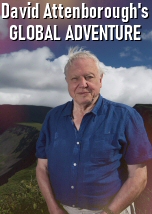
In his mid-eighties, when many believed his journey was winding down, David Attenborough embarked on a bold new chapter in natural history filmmaking. This adventure traces the epic story of life on Earth, from the first organisms that flourished on ancient seabeds hundreds of millions of years ago to the astonishing biodiversity of today. Revisiting iconic landscapes and harnessing cutting-edge technology, Attenborough reveals how our planet’s living tapestry was shaped across deep time. The three episodes can be enjoyed together in a single continuous viewing, creating one sweeping journey across continents and oceans. From the Galápagos Islands to the caves of Borneo, from China’s ancient tropics to the Great Barrier Reef, the series follows Attenborough’s global quest to understand how life rose, adapted, and endured. It is a grand exploration of evolution, resilience, and the fragile beauty of the world we inherit.
In the final three episodes, the journey deepens into a powerful exploration of culture, survival, and science at the planet’s edges. On a remote Pacific island threatened by rising seas, Will Smith joins Dr. Walworth and John Aini to document a dying language spoken by only five people, turning marine research into an intimate race against time to preserve human memory. The mission reveals how climate change erodes not just coastlines, but identities. The adventure then shifts to extremes of land and ice. In the Kalahari Desert, Will learns survival from the San people, confronting the limits of his endurance during a traditional hunt with guide Kane Motswana. The odyssey culminates beneath the ice of the North Pole, where, alongside polar ecologist Allison Fong, a daring dive to collect critical samples is jeopardized by a sudden storm and equipment failure. What follows is a gripping test of courage and teamwork that redefines heroism at the end of a 100-day quest.
Fly across iridescent tropical reefs, brush through a cloud of a million jellyfish, visit an alien world where the closer you look, the more you see, where the tiniest creatures support the greatest predators... We think of reefs as exotic, distant places with little or no connection to our everyday world. Yet every reef is a living city beneath the sea with a parallel existence to ours, distant yet undeniably connected. Reefs are hotspots of biodiversity as vital to life on earth as the rain-forests. They have been shaping our shorelines, literally forming islands and mountains, for millions of years. The fossil record shows that given time they have recovered from all of earth's major extinction events. Even reefs pulverised by atomic blasts at Bikini Atoll have regenerated. Yet within our lifetime reefs have come to face their greatest threat...



















The journey then turns to one of nature's most breathtaking displays: the Aurora Borealis. In the frozen landscapes of northern Sweden, scientists uncover how powerful storms on the Sun send streams of charged particles towards Earth, illuminating the night sky with vast curtains of color. Combining stunning footage with cutting-edge research, the documentary explores solar activity, space weather, eclipses, and the remarkable connection between our planet and the forces that originate far beyond its atmosphere.