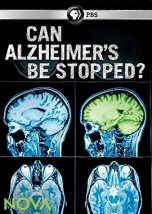
Dementia is one of the fastest-growing health conditions in the UK, yet its earliest warning signs can be difficult to recognise. NHS GP Dr Claire Taylor meets people living with Alzheimer’s and other forms of dementia, explores how the disease changes the brain, and puts herself through innovative tests designed to detect subtle problems with memory, hearing and cognition before more obvious symptoms appear. Along the way, she investigates why some people develop dementia at a younger age, how lifestyle and social isolation may influence risk, and what the latest research says about prevention and treatment. With moving personal stories and access to scientists working at the cutting edge of dementia research, the documentary asks a question that concerns millions: how much can we really know about our own future brain health?
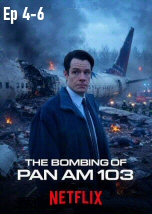
In the final three episodes, the investigation takes a decisive turn when the Frankfurt luggage records and bomb-damaged clothing recovered from the wreckage lead Scottish detectives to Malta. A small clothes shop and the memory of a mysterious customer begin to connect the bomb to a wider international network, while cooperation between Scottish police, the FBI and the CIA becomes increasingly strained. As investigators follow the trail toward Libya, a secret CIA source and similarities with another aircraft bombing appear to offer the breakthrough they have been searching for. More than a decade after Pan Am Flight 103 was destroyed, the case finally reaches the courtroom. Following years of political negotiation, two Libyan suspects stand trial under Scottish law at Camp Zeist in the Netherlands. But the prosecution still depends on fragile witness testimony and painstaking forensic evidence assembled across several countries. As key witnesses are challenged and doubts emerge, the series builds toward a tense question that has haunted the victims’ families since 1988: will the investigation finally deliver justice?
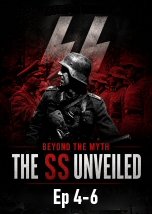
In the final three episodes of the series, the image of elite discipline surrounding the SS is stripped away to reveal a far darker and more disturbing reality. Behind the façade of military excellence lay poorly trained recruits driven not by honor, but by blind ideology and a complete absence of remorse. As their role expands from the battlefield to the brutal control of concentration camps, the narrative exposes how ordinary men became perpetrators of systematic violence, carrying out atrocities with chilling efficiency while maintaining the appearance of normal lives beyond their crimes. These episodes push further into the unsettling contrast between barbarity and everyday existence, showing how members of the SS could participate in unimaginable acts and then return to social settings as if nothing had happened. The story then draws a direct line to the present, confronting the uncomfortable truth that, despite overwhelming historical evidence, remnants of admiration and myth still persist in certain circles. It’s a gripping and unsettling conclusion that forces viewers to question how such distortion of memory can endure—and why it still matters today.
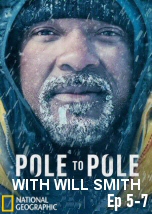
In the final three episodes, the journey deepens into a powerful exploration of culture, survival, and science at the planet’s edges. On a remote Pacific island threatened by rising seas, Will Smith joins Dr. Walworth and John Aini to document a dying language spoken by only five people, turning marine research into an intimate race against time to preserve human memory. The mission reveals how climate change erodes not just coastlines, but identities. The adventure then shifts to extremes of land and ice. In the Kalahari Desert, Will learns survival from the San people, confronting the limits of his endurance during a traditional hunt with guide Kane Motswana. The odyssey culminates beneath the ice of the North Pole, where, alongside polar ecologist Allison Fong, a daring dive to collect critical samples is jeopardized by a sudden storm and equipment failure. What follows is a gripping test of courage and teamwork that redefines heroism at the end of a 100-day quest.
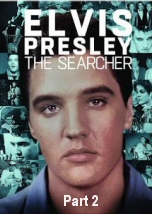
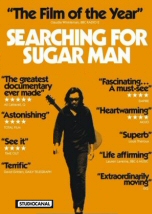
From ephemeral home video clips to voice messages never before heard, this film weaves together the intimate, fragile, and incandescent life of a musician who defied convention—and whose flame was extinguished far too soon. We are drawn into a world where every whispered lyric, every undone recording, and every memory shared by those who loved him becomes a portal. We hear his own voice recounting his doubts. We see raw behind-the-scenes moments, fragile family relationships, and the creative tensions that accompany genius. Through interviews with his mother, former lovers, bandmates, and collaborators, the story casts a luminous, unsettling light on the weight of legacy, the burden of expectations, and the search for identity in the shadow of a father whose name he both carried and sought to transcend. This is not just a chronicle of dates and albums—but a pulse, an echo, a lament and a celebration. It asks: when someone leaves too early, how do we piece together what remains? And what does it mean to live forever through music?
In this powerful continuation of his personal journey, Chris Hemsworth takes viewers around the world to test the boundaries of body and mind. Confronted with chronic back pain and concerns about memory decline, he seeks answers not in laboratories but in life-changing challenges designed by scientists, health experts, and elite trainers. From the nerve-racking task of learning to play the drums—culminating in a breathtaking live performance with Ed Sheeran before 70,000 fans—to enduring brutal Special Forces–style trials in South Korea involving electrocution, pepper spray, and freezing waters, each step reveals the fragile balance between vulnerability and resilience. His raw honesty and willingness to fail make the journey as intimate as it is inspiring. On our website, viewers can enjoy the entire adventure with the three episodes combined into a single video, seamlessly following Hemsworth as he explores how to live better, face fear, and unlock the science of resilience and longevity.













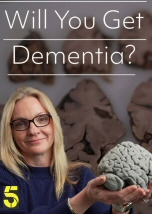







Along the way, she investigates why some people develop dementia at a younger age, how lifestyle and social isolation may influence risk, and what the latest research says about prevention and treatment. With moving personal stories and access to scientists working at the cutting edge of dementia research, the documentary asks a question that concerns millions: how much can we really know about our own future brain health?