In episodes 7 and 8 of Season 2, rivalries harden and new alliances begin to reshape the balance of power on both sides of the sea. Ragnar and King Horik clash over the fate of Jarl Borg and over who should control their next expedition to England. While Horik argues that they still need Borg’s ships and warriors, Ragnar finds an unexpected new ally in Lagertha, now commanding warriors of her own. With that obstacle removed, Ragnar carries out one of the most terrifying punishments in Viking tradition: the blood eagle. At the same time, King Ecbert welcomes King Aelle to Wessex and seals an alliance between their kingdoms through marriage, preparing England for the Vikings’ inevitable return. The tension only increases when Aslaug’s dark prophecy appears to come true with the birth of Ragnar’s son Ivar, while the Viking fleet once again sails for Wessex. Ragnar wants negotiation and sees the possibility of something more lasting than simple plunder, but Horik is driven by revenge and increasingly resents Ragnar’s independence. Ecbert, meanwhile, prepares both for peace and war, using Athelstan as a link to the man he knows is unlike any other Viking leader. When Ragnar discovers that Athelstan is still alive and Ecbert offers talks under safe conduct, the possibility of a historic agreement suddenly emerges—but distrust, ambition and bloodshed threaten to destroy it before it can even begin.
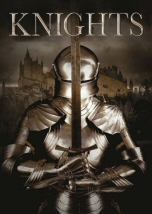
From ordinary mounted warriors to the legendary figures who came to embody courage, honour and chivalry, medieval knights dominated European life for centuries. Through dramatic reconstructions, historical experiments and surviving evidence, this series reveals the harsh reality behind the romantic image: brutal battles and personal feuds, swordsmanship and tournaments, the construction and defense of castles, courtly love and the strict codes of honour that could turn an insult into a fight to the death. It also follows knights to the Holy Land, where crusaders risked everything in pursuit of glory, wealth and salvation, while figures such as John of Bohemia and Joan of Arc show how courage and legend became inseparable from the medieval warrior. Presented here as all three episodes consecutively in a single video, the complete story also reveals how the world that created the knight eventually destroyed him. The rise of robber knights such as Götz von Berlichingen, the spread of mercenary warfare and increasingly spectacular tournaments mark the final years of an old order, while longbows, cannon, artillery and massed infantry transform the battlefield forever. Emperor Maximilian, celebrated as the “Last of the Knights,” embraces these new weapons even as he glorifies the traditions of chivalry. By the end, the armoured horseman who had ruled castles, battlefields and entire communities for centuries has become obsolete in war—but immortal in legend.
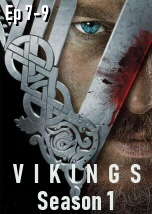
In the final three episodes of Season 1, Ragnar's ambition drives him toward his boldest gamble yet as a daring raid strikes at the heart of one of England's most powerful kingdoms. While victory promises unimaginable wealth and lasting fame, every decision carries devastating consequences, forcing alliances to shift and loyalties to be tested in ways no one expects. As the Vikings make their sacred pilgrimage to Uppsala, faith, sacrifice, and destiny collide in an unforgettable journey that changes the lives of Ragnar, Lagertha, and Athelstan forever. Political intrigue soon follows when Ragnar is sent to negotiate with the dangerous Jarl Borg, where diplomacy hangs by a thread and a single mistake could ignite a brutal conflict. Filled with epic battles, emotional turning points, and unforgettable characters, these episodes deliver a gripping conclusion that leaves you eager for the next season.
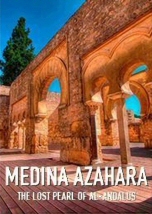
Madinat al-Zahra was given its Arabic name, which means "The Shining City," by the 10th century caliph Abd al-Rahman III, who had it built. Nicknamed the "Versailles of Andalusia", Medina Azahara, located in Cordoba, Spain, is today one of the most important Islamic archaeological sites. This unique capital city, built four centuries before the Alhambra in the mid-10th century, is the object of a new excavation campaign. Five years ago, a team of European archaeologists began a new excavation project at this World Heritage site. For over 100 years, excavations here have concentrated inside the Caliph's palace. This new excavation project is focused outside the palace walls, in areas of the city never before studied. A massive new building came to light, its function unknown. Beyond the mystery of this building, the very location of this city is an enigma in itself. Why was a Muslim city of such importance built in a then primarily Christian area? The site is a complete urban complex including infrastructure, buildings, decoration, and objects of daily use. By following this mission and revealing the mysteries of this lost city, this film traces the history of the golden age of al-Andalus.
The Codex Gigas, or Devil's Bible, is the world's largest and most enigmatic medieval manuscript, said to be crafted from 160 donkey skins and weighing a staggering 165 pounds. Its chilling full-page portrait of the Devil, believed to be the result of a monk's desperate pact with dark forces, is just the beginning of its mysteries. Written in the Kingdom of Bohemia, this legendary text blends biblical scripture with forbidden demonic spells, making it both sacred and cursed. Filled with mystical medical formulas and cryptic incantations, the Codex Gigas holds mysteries that have fascinated historians for centuries. The haunting contrast between a Heavenly City and the devil's image adds to its mystique. This documentary dives deep into one of history's most mysterious artifacts, uncovering secrets that have captivated the world for generations.
Join us on an unforgettable voyage through one of the most desolate periods in human history as the rulers, conflicts, and cataclysmic societal breakdown of Early Middle Ages are brought to light. At its height in the second century A.D., the Roman Empire was the beacon of learning, trade, power and prosperity in the western world. But the once-powerful Rome--rotten to the core by the fifth century--lay open to barbarian warriors who came in wave after wave of invasion, slaughtering, stealing, and ultimately, settling. As chaos replaced culture, Europe was beset by famine, plague, persecutions, and a state of war that was so persistent it was only rarely interrupted by peace. The documentary profiles those who battled to shape the future, from the warlords whose armies threatened to case the demise of European society, like Alaric, Charles the Hammer, and Clovis; to the men and women who valiantly tended the flames of justice, knowledge, and innovation including Charlemagne, St. Benedict, Empress Theodora, and other brave souls who fought for peace and enlightenment. It was in the shadows of this turbulent millennium that the seeds of modern civilization were sown.








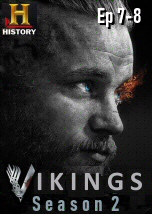








The tension only increases when Aslaug’s dark prophecy appears to come true with the birth of Ragnar’s son Ivar, while the Viking fleet once again sails for Wessex. Ragnar wants negotiation and sees the possibility of something more lasting than simple plunder, but Horik is driven by revenge and increasingly resents Ragnar’s independence. Ecbert, meanwhile, prepares both for peace and war, using Athelstan as a link to the man he knows is unlike any other Viking leader. When Ragnar discovers that Athelstan is still alive and Ecbert offers talks under safe conduct, the possibility of a historic agreement suddenly emerges—but distrust, ambition and bloodshed threaten to destroy it before it can even begin.