Click CC for subtitles. In the winter of 2021, K2 remained the last great prize of high-altitude mountaineering: the only 8,000-meter peak never climbed in winter. Icelandic climber John Snorri Sigurjónsson and the legendary Pakistani father-and-son team Ali and Sajid Sadpara arrive determined to claim that historic first, facing temperatures far below zero, hurricane-force winds, exhaustion and a mountain already infamous for killing even the strongest climbers. But the expedition soon becomes more than a battle against nature. Commercial teams, influencer climbers, professional film crews and a fiercely ambitious all-Nepalese team converge on the same slopes, turning the ascent into a tense contest of strategy, reputation and national pride. As the climb unfolds, the documentary exposes the changing culture of modern mountaineering: the pressure of social media, the commercialization of the world’s highest peaks, the unequal recognition historically given to Western climbers, and the determination of Nepali and Pakistani mountaineers to claim achievements in their own names. The race for the summit culminates in triumph for one team and tragedy for others, leaving five climbers dead and forcing survivors to confront questions of ambition, responsibility and what a “first” is really worth. Built from extraordinary footage shot during the expedition and testimony from those who were there, the film transforms one of mountaineering’s last untouched records into a gripping story about ego, class, nationalism, family and the deadly cost of pushing beyond human limits.
In the final three episodes of Season 2, the struggle for Germania reaches a breaking point as loyalty, vengeance and political ambition collide. Tiberius demands proof that Marbod truly stands with Rome, while Flavus makes a dangerous proposal to Germanicus. At the same time, the Germanic tribal leaders gather to proclaim Marbod king, hoping unity might finally give them the strength to resist Rome. But the fragile alliance is shattered by tragedy, and Marbod is forced to confront Tiberius directly as trust on both sides collapses. The conflict then accelerates toward open war. Thusnelda and Folkwin undertake a perilous mission, Gaius makes a shocking discovery in the forest, and Segestes offers Tiberius a treacherous bargain. With Roman reinforcements approaching by ship, Arminius and the tribes realize they may have only one chance left: strike the Roman camp before a new legion arrives. The season closes with betrayal, sacrifice and a desperate battle for freedom, as every decision threatens to determine whether the Germanic tribes remain divided or finally stand together against Rome.
In the final three episodes, the series follows animals being pushed to the edge as melting ice, extreme heat and prolonged drought reshape the environments they depend on. In the Himalayas, a snow leopard is forced from familiar territory, while an Arctic ground squirrel in Alaska undertakes an extraordinary migration and a young Arctic fox in Svalbard faces her first winter alone. These cold-adapted animals must rapidly change behaviours that once worked for generations as their frozen worlds become increasingly unstable. The struggle then shifts to the opposite extreme, where wombats, leopards and kangaroo rats are tested by record heat and worsening drought, pushing their remarkable physical and behavioural adaptations to their limits. In the final episode, attention turns to the people working directly to help wildlife survive these new extremes, revealing rescue efforts, scientific interventions and conservation strategies in some of the planet’s harshest environments. Together, these final chapters show that survival now depends not only on the animals’ ability to adapt, but increasingly on how far humans are willing to go to protect them.
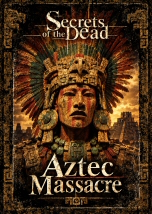
A mass grave at Zultepec, Mexico, containing more than 400 mutilated skeletons forces archaeologists to reconsider one of the most familiar stories of the Spanish conquest. Led by Aztec specialist Elizabeth Baquedano, the investigation follows forensic clues hidden in skulls, bones and artifacts to identify the victims and reconstruct what happened. Some remains prove to be European, including women, while Spanish-made iron objects and evidence of horses link the dead directly to the conquistadors who entered Mexico in the early sixteenth century. The evidence reveals a far more violent confrontation than the traditional image of an easy Spanish victory. Captured Spaniards and members of their entourage appear to have been imprisoned, ritually sacrificed, dismembered and, in some cases, consumed as part of ceremonial practices. By combining archaeology, forensic anthropology and Aztec codices, the documentary shows that indigenous resistance to the conquistadors could be organized, successful and terrifyingly effective, transforming Zultepec into crucial physical evidence of a conflict that history had long oversimplified.
Professor Brian Cox joins Chris Lintott and the team to investigate one of the most intriguing new mysteries in modern astronomy. Observations from the James Webb Space Telescope have revealed hundreds of compact, extraordinarily bright objects known as “little red dots”, appearing less than a billion years after the Big Bang. Many may hide rapidly growing supermassive black holes, raising a profound question: how could such enormous objects have formed so early in cosmic history? The journey begins with the strange physics of black holes themselves, from event horizons and singularities to the supermassive black hole at the centre of the Milky Way and the gigantic black hole in the galaxy M87. With cosmologist Emma Chapman and Professor Sadegh Khochfar, the programme explores radical explanations for these ancient monsters, including primordial black holes born soon after the Big Bang and massive black holes formed directly from collapsing clouds of gas, bypassing stars altogether. Cutting-edge computer simulations recreate the first billion years of the universe and reveal how the earliest galaxies and black holes may have emerged within the cosmic web. These discoveries are forcing astronomers to reconsider not only how supermassive black holes grow, but how galaxies and the early universe itself evolved.
Click CC for subtitles. In the final three episodes of Season 1, Ari fully embraces his identity as Arminius and begins the dangerous task of turning divided Germanic tribes into a force capable of challenging Rome. While Varus believes he has placed a loyal Roman-trained leader at the head of the Cherusci, Arminius secretly works against him. Thusnelda and Folkwin seek support from the Bructeri, and Arminius realizes that defeating three Roman legions will require something almost impossible: convincing rival tribes to put aside their feuds and fight as one people. A political marriage between Arminius and Thusnelda strengthens their cause, while Folkwin, thought dead, is actually alive and enslaved in the Roman camp. Everything then moves toward the confrontation that will change history. Drawing on his intimate knowledge of Roman military tactics, Arminius persuades Varus to lead his legions through the forests and swamps of Germania, where their disciplined formations become a deadly weakness. As mistrust, betrayal and sacrifice threaten the fragile tribal alliance, Thusnelda takes an extreme step to preserve unity and Arminius prepares his ambush. The season culminates in the Battle of the Teutoburg Forest, where three Roman legions are drawn into a trap that will become one of the most devastating defeats in the history of the Roman Empire.


















As the climb unfolds, the documentary exposes the changing culture of modern mountaineering: the pressure of social media, the commercialization of the world’s highest peaks, the unequal recognition historically given to Western climbers, and the determination of Nepali and Pakistani mountaineers to claim achievements in their own names. The race for the summit culminates in triumph for one team and tragedy for others, leaving five climbers dead and forcing survivors to confront questions of ambition, responsibility and what a “first” is really worth. Built from extraordinary footage shot during the expedition and testimony from those who were there, the film transforms one of mountaineering’s last untouched records into a gripping story about ego, class, nationalism, family and the deadly cost of pushing beyond human limits.