From a childhood marked by poverty on the American frontier to the presidency of a nation on the verge of collapse, this three-part historical biography traces how Abraham Lincoln became one of the defining figures in American history. Blending dramatic reconstruction with commentary from historians and political figures, it explores the ambition, empathy, wit and moral conviction that shaped his rise, his belief in democracy and equality, and the immense personal and political pressures that would eventually place him at the center of the struggle over slavery, union and the future of the United States. In the first episode, Lincoln’s journey begins far from power. Growing up in hardship, enduring the death of his mother and receiving little formal education, he develops a fierce determination to rise beyond obscurity. Through hard physical labor, self-education, storytelling and an emerging talent for public speaking, he begins to build the character and political instincts that will define him. His early encounters with slavery, his move into law and politics, and the relationships that shape his ambitions reveal the making of a man who is still searching for his place in the world, but already driven by the conviction that his life must amount to something.
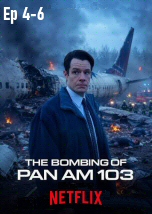
In the final three episodes, the investigation takes a decisive turn when the Frankfurt luggage records and bomb-damaged clothing recovered from the wreckage lead Scottish detectives to Malta. A small clothes shop and the memory of a mysterious customer begin to connect the bomb to a wider international network, while cooperation between Scottish police, the FBI and the CIA becomes increasingly strained. As investigators follow the trail toward Libya, a secret CIA source and similarities with another aircraft bombing appear to offer the breakthrough they have been searching for. More than a decade after Pan Am Flight 103 was destroyed, the case finally reaches the courtroom. Following years of political negotiation, two Libyan suspects stand trial under Scottish law at Camp Zeist in the Netherlands. But the prosecution still depends on fragile witness testimony and painstaking forensic evidence assembled across several countries. As key witnesses are challenged and doubts emerge, the series builds toward a tense question that has haunted the victims’ families since 1988: will the investigation finally deliver justice?
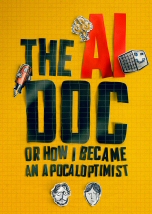
As artificial intelligence accelerates at a breathtaking pace, filmmaker Daniel Roher sets out to understand whether humanity is approaching an extraordinary new era or a catastrophe of its own making. What begins as a personal investigation becomes far more urgent when he and his wife learn they are expecting a child. Faced with predictions ranging from revolutionary medical breakthroughs and powerful new tools for creativity to mass unemployment, deepfakes, autonomous systems and even existential risk, he asks some of the world’s leading AI thinkers a deceptively simple question: should we be excited about the future, or terrified of it? The film explores how generative AI works, why its capabilities are advancing so quickly and what could happen if increasingly powerful systems become difficult to control. Experts debate AI safety and alignment, the race between competing companies, the possibility of machines seeking greater power, and the social consequences of automation and concentrated wealth. At the same time, the documentary confronts the technology’s remarkable promise, from personalized education to scientific discovery and potential cancer treatments. Moving between anxiety and hope, Roher ultimately searches for a way to face an uncertain future not as a pessimist or a blind optimist, but as something in between: an “Apocaloptimist.”
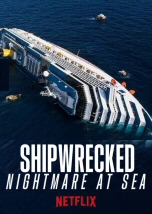
What begins as a dream Mediterranean holiday turns into an unimaginable fight for survival. On the night of January 13, 2012, passengers aboard the luxurious Costa Concordia are dining and putting children to bed when the ship sails dangerously close to the Italian island of Giglio and strikes underwater rocks. As the vessel loses power and begins to flood and tilt, confusion spreads through its glittering corridors. Passengers are initially told there is only an electrical problem, while precious minutes pass before an evacuation is ordered and lifeboats become increasingly difficult to launch. Through extraordinary footage recorded by those on board, black-box communications and deeply personal survivor testimony, the disaster unfolds almost minute by minute: Families desperately searching for a way off the ship, crew members risking their lives to help strangers, passengers trapped as corridors become walls, and rescuers entering the enormous wreck while it threatens to shift beneath them. Behind the terrifying struggle to survive emerges an equally disturbing question—how could a modern cruise ship carrying thousands of people end up on its side just metres from shore? The deaths of 32 people, the actions of Captain Francesco Schettino and the investigation that followed transform one catastrophic night at sea into a gripping story of human courage, fatal decisions and the consequences of failure when every second matters.
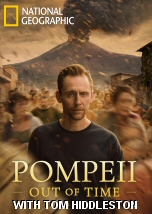
Tom Hiddleston returns to the ancient city that first awakened his fascination with the Roman world, determined to uncover a story far more human than the familiar tale of sudden destruction. Drawing on new archaeological evidence, expert analysis and vivid dramatic reconstruction, he follows three real Romans through the final hours before and during the eruption of Mount Vesuvius: Avianius, a headstrong young apprentice searching for his mother; Julia Felix, a wealthy and independent businesswoman responsible for an entire household; and a veteran soldier who risks everything to help others escape. As earthquakes intensify, ash begins to fall and burning avalanches race towards Pompeii and Herculaneum, every decision becomes a struggle between fear, loyalty and survival. Who understood the warning signs? Who fled, who stayed behind—and whose courage gave others a chance to live? Presented here as one uninterrupted feature containing all three episodes, this extraordinary journey allows viewers to experience the complete disaster from its first tremors to its devastating final surge, revealing Pompeii not simply as a city of death, but as an unforgettable story of ordinary people facing the end of their world.
In the final two episodes, Dean Potter’s dream of pushing free solo climbing beyond anything seen before collides with the arrival of Alex Honnold, a younger climber capable of taking the sport into terrifying new territory. As both men circle the impossible challenge of El Capitan, Dean is forced to confront not only a rival, but the fear that his place at the edge of climbing history may be slipping away. What begins as a battle for greatness becomes something far more personal: A struggle with ego, identity, isolation and the dangerous need to keep proving himself when the world is already watching. As Dean’s mental health declines and some of his closest supporters begin to drift away, he takes a risky job in China and seems to move even closer to the edge. But a new relationship gives him a fragile sense of grounding, and his lifelong dream of flight finally comes into focus through the radical world of wingsuit flying. The final chapters become both breathtaking and haunting, following a man who searched for freedom in the air, in the mountains and in the spaces where fear becomes almost spiritual. Intimate, tense and deeply emotional, they reveal the beauty and tragedy of a life lived in pursuit of the impossible.















In the first episode, Lincoln’s journey begins far from power. Growing up in hardship, enduring the death of his mother and receiving little formal education, he develops a fierce determination to rise beyond obscurity. Through hard physical labor, self-education, storytelling and an emerging talent for public speaking, he begins to build the character and political instincts that will define him. His early encounters with slavery, his move into law and politics, and the relationships that shape his ambitions reveal the making of a man who is still searching for his place in the world, but already driven by the conviction that his life must amount to something.