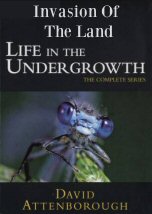
In the final three episodes of the series, Chris Packham follows three extraordinary evolutionary journeys to discover how the relentless demands of survival transformed simple early animals into some of the most remarkable creatures alive today. In Borneo, the voracious appetite of the bat leads back more than half a billion years to the origins of the through-gut, the first anus, heads and jaws, revealing how the need to find and consume food helped reshape animal life and ultimately produced the bat’s extraordinary powers of hearing. In the Bahamas, the intelligence of dolphins opens an even deeper story: from ancient cells able to sense light to the evolution of eyes, complex brains, sophisticated senses and the remarkable minds of modern dolphins. The journey culminates with one of nature’s supreme athletes. Tracing the horse’s ancestry through hundreds of millions of years, Packham reveals how primitive muscle cells evolved into increasingly powerful systems for movement, how beating hearts supplied those muscles with oxygen, and how limbs became ever more effective tools for locomotion. Slithering, swimming, walking and running eventually converge in an animal built for extraordinary speed and endurance. Together, these final episodes reveal a breathtaking truth: hunger, perception and movement were not merely necessities of survival—they were powerful evolutionary forces that helped create the astonishing complexity of animal life.
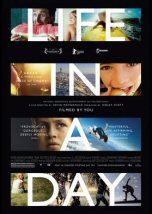
In the final two episodes, Dean Potter’s dream of pushing free solo climbing beyond anything seen before collides with the arrival of Alex Honnold, a younger climber capable of taking the sport into terrifying new territory. As both men circle the impossible challenge of El Capitan, Dean is forced to confront not only a rival, but the fear that his place at the edge of climbing history may be slipping away. What begins as a battle for greatness becomes something far more personal: A struggle with ego, identity, isolation and the dangerous need to keep proving himself when the world is already watching. As Dean’s mental health declines and some of his closest supporters begin to drift away, he takes a risky job in China and seems to move even closer to the edge. But a new relationship gives him a fragile sense of grounding, and his lifelong dream of flight finally comes into focus through the radical world of wingsuit flying. The final chapters become both breathtaking and haunting, following a man who searched for freedom in the air, in the mountains and in the spaces where fear becomes almost spiritual. Intimate, tense and deeply emotional, they reveal the beauty and tragedy of a life lived in pursuit of the impossible.
A decisive clash unfolds on the waters of the Mediterranean, where two powerful worlds collide in a battle that would change the course of history. Through dramatic reconstructions, expert analysis, and historical accounts, the film brings to life the tension, strategy, and sheer scale of one of the largest naval confrontations ever fought. As fleets gather and alliances form, the stakes rise beyond territory or power—this is a struggle that will define the balance between empires and shape the future of Europe. Amid the chaos of combat, the story reveals the human side of the conflict: the commanders making impossible decisions, the soldiers facing overwhelming odds, and the turning points that transformed a desperate confrontation into a legendary victory. With vivid detail and a strong sense of urgency, it offers a compelling look at how courage, faith, and strategy combined in a moment that still echoes through history today.
Against the awe-inspiring backdrop of Egypt’s royal pyramids, a journey unfolds that challenges everything we think we know about these ancient giants. Blending rigorous scientific investigation with a sharp sense of curiosity, the exploration dives deep into how these monumental structures were truly built—and why they continue to captivate both scholars and alternative theorists alike. As each layer of myth is peeled back, new questions emerge, revealing a story far more complex and fascinating than the legends suggest. Guided by expert insights and surprising discoveries, the narrative moves between evidence and speculation, confronting controversial ideas while uncovering the remarkable ingenuity of ancient civilizations. What begins as a search for answers quickly becomes a gripping intellectual adventure—one that keeps you questioning, rethinking, and wanting to uncover the next hidden truth behind one of humanity’s greatest mysteries.
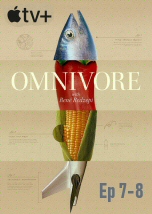
In the last two episodes of this series, you can see how coffee and corn open the door to stories far beyond what we consume every day. From the demanding journey of the coffee bean—shaped by history, craftsmanship and human effort—to the rise of corn from a sacred crop to a dominant force in global food systems, these episodes reveal how simple ingredients carry profound meaning. What begins as a look at familiar foods quickly becomes a deeper exploration of culture, industry and survival, uncovering the fragile balance behind what we eat and leaving a lasting sense of how much is at stake in the most ordinary things.
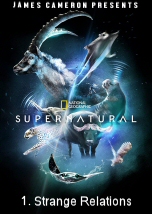
Witness the secret powers of extraordinary animals, experience the world as they do and see the SUPER/NATURAL side of nature as never before. Executive produced by James Cameron and narrated by Benedict Cumberbatch, this series uses the scientific innovations and leading-edge filmmaking technology to reveal the secret powers and super-senses of the world’s extraordinary animals. See flowers in bee-vision to eavesdropping on conversations between elephant seals to soaring the length of a football field with glow-in-the-dark squirrels. They say in nature that only the strongest survive. But when cooperation and communication bring animals and plants together and superpowers combine even the most vulnerable can become unstoppable. If you think you know nature, think again.
























The journey culminates with one of nature’s supreme athletes. Tracing the horse’s ancestry through hundreds of millions of years, Packham reveals how primitive muscle cells evolved into increasingly powerful systems for movement, how beating hearts supplied those muscles with oxygen, and how limbs became ever more effective tools for locomotion. Slithering, swimming, walking and running eventually converge in an animal built for extraordinary speed and endurance. Together, these final episodes reveal a breathtaking truth: hunger, perception and movement were not merely necessities of survival—they were powerful evolutionary forces that helped create the astonishing complexity of animal life.