In the final two episodes, Novak Djokovic’s sudden rise changes everything, forcing Rafael Nadal into a new and even more demanding era: the age of the Big Three. What was once a rivalry defined by Roger Federer becomes a three-way battle for history, greatness and survival at the top of tennis. As Djokovic grows stronger and the pressure intensifies, Rafa is pushed to the limits of his body and mind, fighting through pain, doubt and exhaustion while trying to protect the place he has earned through years of sacrifice. But these episodes are not only about trophies, rankings or legendary matches. They reveal the deepest part of Nadal’s character: the refusal to surrender, even when injuries, age and time begin to close in. From the physical punishment of his greatest victories to the emotional weight of knowing that the end is coming, Rafa keeps searching for one more comeback, one more fight, one more reason to believe. Powerful, intimate and deeply moving, the final chapters become a portrait of a champion who built his legend not simply by winning, but by never giving up.
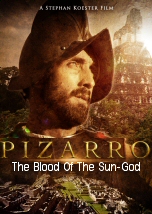
In 1532, Francisco de Pizarro led fewer than two hundred men into the heart of the Inca Empire and brought a civilization of millions to its knees. What drove this man—from humble beginnings in Spain—to defy impossible odds and confront Atahualpa’s army of 30,000 warriors? Through striking reenactments and expert insight, the film explores how faith, greed, and unyielding ambition collided in one of history’s most shocking encounters, forever changing the fate of two worlds. Beyond the conquest, it delves into the man himself—visionary and tyrant, believer and betrayer—revealing how his thirst for glory became a symbol of both human courage and moral ruin. Set against the breathtaking landscapes of the Andes, this journey exposes the hidden cost of empire: the blood spilled, the cultures erased, and the myths that still echo through the ruins of Cuzco.
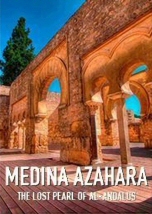
Madinat al-Zahra was given its Arabic name, which means "The Shining City," by the 10th century caliph Abd al-Rahman III, who had it built. Nicknamed the "Versailles of Andalusia", Medina Azahara, located in Cordoba, Spain, is today one of the most important Islamic archaeological sites. This unique capital city, built four centuries before the Alhambra in the mid-10th century, is the object of a new excavation campaign. Five years ago, a team of European archaeologists began a new excavation project at this World Heritage site. For over 100 years, excavations here have concentrated inside the Caliph's palace. This new excavation project is focused outside the palace walls, in areas of the city never before studied. A massive new building came to light, its function unknown. Beyond the mystery of this building, the very location of this city is an enigma in itself. Why was a Muslim city of such importance built in a then primarily Christian area? The site is a complete urban complex including infrastructure, buildings, decoration, and objects of daily use. By following this mission and revealing the mysteries of this lost city, this film traces the history of the golden age of al-Andalus.
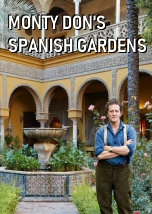
Monty Don embarks on a journey across Spain, discovering gardens across the country’s diverse landscape and exploring its rich and varied history and culture. He will cover more than 4,000 kilometres to visit some of its most interesting gardens, community projects and parks in order to get under the skin of the country. His trips range from historic imperial palaces to cutting-edge modern gardens created by a new wave of Spanish designers working more closely with the landscape and the challenges of the climate. “Spain's history and its landscapes, climates and cultures have huge diversity. And in this series, I want to get under the skin of the country by visiting as many gardens in Spain as I can so I can shed light on this nation's past, its future and its people. The result is a picture not just of its gardens but this fascinating country itself. Dramatic, proud, complex, but always compelling.”
In this documentary series we will see how the real-life pirates of the Caribbean violently plunder, stealing and form a surprisingly egalitarian republic. The historical drama portrays the rise and fall of the eponymous early-18th century pirate republic based in Nassau, Bahamas. The series begins in 1715, shortly after the close of the War of the Spanish Succession, which pitted England against Spain. England had waged the war on the cheap, resorting to the use of privateers rather than incurring the expense of fully funding the Royal Navy. The ending of this war leaved thousands of Caribbean privateers unemployed, when the wreck of a treasure fleet creates new opportunities.
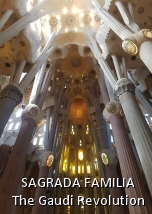
Construction of the famous Basilica in Barcelona, designed by Antoni Gaudi, was started in 1882. To this day, it has not been completed. The architecture is one of such creative madness, originality, and fantasy, that it has been declared a World Heritage Site by UNESCO. After years of piecing back together Gaudi’s master plan with advancements in computer technology and design, architects have been able to pursue the building, started 140 years ago. However, as construction progresses, some of its greatest challenges have yet to be surmounted, including the construction of 10 more spires. The team hopes to complete the masterpiece by 2026, Gaudi’s 100 year anniversary. This film documents the complexities of respecting the original inspiration and techniques set forth by Gaudi over a century ago. Juxtaposing sequences shot in the midst of the cathedral as construction ensues, with reenactments and CGI images, the documentary draws you into Gaudi’s paradise on earth, from the origins of its inspiration to the most recent architectural additions.














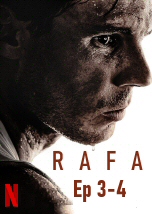





But these episodes are not only about trophies, rankings or legendary matches. They reveal the deepest part of Nadal’s character: the refusal to surrender, even when injuries, age and time begin to close in. From the physical punishment of his greatest victories to the emotional weight of knowing that the end is coming, Rafa keeps searching for one more comeback, one more fight, one more reason to believe. Powerful, intimate and deeply moving, the final chapters become a portrait of a champion who built his legend not simply by winning, but by never giving up.