From a small and aggressive republic fighting for survival in the ancient Mediterranean to an empire that dominated much of the known world, Rome’s story is one of extraordinary ambition, conquest and transformation. The documentary follows the decisive struggles that shaped its rise, from the wars with Carthage and Hannibal to the upheavals of Spartacus, Julius Caesar and the collapse of the Republic, before Augustus establishes a new imperial order. Military power, political rivalry, engineering, law, spectacle and ruthless violence combine to reveal how Rome created a civilization of unprecedented scale, but also planted the seeds of its own destruction. At its height, the empire reaches astonishing levels of wealth and power under rulers such as Trajan and Marcus Aurelius, yet the system becomes increasingly difficult to control. Plague, civil conflict, destructive emperors such as Commodus, religious transformation and mounting pressure from Germanic peoples, Goths, Vandals and other invaders gradually weaken the foundations of Roman authority. From the Colosseum and the grandeur of imperial Rome to Attila and the invasions that accelerate its collapse, the two-part series shows how one of history’s greatest superpowers ultimately became a warning about the dangers of unchecked power and overextension. Presented here with both episodes combined into a single video, viewers can follow the complete rise and fall of Rome without interruption.
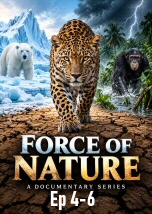
In the final three episodes, the series follows animals being pushed to the edge as melting ice, extreme heat and prolonged drought reshape the environments they depend on. In the Himalayas, a snow leopard is forced from familiar territory, while an Arctic ground squirrel in Alaska undertakes an extraordinary migration and a young Arctic fox in Svalbard faces her first winter alone. These cold-adapted animals must rapidly change behaviours that once worked for generations as their frozen worlds become increasingly unstable. The struggle then shifts to the opposite extreme, where wombats, leopards and kangaroo rats are tested by record heat and worsening drought, pushing their remarkable physical and behavioural adaptations to their limits. In the final episode, attention turns to the people working directly to help wildlife survive these new extremes, revealing rescue efforts, scientific interventions and conservation strategies in some of the planet’s harshest environments. Together, these final chapters show that survival now depends not only on the animals’ ability to adapt, but increasingly on how far humans are willing to go to protect them.
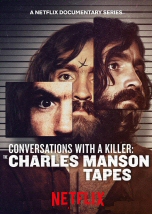
Previously unreleased prison calls, firsthand testimony and archival footage open a disturbing window into the world Charles Manson created around himself. Against the backdrop of the late-1960s counterculture, Manson draws vulnerable and disillusioned young people into a tightly controlled group built on promises of love, freedom and belonging. His manipulation gradually deepens into paranoia, domination and violence, culminating in the 1969 murders committed by members of the Manson Family, including the killings at the home of Sharon Tate, and in Manson’s delusional belief that the crimes could help ignite a racial apocalypse he called “Helter Skelter.” The story then follows the investigation, arrests and extraordinary 1971 trial, where Manson and his followers turn the courtroom into a spectacle and become symbols of a darker side of the era. Recordings of Manson himself are joined by voices from people who lived through the events, including material connected to followers such as Charles “Tex” Watson, Susan Atkins and Leslie Van Houten, revealing how charisma, coercion and group loyalty were transformed into lethal obedience. Presented here with all three episodes combined into a single video, viewers can follow the complete story without interruption, from the formation of the Family to the murders, the trial and the disturbing legacy Manson left behind.
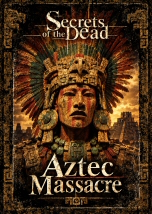
A mass grave at Zultepec, Mexico, containing more than 400 mutilated skeletons forces archaeologists to reconsider one of the most familiar stories of the Spanish conquest. Led by Aztec specialist Elizabeth Baquedano, the investigation follows forensic clues hidden in skulls, bones and artifacts to identify the victims and reconstruct what happened. Some remains prove to be European, including women, while Spanish-made iron objects and evidence of horses link the dead directly to the conquistadors who entered Mexico in the early sixteenth century. The evidence reveals a far more violent confrontation than the traditional image of an easy Spanish victory. Captured Spaniards and members of their entourage appear to have been imprisoned, ritually sacrificed, dismembered and, in some cases, consumed as part of ceremonial practices. By combining archaeology, forensic anthropology and Aztec codices, the documentary shows that indigenous resistance to the conquistadors could be organized, successful and terrifyingly effective, transforming Zultepec into crucial physical evidence of a conflict that history had long oversimplified.
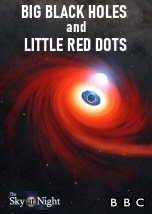
Professor Brian Cox joins Chris Lintott and the team to investigate one of the most intriguing new mysteries in modern astronomy. Observations from the James Webb Space Telescope have revealed hundreds of compact, extraordinarily bright objects known as “little red dots”, appearing less than a billion years after the Big Bang. Many may hide rapidly growing supermassive black holes, raising a profound question: how could such enormous objects have formed so early in cosmic history? The journey begins with the strange physics of black holes themselves, from event horizons and singularities to the supermassive black hole at the centre of the Milky Way and the gigantic black hole in the galaxy M87. With cosmologist Emma Chapman and Professor Sadegh Khochfar, the programme explores radical explanations for these ancient monsters, including primordial black holes born soon after the Big Bang and massive black holes formed directly from collapsing clouds of gas, bypassing stars altogether. Cutting-edge computer simulations recreate the first billion years of the universe and reveal how the earliest galaxies and black holes may have emerged within the cosmic web. These discoveries are forcing astronomers to reconsider not only how supermassive black holes grow, but how galaxies and the early universe itself evolved.
Click CC for subtitles. In the final three episodes of Season 1, Ari fully embraces his identity as Arminius and begins the dangerous task of turning divided Germanic tribes into a force capable of challenging Rome. While Varus believes he has placed a loyal Roman-trained leader at the head of the Cherusci, Arminius secretly works against him. Thusnelda and Folkwin seek support from the Bructeri, and Arminius realizes that defeating three Roman legions will require something almost impossible: convincing rival tribes to put aside their feuds and fight as one people. A political marriage between Arminius and Thusnelda strengthens their cause, while Folkwin, thought dead, is actually alive and enslaved in the Roman camp. Everything then moves toward the confrontation that will change history. Drawing on his intimate knowledge of Roman military tactics, Arminius persuades Varus to lead his legions through the forests and swamps of Germania, where their disciplined formations become a deadly weakness. As mistrust, betrayal and sacrifice threaten the fragile tribal alliance, Thusnelda takes an extreme step to preserve unity and Arminius prepares his ambush. The season culminates in the Battle of the Teutoburg Forest, where three Roman legions are drawn into a trap that will become one of the most devastating defeats in the history of the Roman Empire.






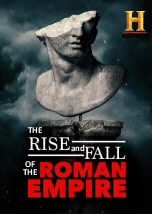




At its height, the empire reaches astonishing levels of wealth and power under rulers such as Trajan and Marcus Aurelius, yet the system becomes increasingly difficult to control. Plague, civil conflict, destructive emperors such as Commodus, religious transformation and mounting pressure from Germanic peoples, Goths, Vandals and other invaders gradually weaken the foundations of Roman authority. From the Colosseum and the grandeur of imperial Rome to Attila and the invasions that accelerate its collapse, the two-part series shows how one of history’s greatest superpowers ultimately became a warning about the dangers of unchecked power and overextension. Presented here with both episodes combined into a single video, viewers can follow the complete rise and fall of Rome without interruption.