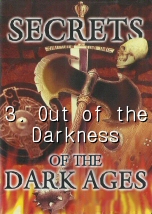
The third assault on the tattered remains of Roman civilization came from even further North, where the melting glacial ice had created immense sheltered fjords, leaving its inhabitants little choice but the sea. These fearless navigators understood that dominion over the oceans was the key to their ambitions. Where the Romans expanded incrementally, the Vikings adopted a bolder, more aggressive approach. So was it the Dark Age which failed Europe, or the stifling uniformity of the great Roman experiment? Were the lost tribes more victim than failure? Richard Rudgley will hope to shed new light on the real secrets of the so-called Dark Age.
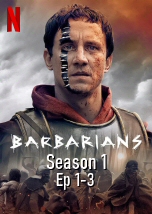
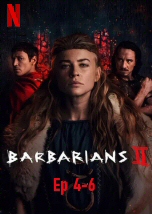
Click CC for subtitles. Torn between the Roman Empire that raised him and the Germanic people into which he was born, a Roman officer finds himself trapped between loyalty, identity and rebellion. As Rome tightens its grip over the tribes beyond the Rhine, resentment grows and old bonds are tested. At the center of the conflict stands Arminius, a man shaped by Roman discipline but increasingly confronted with the suffering of his own people, while Thusnelda and Folkwin become symbols of defiance against an empire that demands obedience at any cost. Based on real historical events and figures, the series reinforces its sense of authenticity by using Latin and Germanic dialogue, helping recreate the cultural and historical setting of the period as faithfully as possible. In the first three episodes, tensions erupt when the Cherusci are pushed beyond endurance by Governor Varus’s demands. Thusnelda and Folkwin strike a provocative blow against Roman authority by stealing the legion’s sacred eagle standard, triggering a brutal response. The crisis brings Arminius back face to face with his father Segimer and with the childhood friends he left behind. Ordered by Varus to hunt down Folkwin and return with his head, Arminius is forced into an impossible choice as Roman reprisals threaten Folkwin’s family, his village and the fragile loyalties that bind them all together.
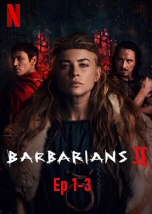
In the first three episodes of Season 2, the uneasy peace after Rome’s defeat begins to unravel. Arminius suspects the Romans are rebuilding their strength and turns to Marbod, the powerful leader of the Marcomanni, hoping to forge a broader Germanic alliance before Rome can strike again. At the same time, his brother Flavus returns to Germania in Roman service, reopening old wounds and forcing Arminius to confront the family he left behind. Thusnelda takes dangerous risks of her own, infiltrating the Roman camp as tensions rise on both sides. The situation becomes even more explosive when Marbod secretly meets Tiberius in an attempt to secure peace with Rome, while Germanicus questions Flavus’s loyalty and the Romans exploit every division among the tribes. Arminius brings his son Gaius into the village, then turns against Marbod when he discovers the depth of his dealings with Rome, while Thusnelda reacts furiously to the secrets Arminius has kept from her. These opening episodes turn the struggle into a dangerous web of betrayal, family conflict and political ambition, where every alliance could decide the future of Germania.



















Where the Romans expanded incrementally, the Vikings adopted a bolder, more aggressive approach. So was it the Dark Age which failed Europe, or the stifling uniformity of the great Roman experiment? Were the lost tribes more victim than failure? Richard Rudgley will hope to shed new light on the real secrets of the so-called Dark Age.