Filmed over four years, Our Planet is an eight-part series that combines the spectacular photography of Planet Earth with an unprecedented look at the planet's remaining wilderness areas and their animal inhabitants. With a cornucopia of visual wonder and environmental advocacy, the series explores more of this beautiful, blue marble while presenting an urgent call to action to its inhabitants. In the words of David Attenborough: 'This series will celebrate the natural wonders that remain, and reveal what we must preserve to ensure people and nature thrive'. The first episode explores the planet's breathtaking diversity -- from seabirds carpet-bombing the ocean to wildebeests eluding the wild dogs of the Serengeti.
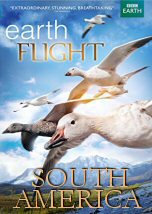
The documentary series gives a bird's-eye view of South America, as condors soar along the Andes, scarlet macaws explore the heart of the Amazon and hummingbirds and vultures see the continent's greatest sights. It is a journey that includes Machu Picchu, the Nasca Lines and the cities of Rio de Janeiro and Santiago. In Patagonia, giant petrels shadow killer whales as they hunt seals by stranding their huge bodies on the beach. At Iguassu Falls, dusky swifts dive through the cascades to huddle in communal roosts while hummingbirds bathe below. In a secret Andean location, condors soar in flocks over 40-strong and scavenge on casualties from herds of fighting guanacos. Elsewhere, a mother condor gently pushes her youngster to the edge of a 200-metre cliff, as flight school begins. Deep in the Amazon, macaws seek medicinal clay. They are joined by a host of secretive jungle animals, including spider monkeys and tapirs, all after the same remedy. In Peru, condors soar over fighting sea lions waiting for causalities and on a mass exodus north, birds converge on the Panama Canal. In Costa Rica, black vultures descend on turtles as they lay their eggs in the sand and pick off the eggs that ping-pong through the air.
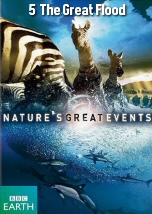
The great flood in the Okavango turns 4,000 square miles of arid plains into a beautiful wetland. Elephant mothers guide their families on an epic trek across the harsh Kalahari Desert towards it, siphoning fresh water from stagnant pools and facing hungry lions. Hippos battle for territory, as the magical water draws in thousands of buffalo and birds, and vast clouds of dragonflies. Will the young elephant calves survive to reach this grassland paradise? The experienced mother elephants time their arrival at the delta to coincide with the lush grass produced by the great flood. In a TV first, the programme shows the way they use their trunks to siphon clean water from the surface layers of a stagnant pool, while avoiding stirring up the muddy sediment on the bottom with their feet. Lechwe swamp deer, zebras, giraffes, crocodiles and numerous fish and thousands of birds arrive in the delta. And, in a phenomenon never before filmed in the Okavango, thousands of dragonflies appear - seemingly from nowhere - within minutes of the flood arrival, mating and laying eggs. As the flood finally reaches its peak, elephants and buffalo, near the end of their epic trek across the desert, face the final gauntlet of a hungry pride of lions. In a heart-wrenching sequence, a baby elephant is brought down by a lion in broad daylight.
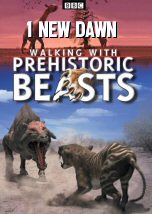
The series takes place after the extinction of the dinosaurs 65 million years ago and recreates animals of the Cenozoic with computer-generated imagery and animatronics. The first episode starts 49 million years ago, when Earth has fully recovered from the dinosaur extinction and is covered in a mysterious forest. This is a time that the world has almost forgotten - Germany was a hot sweaty jungle, birds ruled the earth and preyed on miniature horses and whales walked on land.
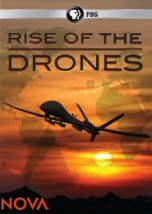
These unmanned flying robots–some as large as jumbo jets, others as small as birds–do things straight out of science fiction. Much of what it takes to get these robotic airplanes to fly, sense, and kill has remained secret. But now, with rare access to drone engineers and those who fly them for the U.S. military, we reveal the amazing technologies that make drones so powerful". From cameras that can capture every detail of an entire city at a glance to swarming robots that can make decisions on their own to giant air frames that can stay aloft for days on end, drones are changing our relationship to war, surveillance, and each other. And it's just the beginning. Discover the cutting edge technologies that are propelling us toward a new chapter in aviation history
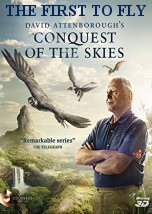
David Attenborough embarks on an extraordinary journey to unravel one of nature s most gripping stories the evolution of flying animals. The power of flight is one of the greatest miracles of nature. Over one hundred billion creatures soar through the air today - from nectar-drinking hummingbirds, to armoured airborne beetles; from bats hunting in the black of night, to bizarre winged lizards. The film travels back in time to unravel the astonishing 300-million-year story of how these animals first appeared, and then evolved into the huge variety of aeronauts that fill our skies today. Only now, using the latest scientific analysis, can he reveal the hidden mechanics behind their gravity-defying skills. Ground-breaking 3D cameras, high speed filming and stunning CGI bring the viewer closer than ever to this astounding aerial world.















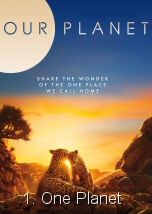

The first episode explores the planet's breathtaking diversity -- from seabirds carpet-bombing the ocean to wildebeests eluding the wild dogs of the Serengeti.