Construction of the famous Basilica in Barcelona, designed by Antoni Gaudi, was started in 1882. To this day, it has not been completed. The architecture is one of such creative madness, originality, and fantasy, that it has been declared a World Heritage Site by UNESCO. After years of piecing back together Gaudi’s master plan with advancements in computer technology and design, architects have been able to pursue the building, started 140 years ago. However, as construction progresses, some of its greatest challenges have yet to be surmounted, including the construction of 10 more spires. The team hopes to complete the masterpiece by 2026, Gaudi’s 100 year anniversary. This film documents the complexities of respecting the original inspiration and techniques set forth by Gaudi over a century ago. Juxtaposing sequences shot in the midst of the cathedral as construction ensues, with reenactments and CGI images, the documentary draws you into Gaudi’s paradise on earth, from the origins of its inspiration to the most recent architectural additions.
Dash Snow rejected a life of privilege to make his own way as an artist on the streets of downtown New York City in the late 1990s. Developing from a notorious graffiti tagger into an international art star, he documented his drug- and alcohol-fueled nights with the surrogate family he formed with friends and fellow artists Ryan McGinley and Dan Colen before his death by heroin overdose in 2009. Drawing from Snow's unforgettable body of work and involving archival footage, Cheryl Dunn's exceptional portrait captures his all-too-brief life of reckless excess and creativity.
Following engineers and scientists on a groundbreaking mission as they build, test and launch the James Webb Space Telescope, the most powerful observatory ever constructed, and discovers the astonishing cosmological enigmas it will investigate. Using the latest CGI animation technology, the film will follow the journey and share the incredible cosmological images and mysteries that scientists believe the telescope will capture. This super-telescope is the next generation successor to the Hubble Space Telescope, with a mirror 6 times bigger. It will also be able to peer back in time. For the first time in space exploration, scientists will be able to explore the formation of the first stars and galaxies and search for planets that can support life.
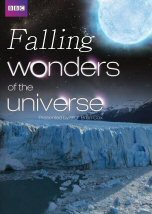
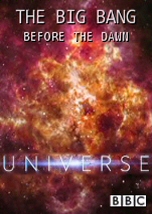
How did the universe come to be? Thanks to a series of discoveries, our most powerful space missions have unravelled 13.8 billion years of cosmic evolution and revealed the story of our universe from its birth all the way to the arrival of our nascent civilization. Our guide on this odyssey back to the dawn of time is light. Telescopes are time machines - by looking out into the distant universe, they open a window to the past. One telescope more than any other has helped us journey through the history of the universe: NASA’s Hubble Space Telescope. Remarkably, Hubble has even found one of the first galaxies ever to exist in the universe, which was born some 13.4 billion years ago. It's a discovery that hints at the beginnings of our own Milky Way. Vivid CGI brings this ancient galaxy to life, allowing us to witness for ourselves the first dawn. It was the beginning of a relationship between stars and planets that would, on a faraway world, lead to the origin of life - and ultimately to us. Hubble’s incredible discoveries have allowed scientists to piece together much of our cosmic story, but it cannot take us back to the most important moment in history: the Big Bang. For decades, the moment the universe began was the subject of pure speculation, but by combining astronomy and cosmology, scientists have finally found a way to put their theories to the test and study the momentous events that took place during the Big Bang. They can do this because the European Space Agency’s Planck space telescope has seen the afterglow of the Big Bang itself – something we call the Cosmic Microwave Background. The unparalleled detail Planck gave us has helped confirm something remarkable: the Big Bang may not be the beginning. There was a time before the dawn – a place beyond anything we can comprehend. Professor Brian Cox transports us back to the fraction of a second before the Big Bang, when the seeds of our universe were planted.
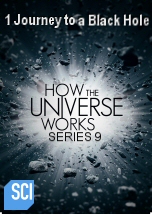
We as humans often question the creation of the universe. How was the universe created? How does it work? This series uses global experts from organizations like NASA and CERN to help us understand how this works, and uses CGI to demonstrate the phenomena. Episode 1 starts the new season as we dive deep into the black holes. The galaxy M87 is known for having at the core a super massive black hole. This black hole is the first ever photographed and we will witness the experts trying to find out the secrets of this famous black hole. In the meantime, they have overcome the scorching winds and death ray jets. And of all its hurdles, the event horizon will be the most difficult. This place is known for its uniqueness of time and space, where time stays still while the laws of physics fail.
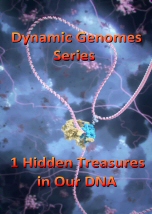
Explore the hottest area of bioscience, genomics with stunning live image, quality CGI, the forefront research, and real human stories. Previously it was thought that only 2% of our DNA is meaningful and the remaining 98% is non-coding 'junk'. But today we are beginning to know how the junk part of our DNA works to decide our personal characteristics and tendencies.










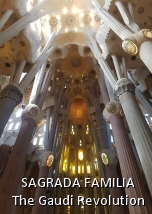




This film documents the complexities of respecting the original inspiration and techniques set forth by Gaudi over a century ago. Juxtaposing sequences shot in the midst of the cathedral as construction ensues, with reenactments and CGI images, the documentary draws you into Gaudi’s paradise on earth, from the origins of its inspiration to the most recent architectural additions.