Without doubt, the Eagles are one of the all-time biggest acts in popular music since the dawn of the rock'n'roll era. The band's roots go back to their role as defining artists in the phenomenally popular Southern California rock scene of the '70s, a decade in which they delivered four consecutive #1 albums. Their momentous 2004 farewell tour filled stadiums around the world, and this series captures one of the most stellar events from that now-historic global sweep. It was filmed in Melbourne, Australia at the Rod Laver Arena on November 14, 15 and 17, 2004.
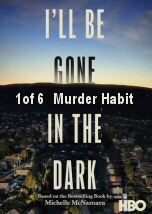
This featured series is a gripping examination of the unsolved crimes of the Golden State Killer who terrorized California in the 1970's and 1980's. Sensitively handled at all turns, I’ll Be Gone in the Dark is different from your standard true crime series. Highly emotional in both a restorative cathartic, but also a genuinely upsetting way. In the first episode, the writer Michelle McNamara finds a new obsession in the 'East Area Rapist', who terrorized California in the 1970s and '80s, responsible for 50 home-invasion rapes and 12 murders.
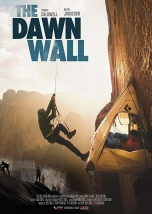
In January, 2015, American rock climbers Tommy Caldwell and Kevin Jorgeson captivated the world with their effort to climb the Dawn Wall, a seemingly impossible 3,000 foot rock face in Yosemite National Park, California. The pair lived on the sheer vertical cliff for weeks, igniting a frenzy of global media attention. But for Tommy Caldwell, the Dawn Wall was much more than just a climb. It was the culmination of a lifetime defined by overcoming obstacles. At the age of 22, the climbing prodigy was taken hostage by rebels in Kyrgyzstan. Shortly after, he lost his index finger in an accident, but resolved to come back stronger. When his marriage fell apart, he escaped the pain by fixating on the extraordinary goal of free climbing the Dawn Wall. Blurring the line between dedication and obsession, Caldwell and his partner Jorgeson spend six years meticulously plotting and practicing their route.
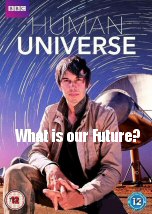
Professor Brian Cox concludes his exploration of our place in the universe by asking what next for the ape that went to space. Our future is far from certain. In Florida, Brian joins the latest efforts to protect Earth from potential catastrophic events. He joins a team of Nasa astronauts who are training for a future mission to an asteroid - should we ever discover one coming our way - under 30 feet of water in a submerged laboratory that simulates space. It is just one example of how, for our long-term survival, space exploration may well be vital. It is a view shared by Apollo 16 astronaut Charlie Duke, who tells Brian what it was like to escape the confines of the planet. It is a dream that both Nasa and now commercial companies share as they race to get humans back into deep space. But space travel, like every leap our civilisation has ever made, requires energy. Here too, scientists are hard at work attempting to safeguard our future. At the National Ignition Facility in California, Brian witnesses the world's most successful fusion experiment in action. He believes that if their mission succeeds, our civilisation will have unlocked a way to the stars that will not destroy the planet in the process. Brian concludes by returning to the top of the world in Svalbard, where he gains access to our civilisation's greatest treasure, locked away in a vault buried deep in the permafrost.
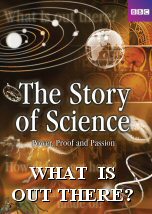
An informative and ambitious journey exploring how the evolution of scientific understanding is intimately interwoven with society's historical path. The Story Of Science tells the forces that came together to create scientific knowledge; the practical business of making instruments and machines; the great forces of history – revolutions, voyages of discovery and artistic movements – and the dogged determination of scientists and experimenters. This is the story of how scientific ideas shaped the modern world and how science made history. Michael Mosley begins the first episode with the story of one of the great upheavals in human history - how we came to understand that our planet was not at the centre of everything in the cosmos, but just one of billions of bodies in a vast and expanding universe. He reveals the critical role of medieval astrologers in changing our view of the heavens, and the surprising connections to the upheavals of the Renaissance, the growth of coffee shops and Californian oil and railway barons. Michael shows how important the practical skills of craftsmen have been to this story and finds out how Galileo made his telescope to peer at the heavens and by doing so helped change our view of the universe forever.
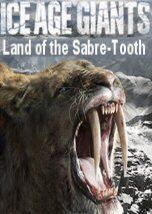
Professor Alice Roberts journeys 40,000 years back in time on the trail of the great beasts of the Ice Age. Drawing on the latest scientific detective work and a dash of graphic wizardry, we bring the Ice Age Giants back to life. The series begins in the 'land of the sabre-tooth'; North America, a continent that was half covered by ice that was up to two miles thick. Yet this frozen land also boasted the most impressive cast of Ice Age giants in the world. Across locations such as the Grand Canyon, the sands of Arizona and the coast of California, Alice traces the movements of Ice Age beasts like bear-sized sloths, vast mammoths and the strange beast known as the glyptodon. These leviathans all have one thing in common: they were stalked by the meanest big cat that ever prowled the Earth, armed with seven-inch teeth and hunting in packs - Smilodon fatalis, the sabre-toothed cat.










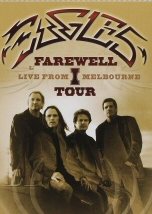


Their momentous 2004 farewell tour filled stadiums around the world, and this series captures one of the most stellar events from that now-historic global sweep. It was filmed in Melbourne, Australia at the Rod Laver Arena on November 14, 15 and 17, 2004.