










Last Watched

"Carbon"  Sort by

No Impact Man The Documentary

   2009    Culture
Follow the Manhattan-based Colin Beavan and his family as they abandon their high consumption 5th Avenue lifestyle and try to live a year while making no net environmental impact. The documentary follows this family during their year-long experiment to reduce their carbon-footprint.
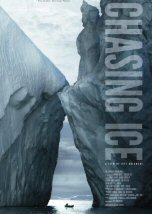
Chasing Ice

   2012    Nature
Acclaimed National Geographic photographer James Balog was once a skeptic about climate change. But through his Extreme Ice Survey, he discovers undeniable evidence of our changing planet. In Chasing Ice, Balog deploys revolutionary time-lapse cameras to capture a multi-year record of the world's changing glaciers". His hauntingly beautiful videos compress years into seconds and capture ancient mountains of ice in motion as they disappear at a breathtaking rate. Traveling with a team of young adventurers across the brutal Arctic, Balog risks his career and his well-being in pursuit of the biggest story facing humanity. As the debate polarizes America, and the intensity of natural disasters ramps up globally, Chasing Ice depicts a heroic photojournalist on a mission to deliver fragile hope to our carbon-powered planet. Directed by Jeff Orlowski

Fix Our Climate

   2021    Nature
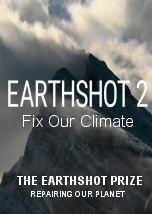
The climate is changing faster than ever, which is why 'fix our climate' is one of the five goals of the Earthshot Prize. Prince William, Sir David Attenborough and Christiana Figueres highlight inspiring and often unexpected solutions to the challenge. In this film, we'll explain the scale of the problem posed by climate change and will introduce you to some amazing people already working on climate crisis. One of these three finalists will win the Earthshot Prize and get the platform and resources they need to scale their ground-breaking work. Nine more solutions for fixing our climate will receive the same support over the course of this decade.
Series: The Earthshot Prize: Repairing Our Planet

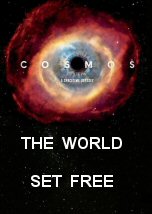
The World Set Free

   2014    Nature
This episode explores the nature of the greenhouse effect (discovered by Joseph Fourier and Svante Arrhenius), and the evidence demonstrating the existence of global warming from humanity's influence. Tyson begins by describing the long-term history of the planet Venus; based on readings from the Venera series of probes to the planet, the planet had once had an ocean and an atmosphere, but due to the release of carbon dioxide from volcanic eruptions, the runaway greenhouse effect on Venus caused the surface temperatures to increase and boiled away the oceans. Tyson then notes the delicate nature of the amount of carbon dioxide in the atmosphere can influence Earth's climate due to the greenhouse effect, and that levels of carbon dioxide have been increasing since the start of the 20th century. Evidence has shown this to be from mankind's consumption of oil, coal, and gas instead of from volcanic eruptions due to the isotopic signature of the carbon dioxide. The increase in carbon dioxide has led to an increase in temperatures, in turn leading to positive feedback loops of the melting polar ice caps and dethawing of the permafrost to increase carbon dioxide levels. Tyson then notes that humans have discovered means of harvesting solar power, such as Augustin Mouchot's solar-driven motor in the 19th century, and Frank Shuman's solar-based steam generator in the 1910's. Tyson points out that in both cases, the economics and ease of using cheap coal and oil caused these inventions to be overlooked at the time. Today, solar and wind-power systems would be able to collect enough solar energy from the sun easily. Tyson then compares the motivation for switching to these cleaner forms of energy to the efforts of the Space race and emphasizes that it is not too late for humanity to correct its course.
Series: Cosmos: A Spacetime Odyssey

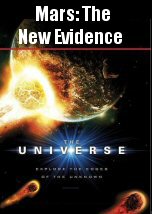
Mars: the New Evidence

   2010    Science
In the last few years, the Red Planet has yielded up many new clues that life may have once existed there...and may even exist there today. There is now have proof that water once flowed on the surface, that Mars once had lakes, and that the frozen poles are mostly water, not carbon dioxide as previously thought. Mars has snow--an aurora--and lightning generated by dust storms. Most intriguing of all are the seasonal plumes of methane that just may point to bacteria living below the surface.
Series: The Universe

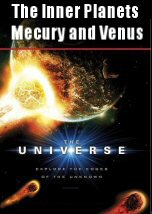
The Inner Planets: Mecury and Venus

   2007    Science
Scorched by their proximity to the sun, Mercury and Venus are hostile worlds; one gouged with craters from cosmic collisions and the other a vortex of sulphur, carbon dioxide and acid rain. Prime examples of planets gone awry, do they serve as a warning for ominous scenarios that might someday threaten Earth?
Series: The Universe
The Hunt

The Hunt

2015  Nature
Life in a Day

Life in a Day

2021  Culture
Walking with Dinosaurs

Walking with Dinosaurs

2025  Science
The Sky at Night

The Sky at Night

2024  Science
Top Gear

Top Gear

2012  Technology
The Story of China

The Story of China

2016  History