(Click CC for subtitles) The Last Narc tells the story of a fallen hero, the men who killed him, and the one man who risked everything to find out what really happened and why. Highly decorated special agent Hector Berellez, who was assigned to lead the DEA's investigation of Camarena's murder, peels back the layers of myth and propaganda to reveal the bone-chilling truth about a conspiracy that stretches from the killing fields of Mexico to the halls of power in Washington, D.C. The first episode is set in the mid-1970s. The newly formed DEA recruits two Mexican-American street cops: Kiki Camarena and Hector Berrellez. Kiki is assigned to Guadalajara, home turf of the Guadalajara Cartel, while Hector targets cartel operations in Los Angeles. The Cartel is putting cops on its payroll, including three Jalisco state policemen. When Kiki is kidnapped it rocks both sides of the border
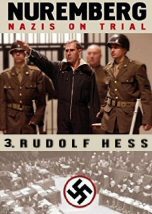
Episode three explores the mind of one of the most fanatical of all Nazis and the insight that gives into the psychology of dictatorship. Hess is brought to Nuremberg from the UK where he had flown 4 years earlier much to the bemusement of the British. Overy explains that they must have quickly realised he was not normal. In the intervening time Hess’s mental state has further deteriorated and when interviewed by Chief Interrogator Colonel John Amen proclaims amnesia. Chief Interpreter Richard Sonnenfeldt explains that they brought in Göring to confront Hess but that he too failed to make an impression. Psychopathologist Prof. Edgar Jones proposes Hess’s behaviour patterns may be his way of escaping reality as he is forced to face the extent of the atrocities and choose between accepting his part of the blame or forsaking his Führer. However, as history Professor Robert Gellatel explains it is difficult to construct a case against Hess as he was imprisoned in England when the worst of the atrocities were carried out so British Prosecutor Mervyn Griffith-Jones must argue a conspiracy charge linking the pre-1939 persecutions to the post-1939 atrocities and a crimes against peace charge proving the flight to Scotland was merely a ruse.
In the second episode, the murder of a political staffer in 2016 spawns a myriad of unfounded conspiracy theories as the man's family and the truth hang in the balance. Following Seth Rich's murder, his parents filed a lawsuit with Fox News after conspiracy theories about his murder spread across the internet. Mary Rich told NPR that the combined trauma of her son's death and the attacks by conspiracy theorists caused intense and lasting distrust. After the case was resolved, Rich's parents said in a statement at the time that they were 'pleased with the resolution of this matter and sincerely hope that the media will take genuine precautions in the future'.
















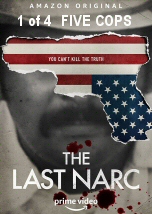











The first episode is set in the mid-1970s. The newly formed DEA recruits two Mexican-American street cops: Kiki Camarena and Hector Berrellez. Kiki is assigned to Guadalajara, home turf of the Guadalajara Cartel, while Hector targets cartel operations in Los Angeles. The Cartel is putting cops on its payroll, including three Jalisco state policemen. When Kiki is kidnapped it rocks both sides of the border