

Last Watched

"Crow"  Sort by

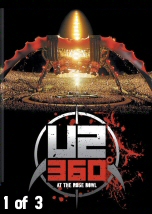
U2 Live at the Rose Bowl 1of3

   2010    Art
This concert film by Irish rock band U2 was shot on 25 October 2009 at the Rose Bowl in Pasadena, California, during the band's U2 360° Tour. The Rose Bowl concert featured a sold-out crowd of 97,014 people, breaking the US record for single concert attendance for one headline act. The U2 360° Tour was launched in support of the group's 2009 album No Line on the Horizon. The tour featured a 360-degree configuration, with the stage being placed closer to the center of the stadium's field than usual.
Series: U2 Live at the Rose Bowl
How did the Universe Begin

   2021    Science
Scientists on the BICEP and Planck missions are attempting to solve a mystery about the earliest moments of our universe, by searching for patterns in the Cosmic Microwave Background (CMB). If successful, the missions will help to answer the biggest question anyone can ask: how did our universe begin?
Series: Secrets of the Universe

Iron Maiden: Flight 666

   2009    Art
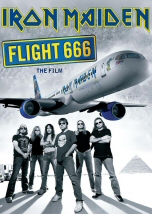
Come fly with Iron Maiden and enjoy the hospitality of Flight 666 as the boys' take on the biggest tour of their career, flying around the world in their own private Boeing 757. This insight into the background noise that is the logistical workings' of the '2008 Somewhere Back in Time' World Tour is captivating, both behind the scenes as well as on stage. Performing in front of sell out crowds, this 'Rocumentary' is an insight into the minds, bodies and souls of the family that is Iron Maiden.
The film is a complete chronological account of the band's 2008 world tour through India, Australia, Japan, USA, Canada, Mexico and South America in a jet piloted by the band's front man, Bruce Dickinson. Features interviews with the musicians, their road crew and fans.

The Big Bang: Before the Dawn

   2021    Science
How did the universe come to be? Thanks to a series of discoveries, our most powerful space missions have unravelled 13.8 billion years of cosmic evolution and revealed the story of our universe from its birth all the way to the arrival of our nascent civilization. Our guide on this odyssey back to the dawn of time is light. Telescopes are time machines - by looking out into the distant universe, they open a window to the past. One telescope more than any other has helped us journey through the history of the universe: NASA’s Hubble Space Telescope. Remarkably, Hubble has even found one of the first galaxies ever to exist in the universe, which was born some 13.4 billion years ago. It's a discovery that hints at the beginnings of our own Milky Way. Vivid CGI brings this ancient galaxy to life, allowing us to witness for ourselves the first dawn. It was the beginning of a relationship between stars and planets that would, on a faraway world, lead to the origin of life - and ultimately to us.
Hubble’s incredible discoveries have allowed scientists to piece together much of our cosmic story, but it cannot take us back to the most important moment in history: the Big Bang. For decades, the moment the universe began was the subject of pure speculation, but by combining astronomy and cosmology, scientists have finally found a way to put their theories to the test and study the momentous events that took place during the Big Bang. They can do this because the European Space Agency’s Planck space telescope has seen the afterglow of the Big Bang itself – something we call the Cosmic Microwave Background. The unparalleled detail Planck gave us has helped confirm something remarkable: the Big Bang may not be the beginning. There was a time before the dawn – a place beyond anything we can comprehend. Professor Brian Cox transports us back to the fraction of a second before the Big Bang, when the seeds of our universe were planted.
Series: Universe

The Dissident

   2020    Culture
Washington Post journalist Jamal Khashoggi was critical of his beloved Saudi Arabia and of Crown Prince Mohammed bin Salman’s policies. On October 2, 2018, Khashoggi entered the Saudi Arabian consulate in Istanbul and never came out. His fiancée and dissidents around the world are left to piece together clues to his brutal murder—and in their dogged quest for truth, they expose a global cover-up perpetrated by the very country he loved.

Plagues and Pestilence

   2020    Medicine
COVID-19 is far from the first pandemic to wreak havoc in the world. A long line of infectious diseases have devastated and in some cases destroyed entire societies. Almost all of them started in animals and made the jump to humans. The Black Death spread across Europe and Asia in the 14th century leaving millions dead in its wake. Between the 15th and 18th centuries, European colonists brought smallpox to the Americas, the Pacific region and to Australia. In Europe, the 17th century saw a series of major epidemics. And at the end of the First World War, more people died of the Spanish flu than on the battlefield.
This documentary examines the causes of these epidemics - whether it be lack of hygiene, interaction with animals, overcrowding, or the growth of cities - and how people travelling helped to spread disease and promote pandemics. It also sheds a light on the impact these infectious diseases have had on politics and societal change. Over the centuries, scientists managed to develop treatments and medicines to help control or even eradicate infectious diseases. Virologists are facing that task again with the coronavirus, as the world frantically searches for ways to overcome a pandemic which threatens our modern way of life.