Dementia is one of the fastest-growing health conditions in the UK, yet its earliest warning signs can be difficult to recognise. NHS GP Dr Claire Taylor meets people living with Alzheimer’s and other forms of dementia, explores how the disease changes the brain, and puts herself through innovative tests designed to detect subtle problems with memory, hearing and cognition before more obvious symptoms appear. Along the way, she investigates why some people develop dementia at a younger age, how lifestyle and social isolation may influence risk, and what the latest research says about prevention and treatment. With moving personal stories and access to scientists working at the cutting edge of dementia research, the documentary asks a question that concerns millions: how much can we really know about our own future brain health?
Around 12,000 years ago, humans began one of the most important transformations in history: the shift from hunting and gathering to farming and permanent settlements. Archaeological sites such as Gobekli Tepe reveal how these early communities lived, what they believed and how agriculture transformed diet, population and social life. Across Europe and the Middle East, prehistoric societies also created huge stone monuments, tombs and ceremonial sites, moving blocks weighing many tons with surprisingly limited technology. Presented here with both episodes combined into a single video, the documentary explores the birth of farming, organized communities, belief systems and monumental architecture during the Stone Age.
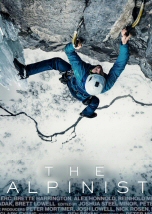
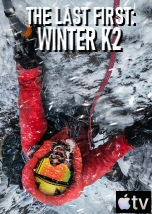
Click CC for subtitles. In the winter of 2021, K2 remained the last great prize of high-altitude mountaineering: the only 8,000-meter peak never climbed in winter. Icelandic climber John Snorri Sigurjónsson and the legendary Pakistani father-and-son team Ali and Sajid Sadpara arrive determined to claim that historic first, facing temperatures far below zero, hurricane-force winds, exhaustion and a mountain already infamous for killing even the strongest climbers. But the expedition soon becomes more than a battle against nature. Commercial teams, influencer climbers, professional film crews and a fiercely ambitious all-Nepalese team converge on the same slopes, turning the ascent into a tense contest of strategy, reputation and national pride. As the climb unfolds, the documentary exposes the changing culture of modern mountaineering: the pressure of social media, the commercialization of the world’s highest peaks, the unequal recognition historically given to Western climbers, and the determination of Nepali and Pakistani mountaineers to claim achievements in their own names. The race for the summit culminates in triumph for one team and tragedy for others, leaving five climbers dead and forcing survivors to confront questions of ambition, responsibility and what a “first” is really worth. Built from extraordinary footage shot during the expedition and testimony from those who were there, the film transforms one of mountaineering’s last untouched records into a gripping story about ego, class, nationalism, family and the deadly cost of pushing beyond human limits.
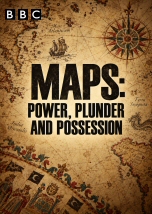
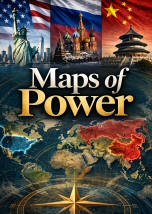
Professor Jerry Brotton reveals that maps are far more than neutral guides to places: they are expressions of the societies that create them and powerful instruments for shaping territory, belief and authority. Beginning with some of the earliest known maps, he traces how cartography evolved from marking land and ownership to serving kings, empires, scientists and governments. From Henry VIII’s coastal surveys and the Cassini family’s scientific breakthroughs to the drawing of modern national borders, the series shows how maps can define who controls land, who belongs where and even how entire peoples understand the world around them. Across the three episodes, presented here together in a single uninterrupted video, the journey moves from ancient and medieval worldviews to imperial expansion and the digital age. Brotton explores religious maps, Aztec symbolism, Victorian attempts to classify societies, the politics behind projections of the globe, and the rise of Google Earth and data-driven mapping. He then follows the mapmakers and explorers who turned distant lands into targets for conquest and profit, from Ptolemy and Columbus to Walter Raleigh and the trading empires that followed. The story ends in the Arctic, where new maps are once again being used to stake claims over oil, gas and minerals, proving that even in the twenty-first century, cartography remains inseparable from power, plunder and possession.
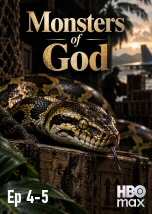
In the final two episodes of the series, the reptile trade enters a new and even more lucrative era. After prison, Tommy Crutchfield returns to find an industry transformed by the rise of genetically altered “morphs”, rare colour and pattern variations that can sell for enormous sums. What appears to be a more legitimate breeding business quickly collides again with illegal trafficking, as Operation Chameleon begins to expose the international network linking collectors, dealers and even major zoological institutions. The investigation then closes in on Anson Wong, the Malaysian trafficker described as one of the most powerful figures in the global reptile trade. As U.S. Fish and Wildlife agents work undercover to penetrate his organization, the story expands from rare snakes and lizards to critically endangered species such as the ploughshare tortoise, whose extraordinary black-market value has helped drive it toward extinction in the wild. These final episodes reveal how obsession, vast profits, corruption and international demand can turn the pursuit of exotic animals into a criminal empire with devastating consequences for wildlife.
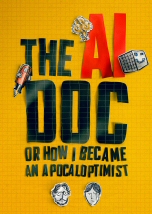
As artificial intelligence accelerates at a breathtaking pace, filmmaker Daniel Roher sets out to understand whether humanity is approaching an extraordinary new era or a catastrophe of its own making. What begins as a personal investigation becomes far more urgent when he and his wife learn they are expecting a child. Faced with predictions ranging from revolutionary medical breakthroughs and powerful new tools for creativity to mass unemployment, deepfakes, autonomous systems and even existential risk, he asks some of the world’s leading AI thinkers a deceptively simple question: should we be excited about the future, or terrified of it? The film explores how generative AI works, why its capabilities are advancing so quickly and what could happen if increasingly powerful systems become difficult to control. Experts debate AI safety and alignment, the race between competing companies, the possibility of machines seeking greater power, and the social consequences of automation and concentrated wealth. At the same time, the documentary confronts the technology’s remarkable promise, from personalized education to scientific discovery and potential cancer treatments. Moving between anxiety and hope, Roher ultimately searches for a way to face an uncertain future not as a pessimist or a blind optimist, but as something in between: an “Apocaloptimist.”






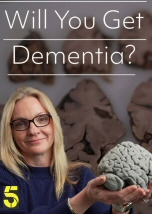

Along the way, she investigates why some people develop dementia at a younger age, how lifestyle and social isolation may influence risk, and what the latest research says about prevention and treatment. With moving personal stories and access to scientists working at the cutting edge of dementia research, the documentary asks a question that concerns millions: how much can we really know about our own future brain health?