In this revealing documentary, Giancarlo Granda, former pool attendant at the Fontainebleau Hotel, shares the intimate details of his 7-year relationship with a charming older woman, Becki Falwell, and her husband, the Evangelical Trump stalwart Jerry Falwell Jr. Directed by Billy Corben, the film outlines Granda's entanglement with the Falwell's seemingly perfect lives and the overarching influence this affair had on a presidential election. The life of Jerry Falwell — the late Moral Majority televangelist who for decades helped catalyze the rightward shift of American evangelicals before his death in 2007 — is a quintessentially American story. But it’s in the next generation that the Falwell narrative becomes at once soap opera and morality tale. The film covers the graceless fall of Jerry Falwell Jr., who after the death of his father was placed in the presidency of the family’s conservative organ Liberty University. There, he seemed to remain painfully in thrall to his appetites. We hear testimony about his alleged tendency to drink on the job and discomfiting, slurry interviews between him and sympathetic media — but most crucially, we receive the testimony of Giancarlo Granda. Granda was a pool attendant at a Miami hotel when he met Falwell and his wife, Becki, in 2012. Today, he alleges that he was persuaded to have sex with Becki while Falwell watched, and that the pair engaged in an ongoing campaign of communication with him that could be described as coercive. His energies were consumed with managing their tempers and occasionally threatening behavior, and he blames the swirl of scandal around them for derailing his professional future. Plainspoken and only occasionally visibly emotional, Granda is his own best advocate as he describes a couple who, he says, craved his body and were willing to discard the rest of him.
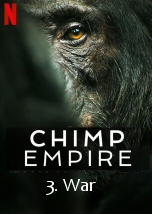
In the third episode of the series, the intricate social dynamics of the Ngogo chimpanzee community come to a head. Decades of growth and dominance have made this the largest known chimp group, but internal rivalries lead to a significant schism, with a faction of males breaking away to form their own group, the Westerners. Once comrades, these chimps now face each other as deadly enemies. The tension escalates with the mysterious death of Pork Pie, leaving the central chimps in a state of heightened alert and mourning, while leadership struggles and territorial disputes intensify within both factions. As the Westerners grow bolder, driven by the likes of Richmond and the ambitious Rollins, they encroach further into central territory, setting the stage for an inevitable clash. Amidst the power plays, we witness the personal struggles of individuals like Jackson, the embattled alpha, and Bartoli, who must protect her son Herzog from the looming threat. This episode masterfully captures the raw emotion and brutal reality of chimpanzee warfare, leaving viewers on edge as alliances are tested and the fight for dominance reaches a fever pitch.
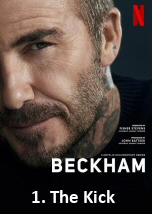
The series chronicles David Beckham's meteoric rise to the pinnacle of world soccer and his transformation into a cultural icon. Beckham is one of the most well-known names on the planet, but few truly understand the man behind the fame. From his humble beginnings in working-class East London, through his unwavering determination to succeed, to his ongoing struggle to balance ambition, love, and family, David's journey is filled with numerous ups and downs. It is the story of one of the most recognized and scrutinized athletes of all time. In the first episode of the series, we delve into the early defining moments of David Beckham's life, shaping both his career and personal journey. It starts with a history-making goal in 1996, catapulting David to fame. As he becomes a household name, big spending and brand deals further fuel his popularity. However, a pivotal moment comes when he receives a red card during a match between England and Argentina, ultimately leading to England's loss. Throughout this episode, we also get a glimpse of David's initial encounters with Victoria.
This widely praised by critics film was created with cooperation from Paul McCartney, Ringo Starr and the widows of John Lennon and George Harrison. Filmmaker Peter Jackson delves into invaluable footage archives to make a film that shows the truth about the Beatles recording together the album Let it Be, which had the working title of Get Back. The production employed film restoration techniques developed for Jackson's previous works on sixty hours of film footage and 150 hours of audio, spending four years in editing the series. The final cut covers 21 days in the studio with the Beatles and climaxes with the full 42-minute rooftop concert. In part I, the Beatles begin rehearsing at Twickenham Studios for what is at first meant to be a television special about the recording of their next album leading up to a live show at a location to be determined. During the sessions, Paul McCartney and George Harrison play some songs that would later appear on their respective solo albums. After seven days of rehearsals, Harrison abruptly leaves the group.
For more than 90 years, Abbey Road Studios has been at the heart of the music industry. In this personal film of memory and discovery, Mary McCartney guides us through nine decades to see and experience the creative magic that makes it the most famous and longest-running studio in the world. From classical to pop, film scores to hip-hop, ‘If These Walls Could Sing’ explores the breadth, diversity and ingenuity of Abbey Road Studios. The doc marks the first time Abbey Road has opened its doors to a feature doc, and will be the centrepiece of the legendary studio’s 90th anniversary celebrations. Billed as the untold story of the studio, the film will feature an all-star cast of interviews, and intimate access to the premises.
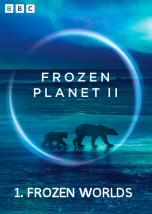
Journeying from pole to pole, The series 'Frozen Planet II' reveals surprising worlds that exist across the planet and the remarkable animals that make them their home. In a fragile world of beauty and hostility, nature finds a way to survive and thrive. David Attenborough explores a planet on the brink of major change. In the first episode, we begin our journey in the far south, in the most hostile place on earth, the frozen continent of Antarctica. After being raised on the ice in winter, emperor penguin chicks find themselves abandoned by their parents in spring. To survive, they must find their own way across the treacherous sea ice to the rich waters of the Southern Ocean. The waters surrounding Antarctica may be the richest of all, but they are also home to an exceptionally sophisticated predator, the killer whale. To reach their favored prey, Weddell seals, a family of killer whales have learnt to generate their own waves, washing the seals off their ice floes. It’s a technique that has been passed down over generations and is coordinated by the family matriarch, who can be over 100 years old. Leaving Antarctica and travelling north, we discover frozen habitats that are created by altitude. The greatest of these is the Himalaya, the tallest mountain range on earth, which contains so much ice and snow it is known as the third pole. In the shadow of the Himalaya lies a vast frozen grassy plain that is home to the fluffiest cat in the world, Pallas’s cat. It may have extremely dense fur, but if it’s to survive the Mongolian winter, it needs to catch lots of gerbils and voles. Easier said than done when you only have short legs and paws that are sensitive to the cold. North of the Great Steppe lies the boreal forest, which encircles the continents of North America, Europe and Asia, and remains frozen for six months of the year. Prowling these forests in the far east of Russia is the Siberian tiger, the largest cat in the world. In winter, it is on the lookout for black bears hibernating in caves, a high-risk strategy that only a cat of this size would attempt. Above the boreal forest, we cross into the Arctic Circle, where conditions become so extreme that trees can no longer grow. This is the tundra. Living here are relics of the last ice age, musk ox. In spring, their calves face a far greater danger than the cold, grizzly bears. Encounters can be brutal, but if just a few calves survive the gauntlet, the herd’s future is secure. To the north of the tundra is the Arctic Ocean, the only ocean that can completely freeze over. Living here is one of the most peculiar animals on earth, the hooded seal. Males have extraordinary inflatable noses, producing a bright red balloon out of their left nostrils. One male hopes this will make him irresistible. All of the frozen habitats share one thing in common: the threat posed by today’s climate change. Travelling to the island of Greenland, home to the largest body of ice in the northern hemisphere, we witness how global warming is melting its ice cap at faster rates than ever before, with profound consequences for global sea levels. Lastly, we visit the Arctic’s most iconic resident, the polar bear, as a mother bear struggles to provide for her cubs in a world of shrinking sea ice.











The life of Jerry Falwell — the late Moral Majority televangelist who for decades helped catalyze the rightward shift of American evangelicals before his death in 2007 — is a quintessentially American story. But it’s in the next generation that the Falwell narrative becomes at once soap opera and morality tale. The film covers the graceless fall of Jerry Falwell Jr., who after the death of his father was placed in the presidency of the family’s conservative organ Liberty University. There, he seemed to remain painfully in thrall to his appetites. We hear testimony about his alleged tendency to drink on the job and discomfiting, slurry interviews between him and sympathetic media — but most crucially, we receive the testimony of Giancarlo Granda.
Granda was a pool attendant at a Miami hotel when he met Falwell and his wife, Becki, in 2012. Today, he alleges that he was persuaded to have sex with Becki while Falwell watched, and that the pair engaged in an ongoing campaign of communication with him that could be described as coercive. His energies were consumed with managing their tempers and occasionally threatening behavior, and he blames the swirl of scandal around them for derailing his professional future. Plainspoken and only occasionally visibly emotional, Granda is his own best advocate as he describes a couple who, he says, craved his body and were willing to discard the rest of him.