One of the main battles of the Second World War took place inside the brain of a mathematician called Alan Turing. During the war, the allies' key objective was to crack the German army's encrypted communications code. Without a doubt, the key player in the game was this interdisciplinary scientist and a long-forgotten hero. Alan Turing's breakthroughs, his story and tragic destiny, gives us a chance to look at the Second World War from a different angle.
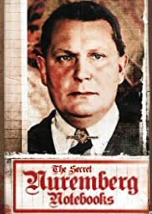
We are familiar with images of the hearings at the Nuremberg trials. But to this day, no one has taken us into the cells and minds of the accused. Leon Goldensohn, a 34-year-old American Jewish psychiatrist, spent six months visiting the 4 main Nazi war criminals. Based on these unique and recently uncovered documents and reconstitutions of the main events, this film discloses for the first time the personal thoughts of the Nazis: Hermann Goering, Rudolf Hess, Hans Franck and Julius Streicher. These interviews raise serious questions concerning the psychic mechanisms and mysteries that set off acts of barbarity.
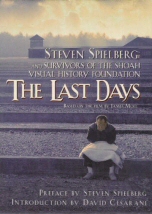
In late 1944, even as they faced imminent defeat, the Nazis expended enormous resources to kill or deport over 425,000 Jews during the 'cleansing' of Hungary. This Oscar-winning documentary, executive produced by Steven Spielberg, focuses on the plight of five Hungarian Jews who survived imprisonment in Auschwitz. Though these survivors recount the horrors they witnessed and endured as a result of the Nazis' 'Final Solution,' their individual triumphs are a testament to hope and humanity.
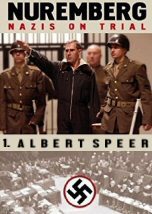
This remarkable series profiles on the major defendants of the Nuremberg war crimes trials. In the first episode, Nathaniel Parker plays the most inscrutable Nazi on trial at Nuremberg, Hitler's architect and armaments minister Albert Speer. He was the only defendant who unreservedly accepted responsibility for the Nazis' crimes. But was Speer's remorse genuine or just a clever defense strategy to get off the hook? The film tells the intriguing behind-the scenes-story of Speer's trial and his showdown with unrepentant rival, Hermann Goering.
For the first time, you will see dramatic moments of WWII that were captured in 3D with stereographs and then shuttered away in secret archives and attics, until now. This stunning collection of colour 3D photos includes Allied reconnaissance photos, a trove of images that documents the rise and fall of the Third Reich, and photos secretly taken by a civilian in occupied France. WWII IN 3D also features an actual 3D motion picture film shot by the Nazis in 1943 and creates a fully immersive, three dimensional portrait of history's largest and bloodiest conflict.
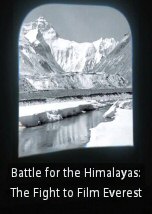
Between the 1920s and the 1960s the world's great powers sent vast military-style expeditions to conquer the peaks of the Himalayas, with Everest at their head. This was a great game played - camera in hand - by Imperial Britain, Nazi Germany and superpower America. As a result, Himalayan mountaineering's most iconic, epic and tragic moments didn't just go down in history, but were caught on film - from the deaths of Mallory and Irvine on Everest in 1924, to Everest's final conquest in 1953 by Hillary and Tensing. Using footage never before seen on British television, this is the story how of how film-makers turned the great peaks into great propaganda.
















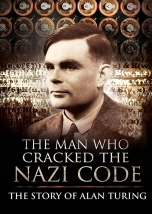




Alan Turing's breakthroughs, his story and tragic destiny, gives us a chance to look at the Second World War from a different angle.