We offer this captivating full documentary series in a single video, inviting viewers to question everything they think they know about prehistory. Journalist Graham Hancock embarks on a global journey, exploring archaeological sites in search of clues to an advanced civilization that may have thrived thousands of years ago. Hancock presents a bold theory: during the last ice age, a sophisticated society existed but was wiped out by catastrophic meteor impacts roughly 12,000 years ago. He suggests that survivors of this lost civilization shared their knowledge with hunter-gatherers across the globe, sparking the development of early societies. Hancock visits intriguing sites and natural formations, presenting what he claims is evidence of this forgotten culture. He also asserts that mainstream archaeology may be overlooking—or even concealing—critical findings that support his theory. The series offers a fresh perspective on ancient history, blending mystery, controversy, and the thrill of discovery for those ready to rethink humanity's distant past. All eight episodes are available in a single, continuous video exclusively on our website.
Join us on an unforgettable voyage through one of the most desolate periods in human history as the rulers, conflicts, and cataclysmic societal breakdown of Early Middle Ages are brought to light. At its height in the second century A.D., the Roman Empire was the beacon of learning, trade, power and prosperity in the western world. But the once-powerful Rome--rotten to the core by the fifth century--lay open to barbarian warriors who came in wave after wave of invasion, slaughtering, stealing, and ultimately, settling. As chaos replaced culture, Europe was beset by famine, plague, persecutions, and a state of war that was so persistent it was only rarely interrupted by peace. The documentary profiles those who battled to shape the future, from the warlords whose armies threatened to case the demise of European society, like Alaric, Charles the Hammer, and Clovis; to the men and women who valiantly tended the flames of justice, knowledge, and innovation including Charlemagne, St. Benedict, Empress Theodora, and other brave souls who fought for peace and enlightenment. It was in the shadows of this turbulent millennium that the seeds of modern civilization were sown.
Stephen Fry embarks on a fascinating journey to discover the stories behind some of the world’s most fantastic beasts. Discover the magic and mystery behind humanity's timeless fascination with mythical creatures in this captivating documentary. Journey through history to uncover the origins of legendary beasts that have captured our imaginations for centuries. Why do these fantastical beings still enchant us in today's world of science and technology? This film reveals the hidden truths behind the myths, showing how real animals often inspired these legendary tales. Embark on an exhilarating adventure to uncover the secrets of beloved mythical creatures, from dragons and unicorns to the phoenix and the elusive Loch Ness Monster. Explore the labyrinthine corridors of the Natural History Museum, meet experts who shed light on ancient legends, and see how cutting-edge technology brings these creatures to life on the big screen. This documentary offers a mesmerizing blend of history, science, and fantasy, showing that the natural world holds wonders that rival even the most magical beasts. Don't miss this enchanting exploration that will leave you questioning what might still be out there, waiting to be discovered.
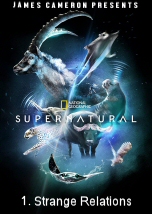
Witness the secret powers of extraordinary animals, experience the world as they do and see the SUPER/NATURAL side of nature as never before. Executive produced by James Cameron and narrated by Benedict Cumberbatch, this series uses the scientific innovations and leading-edge filmmaking technology to reveal the secret powers and super-senses of the world’s extraordinary animals. See flowers in bee-vision to eavesdropping on conversations between elephant seals to soaring the length of a football field with glow-in-the-dark squirrels. They say in nature that only the strongest survive. But when cooperation and communication bring animals and plants together and superpowers combine even the most vulnerable can become unstoppable. If you think you know nature, think again.
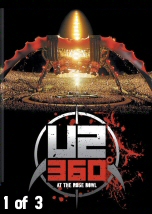
This concert film by Irish rock band U2 was shot on 25 October 2009 at the Rose Bowl in Pasadena, California, during the band's U2 360° Tour. The Rose Bowl concert featured a sold-out crowd of 97,014 people, breaking the US record for single concert attendance for one headline act. The U2 360° Tour was launched in support of the group's 2009 album No Line on the Horizon. The tour featured a 360-degree configuration, with the stage being placed closer to the center of the stadium's field than usual.
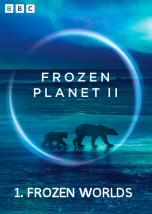
Journeying from pole to pole, The series 'Frozen Planet II' reveals surprising worlds that exist across the planet and the remarkable animals that make them their home. In a fragile world of beauty and hostility, nature finds a way to survive and thrive. David Attenborough explores a planet on the brink of major change. In the first episode, we begin our journey in the far south, in the most hostile place on earth, the frozen continent of Antarctica. After being raised on the ice in winter, emperor penguin chicks find themselves abandoned by their parents in spring. To survive, they must find their own way across the treacherous sea ice to the rich waters of the Southern Ocean. The waters surrounding Antarctica may be the richest of all, but they are also home to an exceptionally sophisticated predator, the killer whale. To reach their favored prey, Weddell seals, a family of killer whales have learnt to generate their own waves, washing the seals off their ice floes. It’s a technique that has been passed down over generations and is coordinated by the family matriarch, who can be over 100 years old. Leaving Antarctica and travelling north, we discover frozen habitats that are created by altitude. The greatest of these is the Himalaya, the tallest mountain range on earth, which contains so much ice and snow it is known as the third pole. In the shadow of the Himalaya lies a vast frozen grassy plain that is home to the fluffiest cat in the world, Pallas’s cat. It may have extremely dense fur, but if it’s to survive the Mongolian winter, it needs to catch lots of gerbils and voles. Easier said than done when you only have short legs and paws that are sensitive to the cold. North of the Great Steppe lies the boreal forest, which encircles the continents of North America, Europe and Asia, and remains frozen for six months of the year. Prowling these forests in the far east of Russia is the Siberian tiger, the largest cat in the world. In winter, it is on the lookout for black bears hibernating in caves, a high-risk strategy that only a cat of this size would attempt. Above the boreal forest, we cross into the Arctic Circle, where conditions become so extreme that trees can no longer grow. This is the tundra. Living here are relics of the last ice age, musk ox. In spring, their calves face a far greater danger than the cold, grizzly bears. Encounters can be brutal, but if just a few calves survive the gauntlet, the herd’s future is secure. To the north of the tundra is the Arctic Ocean, the only ocean that can completely freeze over. Living here is one of the most peculiar animals on earth, the hooded seal. Males have extraordinary inflatable noses, producing a bright red balloon out of their left nostrils. One male hopes this will make him irresistible. All of the frozen habitats share one thing in common: the threat posed by today’s climate change. Travelling to the island of Greenland, home to the largest body of ice in the northern hemisphere, we witness how global warming is melting its ice cap at faster rates than ever before, with profound consequences for global sea levels. Lastly, we visit the Arctic’s most iconic resident, the polar bear, as a mother bear struggles to provide for her cubs in a world of shrinking sea ice.










Hancock visits intriguing sites and natural formations, presenting what he claims is evidence of this forgotten culture. He also asserts that mainstream archaeology may be overlooking—or even concealing—critical findings that support his theory. The series offers a fresh perspective on ancient history, blending mystery, controversy, and the thrill of discovery for those ready to rethink humanity's distant past. All eight episodes are available in a single, continuous video exclusively on our website.