








Last Watched

"Pine"  Sort by

Beyond Thinking

   2012    Culture
We live our lives pursuing happiness 'out there' as if it is a commodity. We have become slaves to our own desires and craving. Happiness isn't something that can be pursued or purchased like a cheap suit. This is Maya, illusion, the endless play of form. In the Buddhist tradition, Samsara, or the endless cycle of suffering is perpetuated by the craving of pleasure and aversion to pain. Freud referred to this as the "pleasure principle." Everything we do is an attempt to create pleasure, to gain something that we want, or to push away something that is undesirable that we don't want. Even a simple organism like the paramecium does this. It is called response to stimulus. Unlike a paramecium, humans have more choice. We are free to think, and that is the heart of the problem. It is the thinking about what we want that has gotten out of control. The dilemma of modern society is that we seek to understand the world, not in terms of archaic inner consciousness, but by quantifying and qualifying what we perceive to be the external world by using scientific means and thought. Thinking has only led to more thinking and more questions. We seek to know the innermost forces which create the world and guide its course. But we conceive of this essence as outside of ourselves, not as a living thing, intrinsic to our own nature. It was the famous psychiatrist Carl Jung who said, "one who looks outside dreams, one who looks inside awakes." It is not wrong to desire to be awake, to be happy. What is wrong is to look for happiness outside when it can only be found inside.
Series: Inner Worlds Outer Worlds
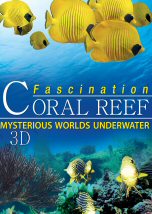
Fascination Coral Reef

   2013    Nature    3D    HD
Enter the fascinating world of the coral reefs and experience breath taking flora and fauna up close. The multitude of marine species, commencing with glassy sweepers, blow and porcupine fish, goliath groupers, giant morays, sea turtles up to the largest shark on earth, the whale shark, as well as the play of colours and the biodiversity of the corals, stony star corals, soft corals, bubble-tip anemones and gorgonian corals. Let yourself fall into a rapture of the deep. All in glorious 3D

In Search of Beethoven II

   2009    Art
Above all, 'In Search of Beethoven' addresses the central myth of Beethoven's life and work -- that of the heroic, tormented figure battling to overcome the tragic fate of being struck down by deafness in his prime; a man who searched for his elusive, eternal 'immortal beloved,' yet was never to attain lasting happiness.
Series: In Search of Beethoven

The Virus of Faith

   2006    Culture
Dawkins opines that the moral framework of religions is warped, and argues against the religious indoctrination of children. He discusses specifically the idea of religion seen as a virus in the sense of a meme. He begins by explaining how a child is genetically programmed to believe without questioning the word of authority figures, especially parents – the evolutionary imperative being that no child would survive by adopting a sceptical attitude towards everything their elders said. But this same imperative, he claims, leaves children open to infection by religion.
Series: The Root of All Evil

The Captains

   2011    Art
Follow actor William Shatner through interviews with the other actors who have portrayed starship Enterprise captains in five other incarnations of the Star Trek franchise. Shatner's subjects discuss their lives and careers before, during and after their tenure with Star Trek. With the use of conversations and archival footage, they explore the pressures, stigmas and sacrifices that accompanied their roles and their larger careers. During the process of the film and with help from the other Captains, Sir Patrick Stewart, Avery Brooks, Kate Mulgrew, Scott Bakula and Chris Pine, Shatner overcomes his disdain and learns to embrace his best known character, Captain James T. Kirk.

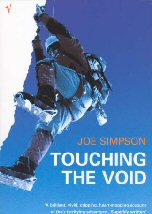
Touching the Void

   2003    Culture
In 1985, two adventurous young mountaineers, Joe Simpson and Simon Yates, set off to climb the treacherous west face of the Siula Grande in the Peruvian Andes. They were experienced climbers, and climbed "Alpine-style," climbing the mountain in "one great push," without setting up ropes or base camps ahead of time. After dealing with a snowstorm and some dangerous climbing over powder formations, they reached the summit (about 21,000 feet) on the third day. The climb down proved to be far more difficult. Simpson fell and broke his leg badly. Yates decided to try to lower Simpson down the mountain, one 300-foot section of rope at a time. The climbers had run out of gas to melt snow, so they couldn't risk stopping as night came, and a violent snowstorm began. Their plodding, painful journey hit a snag when Yates inadvertently lowered Simpson over the edge of a cliff. In the storm, the men couldn't hear each other's cries, and, Yates, uncertain as to Simpson's position, and gradually sliding down the slope himself, decided to cut the rope that connected them, sending Simpson plummeting to certain death. Miraculously, Simpson survived the fall, and was faced with the prospect of getting off the mountain alone with no food, no water, and a broken leg. In Touching the Void, filmmaker Kevin Macdonald (One Day in September) tells their story, based on Simpson's book, using contemporary interviews with the two men, and a reenactment of their climb and descent, featuring Brendan Mackey as Simpson and Nicholas Aaron as Yates