






Last Watched

"Rainforest"  Sort by

Rainforest Home

   2020    Nature
Rainforests face more threats than ever before, but remain the last stronghold for some truly astonishing animal families. Today we know rainforests are some of the most wondrous and important habitats on Earth. It is the richest habitat on earth, teeming with millions of dramatic plants and animals. From giant landscape gardeners to a whole family supported by a single leaf, there are surprises at every turn.
Incredible Animal Moments

   2018    Nature    HD
The fiercest, strangest, and wildest creatures in the animal kingdom face off in a countdown of the most incredible animal moments ever recorded. Across arid deserts, through dense rainforests, and into the deepest of oceans, witness remarkable scenes of animal activity, from deadly showdowns to wild romances.

Big Bugs

   2012    Nature    3D    HD
The world of bugs normally passes beneath our notice, yet shrink yourself to their size, see them in 3D and you’ll enter a world you’d never believe existed. Big Bugs in 3D uses specially developed 3D technology to take the viewer on a global journey, from Mexico and the rainforests of Asia to our own backyards. There are perhaps four and a half million different kinds of bugs sharing the planet with us. They exist in a bewildering variety of forms, some more like creatures from an alien world. Big Bugs asks how and why these creatures have become so successful.

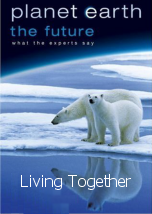
Living Together

   2006    Nature
The documentary deals with the future of conservation. It begins by looking at previous efforts. The 'Save The Whales' campaign, which started in the 1960s, is seen to have had a limited effect, as whaling continues and fish stocks also decline. In the 1990s, as head of the Kenya Wildlife Service, Richard Leakey took on the poachers by employing armed units. Although it was successful in saving elephants, the policy was detrimental to the Maasai people, who were forced from their land. The need for "fortress" areas is questioned, and the recently highlighted Raja Ampat coral reef in Indonesia is an example. The more tourism it generates, the greater the potential for damage — and inevitable coastal construction. Sustainable development is viewed as controversial, and one contributor perceives it to currently be a "contradiction in terms". Trophy hunting is also contentious. Those that support it argue that it generates wealth for local economies, while its opponents point to the reducing numbers of species such as the markhor. Ecotourism is shown to be beneficial, as it is in the interests of its providers to protect their environments. However, in some areas, such as the Borneo rainforests, the great diversity of species is being replaced by monocultures. The role of both religion and the media in conservation is argued to be extremely important. Contributors to the programme admit a degree of worry about the future, but also optimism.

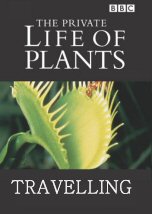
The Private Life of Plants: Travelling

   1994    Nature
Sir David Attenborough reveals plants as they have never been seen before - on the move and dangerously devious. About the major problems of life - growing, finding food, reproduction - and the varied ways plants have evolved to solve it. Filmed from the plant's point of view, using computer animations, fibre-optics and unique time-lapse photography. The first episode looks at how plants are able to move". The bramble is an aggressive example: it advances forcefully from side to side and, once settled on its course, there is little that can stand in its way. An altogether faster species is the birdcage plant, which inhabits Californian sand dunes. When its location becomes exposed, it shifts at great speed to another one with the assistance of wind — and it is this that allows many forms of vegetation to distribute their seeds. While not strictly a plant, the spores of fungi are also spread in a similar fashion. One of the most successful (and intricate) flowers to use the wind is the dandelion, whose seeds travel with the aid of 'parachutes'. They are needed to travel miles away from their parents, who are too densely packed to allow any new arrivals. Trees have the advantage of height to send their seeds further, and the cottonwood is shown as a specialist in this regard. The humidity of the tropical rainforest creates transportation problems, and the liana-species Alsomitra macrocarpa is one plant whose seeds are aerodynamic 'gliders'. Some, such as those of the sycamore, take the form of 'helicopters', while others, such as the squirting cucumber release their seeds by 'exploding'. Water is also a widely used method of propulsion. The tropical sea bean Entada gigas has one of the biggest fruits of all plants and is dispersed by water streams. However, most plants use living couriers, whether they be dogs, humans and other primates, ants or birds, etc., and to that end, they use colour and smell to signify when they are ripe for picking.
Series: The Private Life of Plants

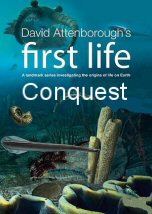
Conquest

   2010    Science
Attenborough's journey continues in Canada's Rocky Mountains, where fossils document an explosion in animal diversity never seen before or since. Travelling from there to North Africa, the rainforests of Australia and the east coast of Scotland, Attenborough discovers how animals evolved to conquer not only the oceans but also the land and air. These remote and fascinating creatures are brought to life as never before with the help of cutting-edge scientific technology and photorealistic visual effects. From the first large predators to the first legs on land, these were creatures that evolved the traits and tools that allow all animals, including ourselves, to survive to this day.
Series: First Life
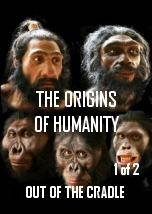
Out of the Cradle

Out of the Cradle

2019  History
The Making of the Mob

The Making of the Mob

2016  History
The Beauty of Maps

The Beauty of Maps

2010  History
Prehistoric Planet II

Prehistoric Planet II

2023  Science
Chimp Empire

Chimp Empire

2023  Nature
Earth from Space

Earth from Space

2019  Nature
Reel Rock

Reel Rock

2015  Culture