Electric bikes are transforming Britain’s streets, offering a fast and convenient way to travel, but the boom has also brought a growing wave of controversy. The documentary investigates the rise of illegal, high-powered e-bikes capable of speeds far beyond those allowed on public roads, examining dangerous riding, collisions, police seizures and the growing concern of pedestrians and other road users. It also looks at the blurred line between legal pedal-assist bikes and modified machines that behave more like motorbikes, asking whether current laws and enforcement can keep pace with a rapidly changing form of transport. As e-bikes become ever more common, the film explores whether they represent the future of urban mobility or a new threat on Britain’s streets.
In the final episode of the series, the Civil War reaches its bloodiest and most decisive stage. After the Union victories at Gettysburg and Vicksburg, Abraham Lincoln becomes increasingly frustrated by generals who fail to destroy Robert E. Lee’s army and finally turns to Ulysses S. Grant, a commander willing to fight relentlessly until the Confederacy is defeated. At the same time, Lincoln pushes the nation beyond simply preserving the Union, supporting Black soldiers, confronting Frederick Douglass over their unequal treatment and making emancipation central to the meaning of the war. As casualties continue to mount, Lincoln faces the election of 1864, the fight to abolish slavery permanently through the 13th Amendment and the final collapse of the Confederacy. Lee’s surrender at Appomattox finally brings the long struggle toward its end, leaving Lincoln to consider how a divided nation can be reunited and what freedom will mean for millions of formerly enslaved people. But just as victory opens the possibility of a new beginning, his assassination transforms triumph into national tragedy and seals his place in American history.
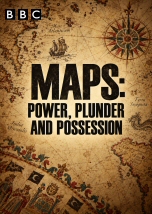
Professor Jerry Brotton reveals that maps are far more than neutral guides to places: they are expressions of the societies that create them and powerful instruments for shaping territory, belief and authority. Beginning with some of the earliest known maps, he traces how cartography evolved from marking land and ownership to serving kings, empires, scientists and governments. From Henry VIII’s coastal surveys and the Cassini family’s scientific breakthroughs to the drawing of modern national borders, the series shows how maps can define who controls land, who belongs where and even how entire peoples understand the world around them. Across the three episodes, presented here together in a single uninterrupted video, the journey moves from ancient and medieval worldviews to imperial expansion and the digital age. Brotton explores religious maps, Aztec symbolism, Victorian attempts to classify societies, the politics behind projections of the globe, and the rise of Google Earth and data-driven mapping. He then follows the mapmakers and explorers who turned distant lands into targets for conquest and profit, from Ptolemy and Columbus to Walter Raleigh and the trading empires that followed. The story ends in the Arctic, where new maps are once again being used to stake claims over oil, gas and minerals, proving that even in the twenty-first century, cartography remains inseparable from power, plunder and possession.
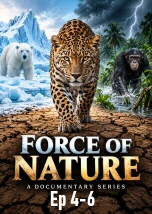
In the final three episodes, the series follows animals being pushed to the edge as melting ice, extreme heat and prolonged drought reshape the environments they depend on. In the Himalayas, a snow leopard is forced from familiar territory, while an Arctic ground squirrel in Alaska undertakes an extraordinary migration and a young Arctic fox in Svalbard faces her first winter alone. These cold-adapted animals must rapidly change behaviours that once worked for generations as their frozen worlds become increasingly unstable. The struggle then shifts to the opposite extreme, where wombats, leopards and kangaroo rats are tested by record heat and worsening drought, pushing their remarkable physical and behavioural adaptations to their limits. In the final episode, attention turns to the people working directly to help wildlife survive these new extremes, revealing rescue efforts, scientific interventions and conservation strategies in some of the planet’s harshest environments. Together, these final chapters show that survival now depends not only on the animals’ ability to adapt, but increasingly on how far humans are willing to go to protect them.
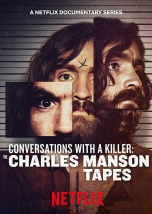
Previously unreleased prison calls, firsthand testimony and archival footage open a disturbing window into the world Charles Manson created around himself. Against the backdrop of the late-1960s counterculture, Manson draws vulnerable and disillusioned young people into a tightly controlled group built on promises of love, freedom and belonging. His manipulation gradually deepens into paranoia, domination and violence, culminating in the 1969 murders committed by members of the Manson Family, including the killings at the home of Sharon Tate, and in Manson’s delusional belief that the crimes could help ignite a racial apocalypse he called “Helter Skelter.” The story then follows the investigation, arrests and extraordinary 1971 trial, where Manson and his followers turn the courtroom into a spectacle and become symbols of a darker side of the era. Recordings of Manson himself are joined by voices from people who lived through the events, including material connected to followers such as Charles “Tex” Watson, Susan Atkins and Leslie Van Houten, revealing how charisma, coercion and group loyalty were transformed into lethal obedience. Presented here with all three episodes combined into a single video, viewers can follow the complete story without interruption, from the formation of the Family to the murders, the trial and the disturbing legacy Manson left behind.
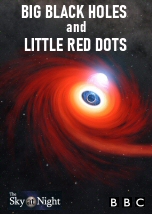
Professor Brian Cox joins Chris Lintott and the team to investigate one of the most intriguing new mysteries in modern astronomy. Observations from the James Webb Space Telescope have revealed hundreds of compact, extraordinarily bright objects known as “little red dots”, appearing less than a billion years after the Big Bang. Many may hide rapidly growing supermassive black holes, raising a profound question: how could such enormous objects have formed so early in cosmic history? The journey begins with the strange physics of black holes themselves, from event horizons and singularities to the supermassive black hole at the centre of the Milky Way and the gigantic black hole in the galaxy M87. With cosmologist Emma Chapman and Professor Sadegh Khochfar, the programme explores radical explanations for these ancient monsters, including primordial black holes born soon after the Big Bang and massive black holes formed directly from collapsing clouds of gas, bypassing stars altogether. Cutting-edge computer simulations recreate the first billion years of the universe and reveal how the earliest galaxies and black holes may have emerged within the cosmic web. These discoveries are forcing astronomers to reconsider not only how supermassive black holes grow, but how galaxies and the early universe itself evolved.









It also looks at the blurred line between legal pedal-assist bikes and modified machines that behave more like motorbikes, asking whether current laws and enforcement can keep pace with a rapidly changing form of transport. As e-bikes become ever more common, the film explores whether they represent the future of urban mobility or a new threat on Britain’s streets.